View methods side by side.
Choose up to four methods. Add them using the search and share the comparison by copying its link.
| Criterion | 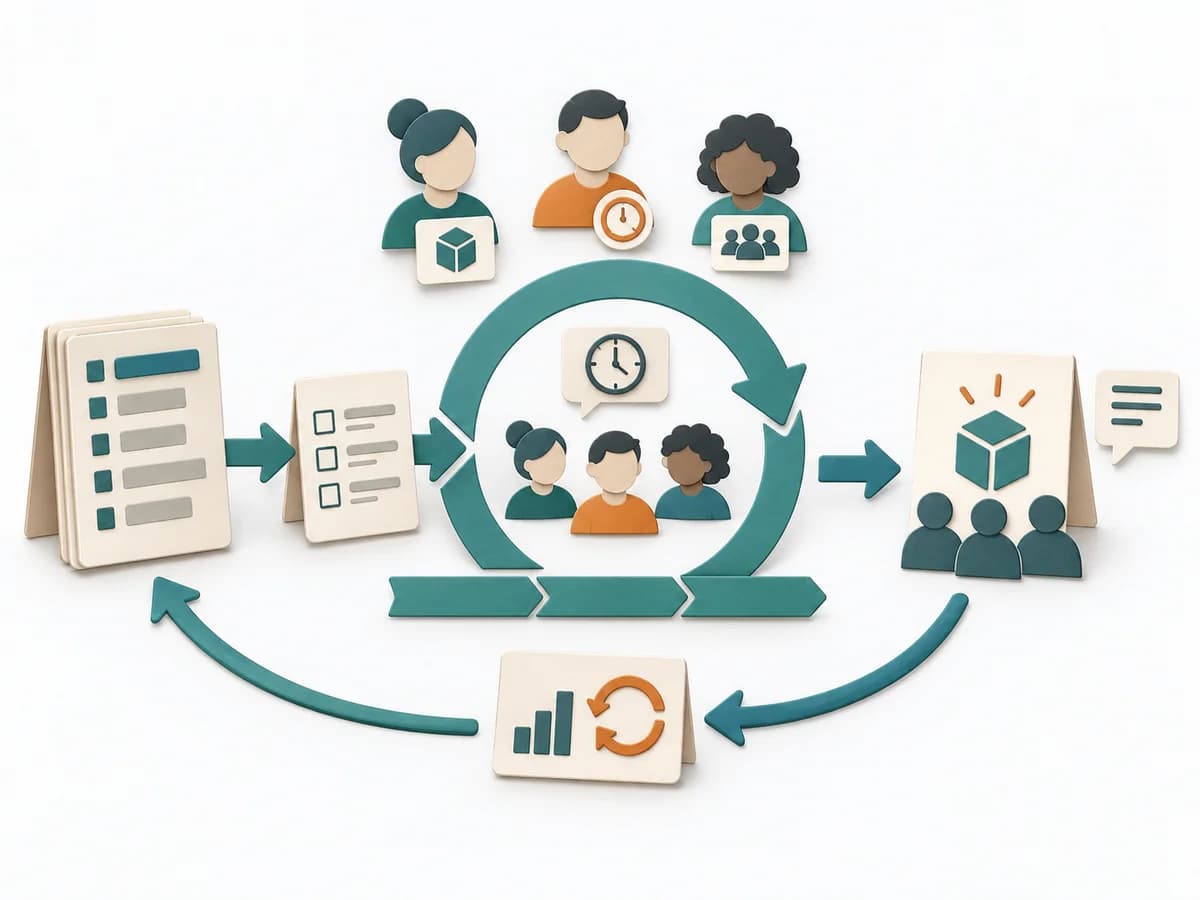 Agile Scrum | 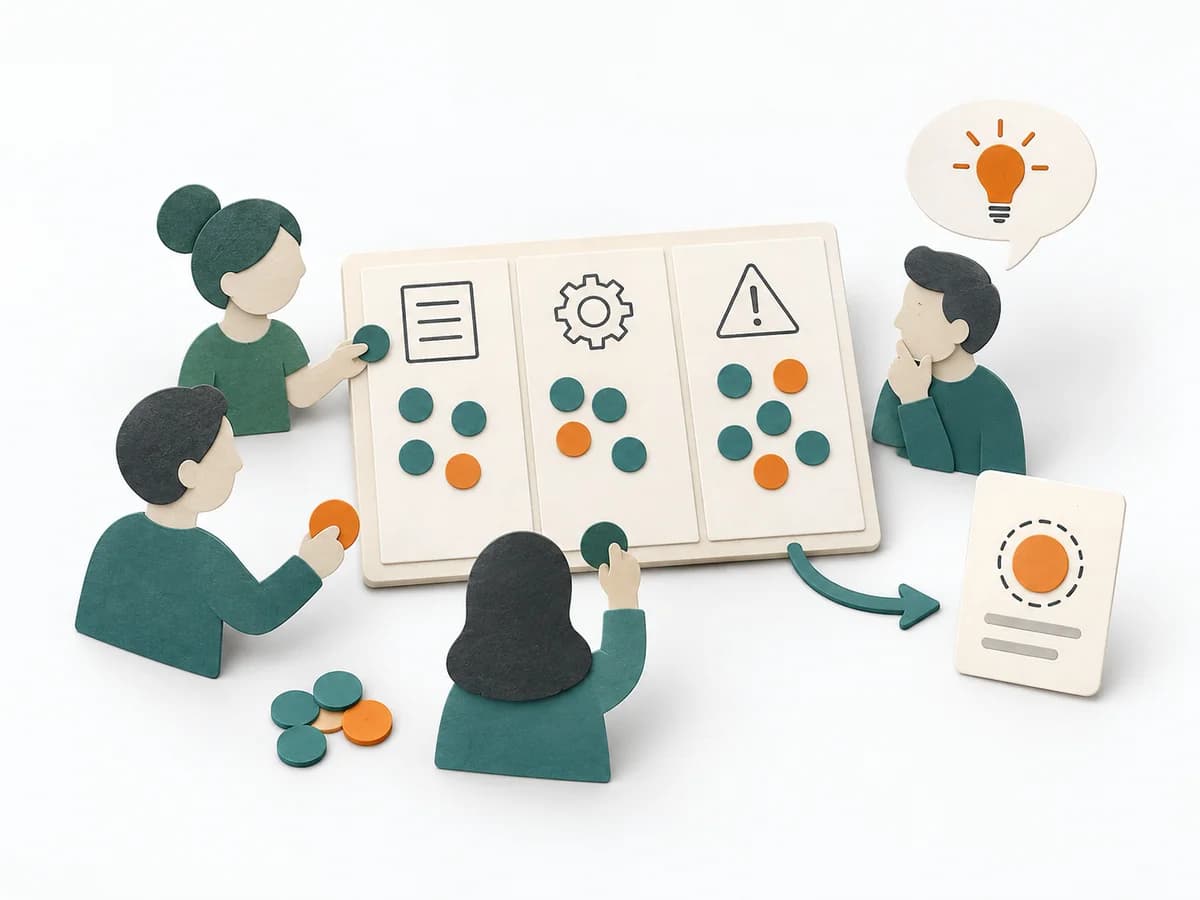 Facilitation Dot Estimation | 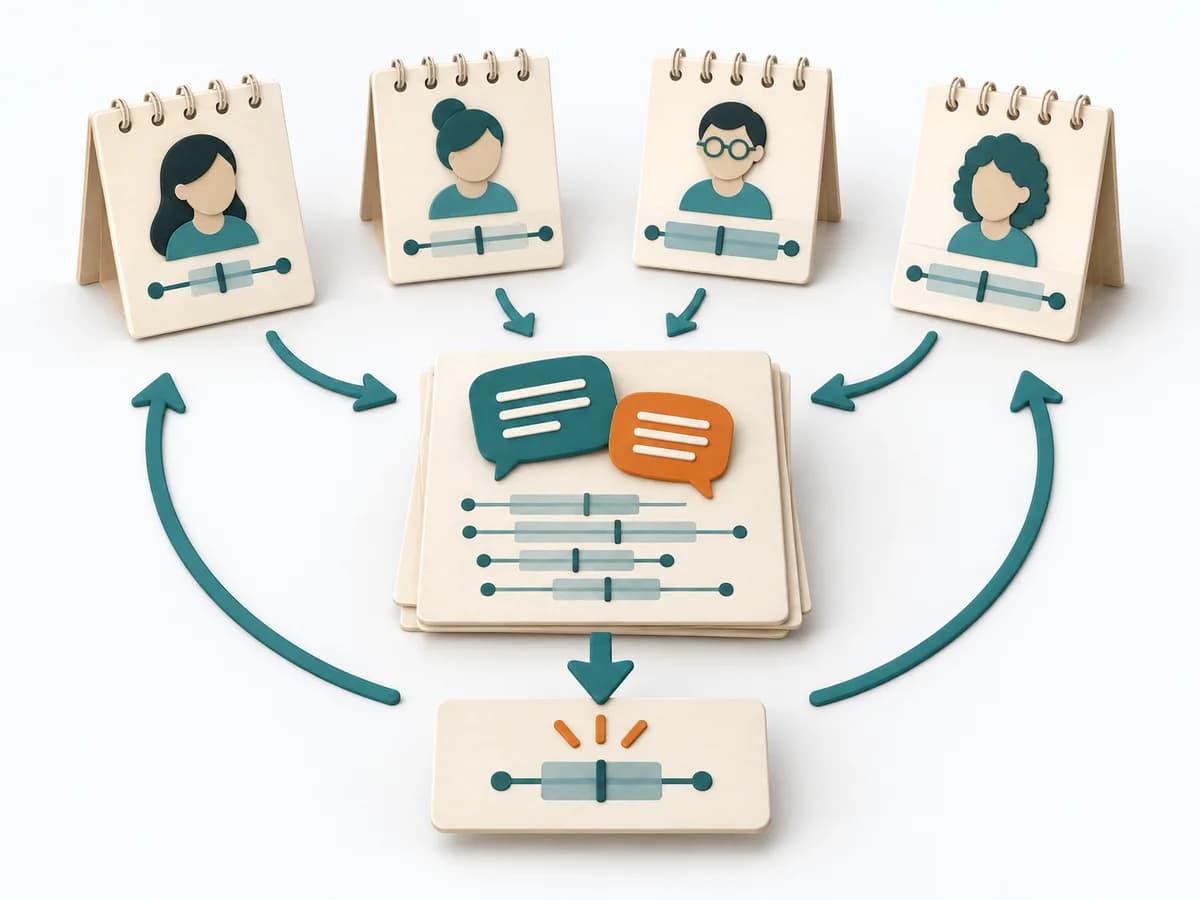 Decision Making Wideband Delphi | 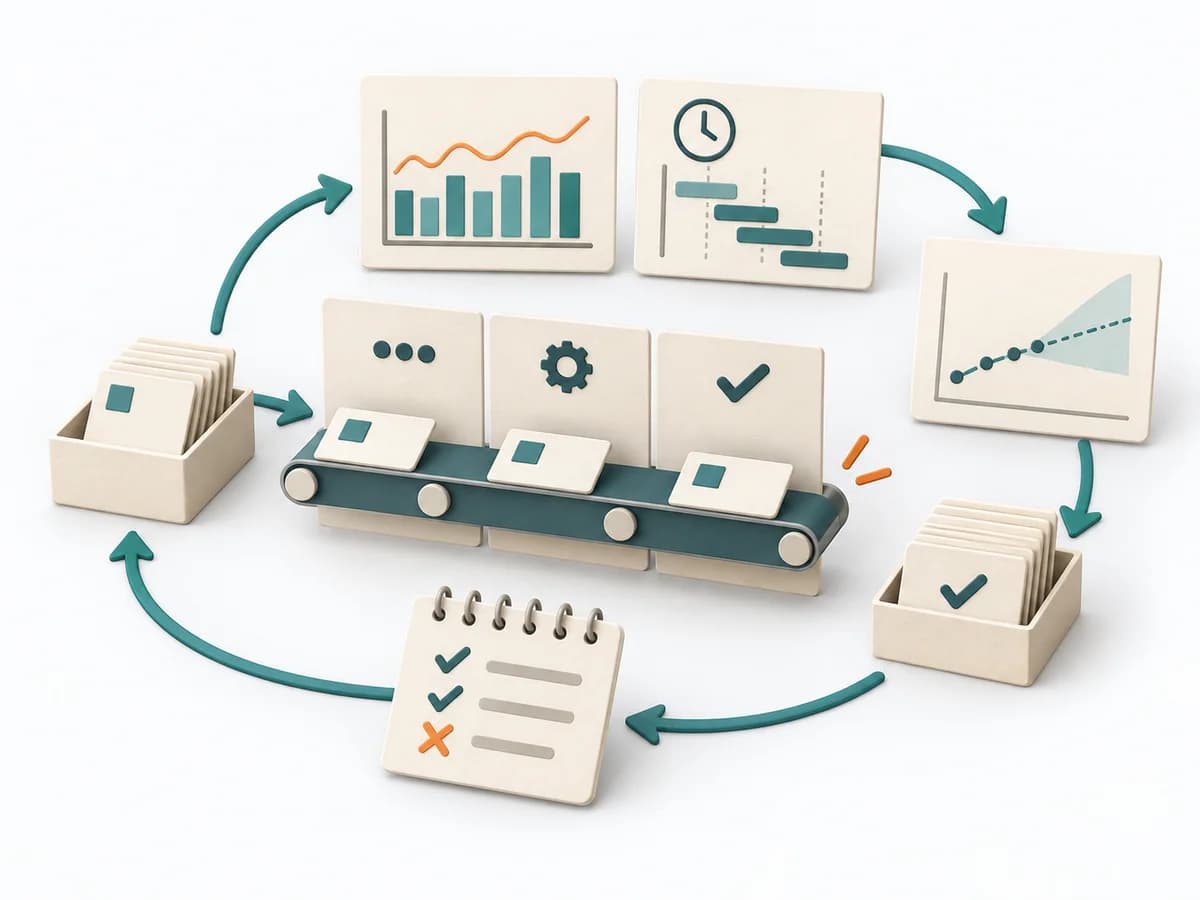 Agile NoEstimates |
|---|---|---|---|---|
Purposedifferent | When a team needs to work in a fixed delivery rhythm, it stabilizes cadence, responsibility, and feedback loops. It makes collaboration reliable across sprint boundaries. | When size or effort can only be estimated roughly, Dot Estimation condenses the group's experience into a quick range. It turns individual contributions into a visible selection. The result is captured as an Effort Heatmap, Risk Signals, and Discussion Targets. | A single opinion rarely holds up for planning when the future is genuinely uncertain. It separates options, evaluation criteria, and open risks. The result is captured as an Estimate Range, Assumption Log, and Expert Consensus Notes. | When estimating slows a team down more than it helps, it shifts the focus to flow, small slices, and real lead time. It sorts work by value, risk, and delivery ability. The result is captured as Throughput Data, Flow Forecast, and Slicing Rules. |
Complexitydifferent | Medium | Low | High | Medium |
Timedifferent | 1-4 Wochen je Sprint, laufend | 5-20 min | 1-4 h or multiple rounds | laufend |
Participantsdifferent | 3-10 (Scrum Team) | 3-20 | 4-12 Experten | 2-12 |
Formatdifferent | Workshop + async | Workshop | Workshop + async | Workshop + async |
Outputdifferent | Product Backlog, Sprint Backlog, Increment, Sprint Goal | Effort Heatmap, Risk Signals, Discussion Targets | Estimate Range, Assumption Log, Expert Consensus Notes | Throughput Data, Flow Forecast, Slicing Rules |
Tagsno overlap | AgileIterationCadence | EstimationEffortRisk | EstimationExpertsForecasting | EstimationForecastingFlow |