View methods side by side.
Choose up to four methods. Add them using the search and share the comparison by copying its link.
| Criterion | 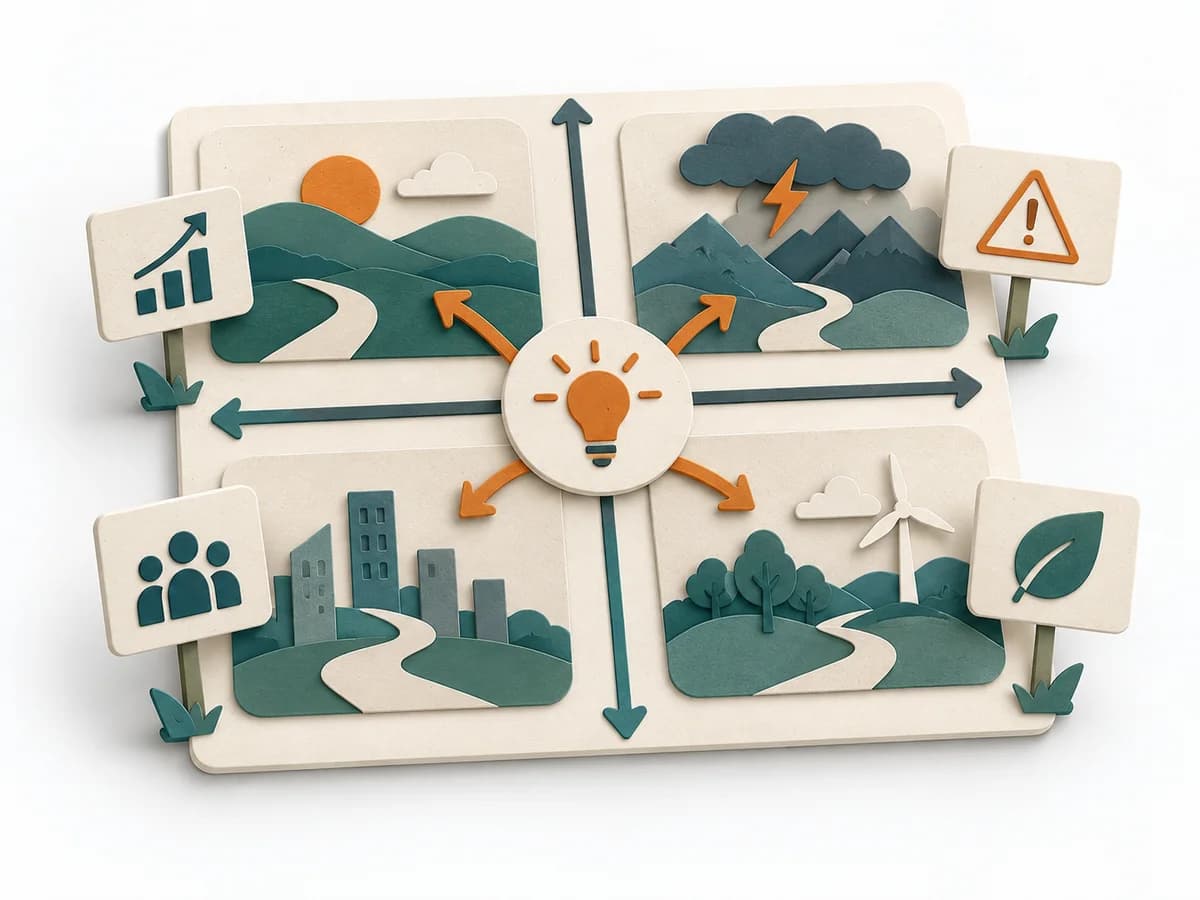 Business Strategy Scenario Planning | 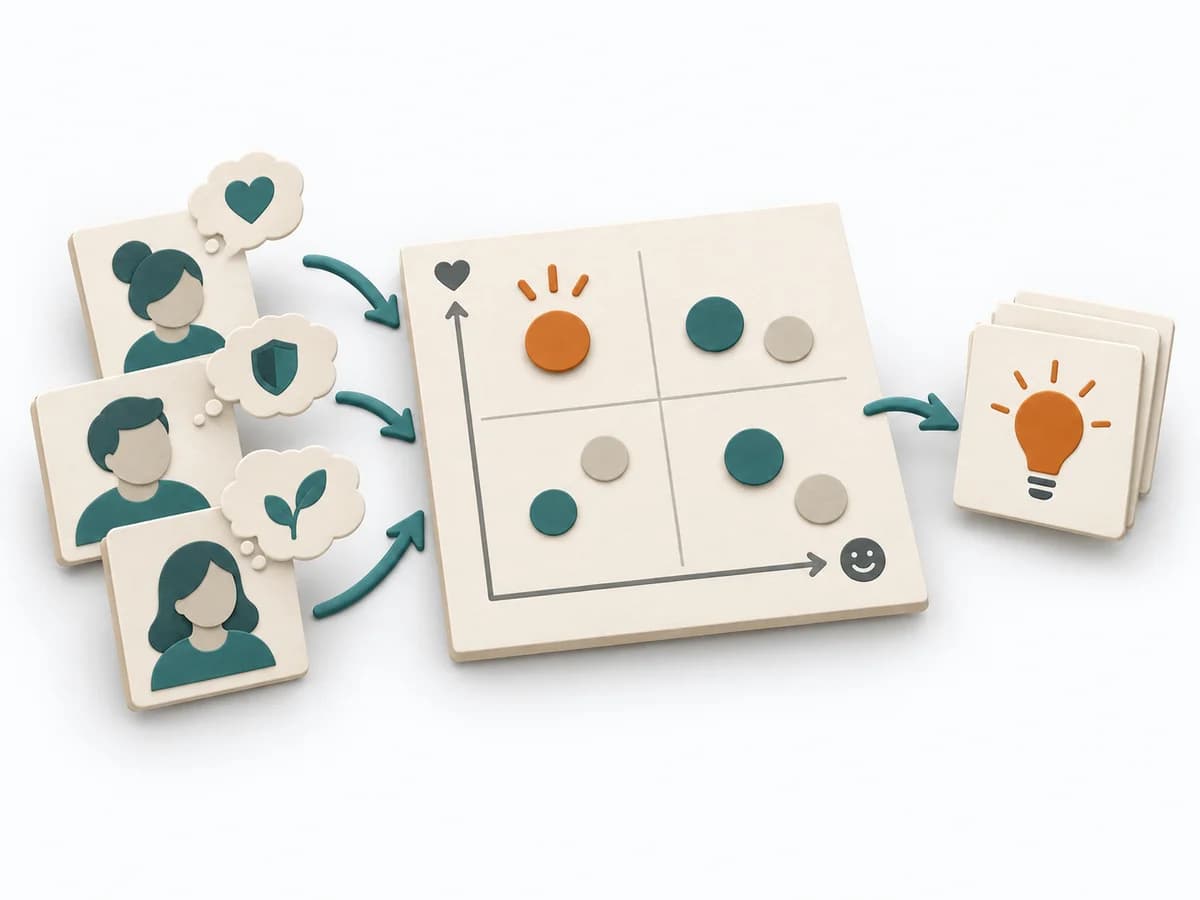 Product Discovery Outcome-Driven Innovation | 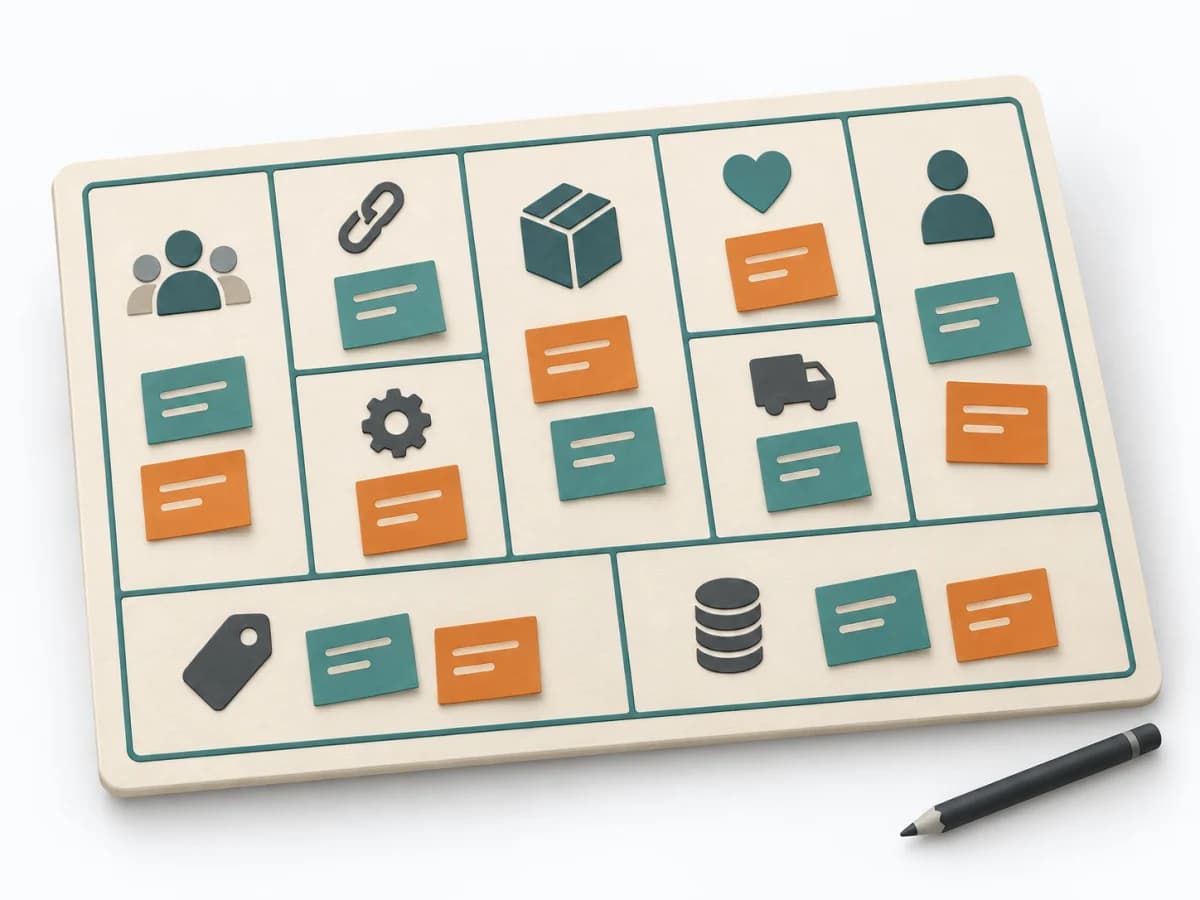 Business Strategy Business Model Canvas | 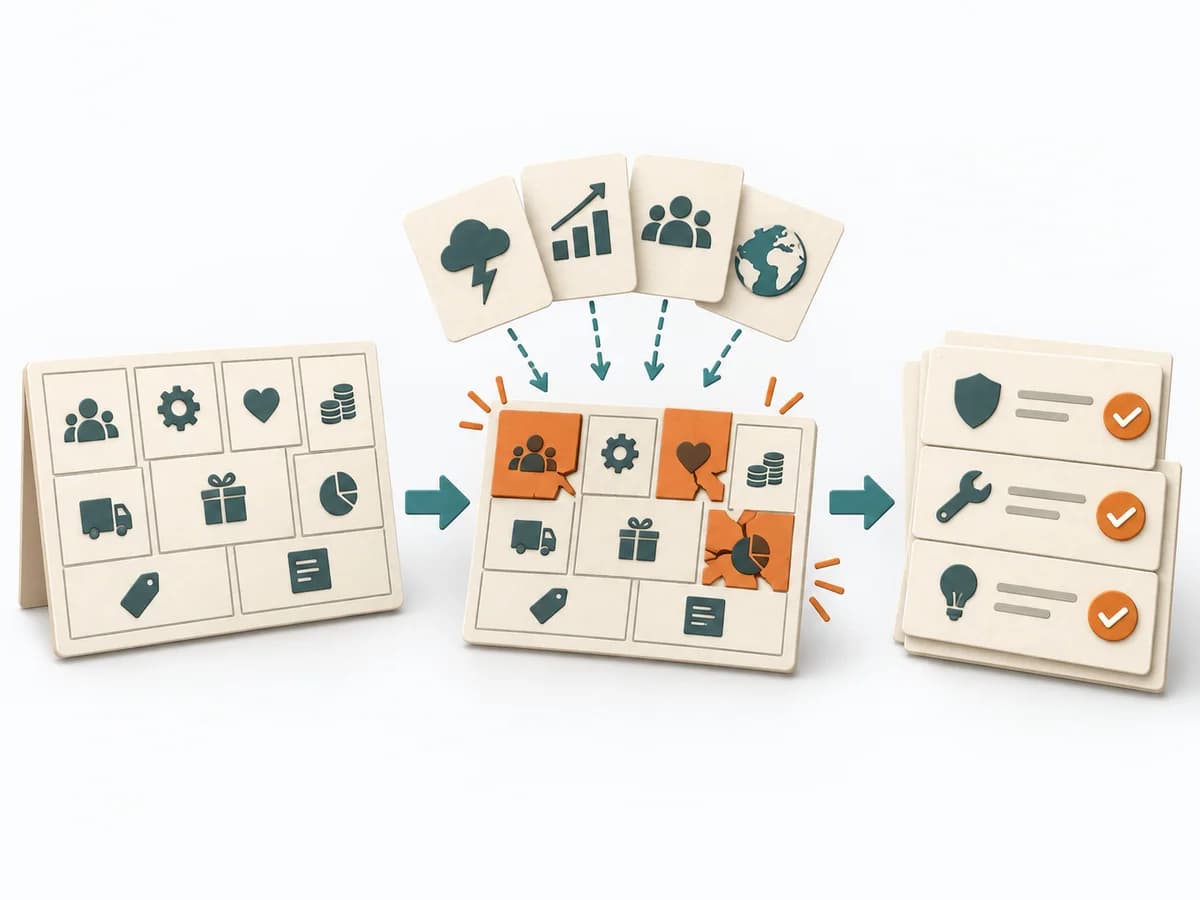 Business Strategy Business Model Stress Test |
|---|---|---|---|---|
Purposedifferent | Scenario Planning opens the view to several plausible futures instead of a single forecast. The method protects strategies from depending on too narrow an expected path. | Outcome-Driven Innovation clarifies customer problems, solution opportunities, and evidence. It separates jobs, desired outcomes, importance, satisfaction, and opportunity, and captures results as desired outcome statements, an opportunity landscape, and segments by underserved needs. | The Business Model Canvas condenses a business model to its key building blocks and assumptions. It makes variants quickly comparable and reveals gaps before validation or implementation begins. | A Business Model Stress Test checks how well a business model holds up under pressure and headwinds. It compares strengths, risks, market logic, and courses of action. The result is captured as a stress-test report and action plan per scenario. |
Complexitydifferent | High | High | Medium | High |
Timedifferent | 0.5-2 Tage | Mehrere Wochen | 1-2 h | Half day |
Participantsdifferent | 4-12 | 2-6 researchers plus sample | 2-8 | 3-8 |
Formatdifferent | Workshop | Workshop + async | Workshop + async | Workshop |
Outputdifferent | Scenario Set, Strategic Implications, Robust Options | Desired outcome statements, Opportunity landscape, Segmentation by underserved needs, Innovation hypotheses | Business Model Canvas, Assumption List, Business Hypotheses | Stress Test Report, Action Plan per Scenario |
Tagsno overlap | StrategyUncertaintyPlanning | OutcomesInnovationResearchQuantitative | Business modelStrategyValueInnovation | StrategyBusiness modelRiskDiagnosis |