View methods side by side.
Choose up to four methods. Add them using the search and share the comparison by copying its link.
| Criterion |  Business Strategy Scenario Planning | 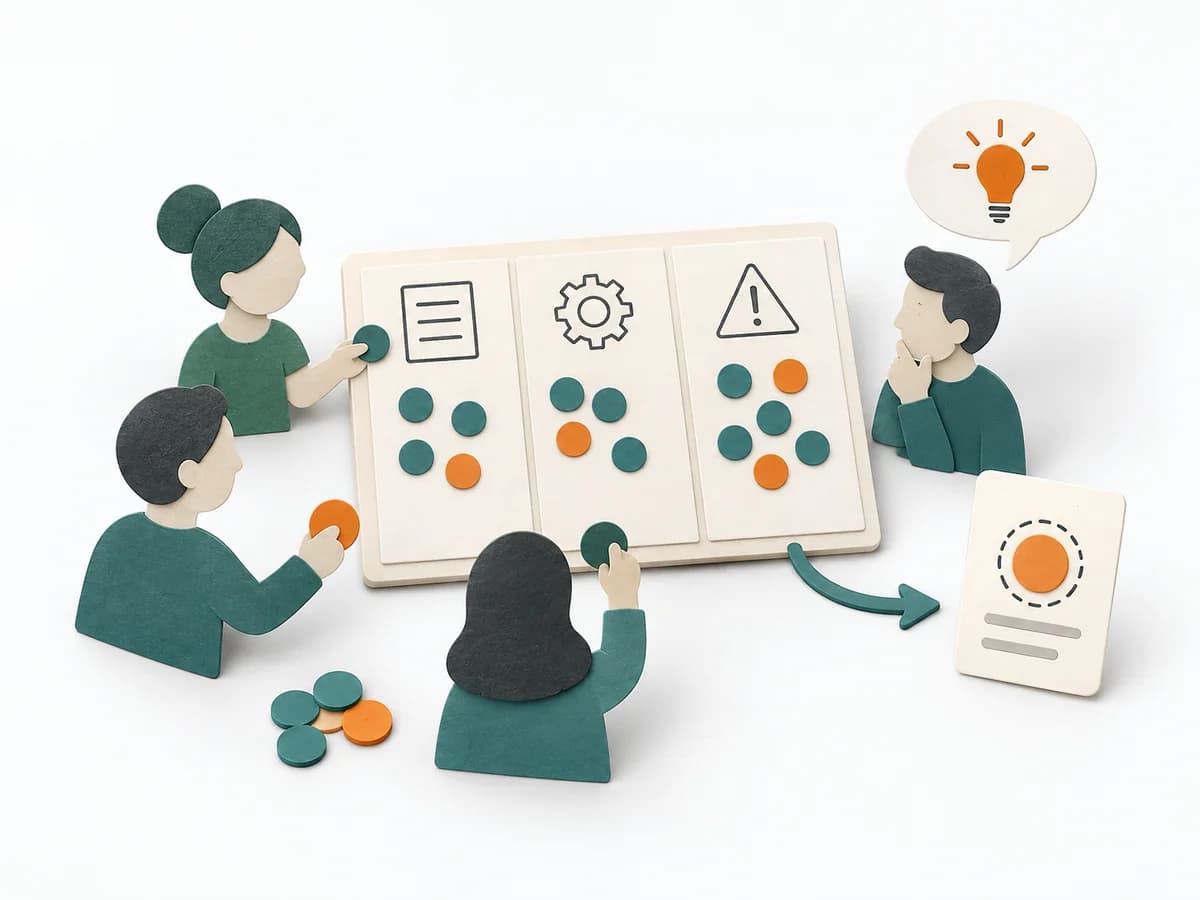 Facilitation Dot Estimation | 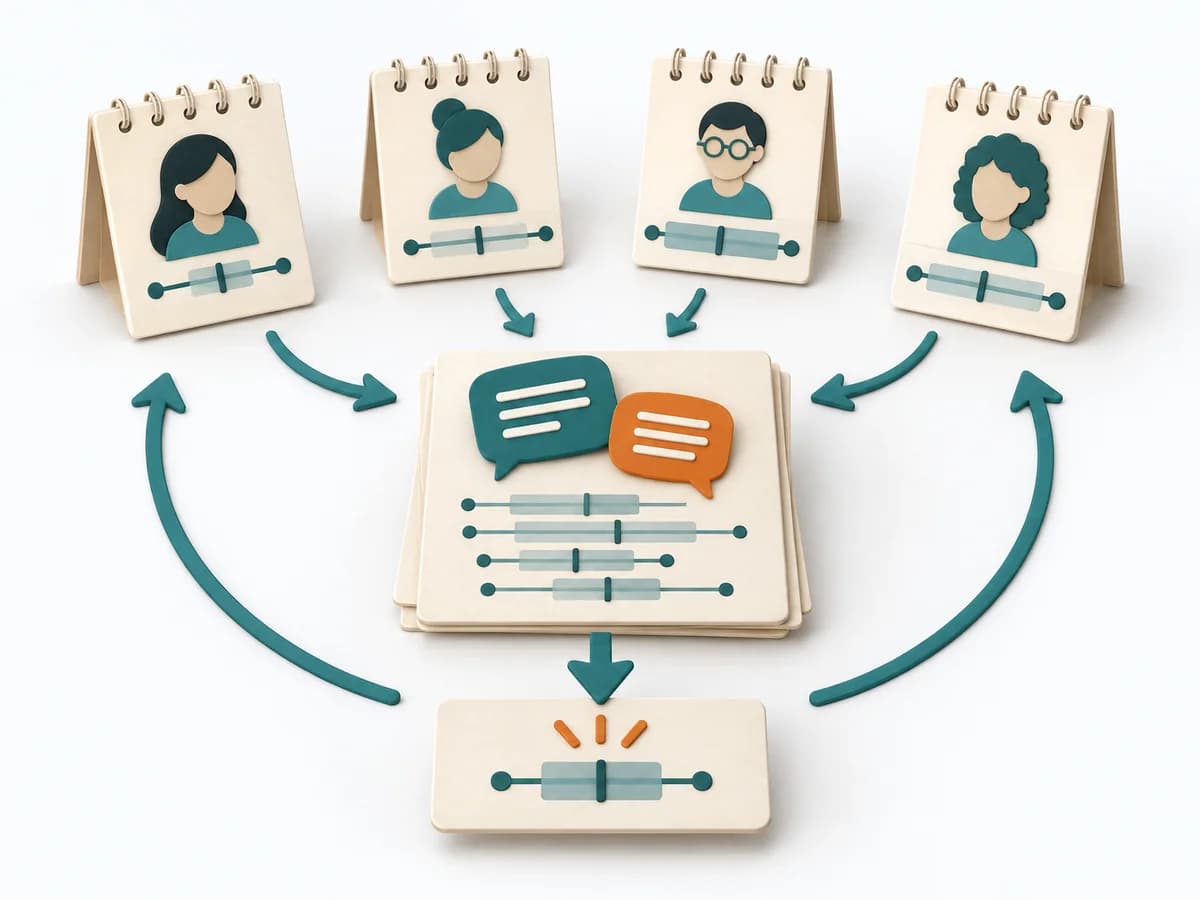 Decision Making Wideband Delphi | 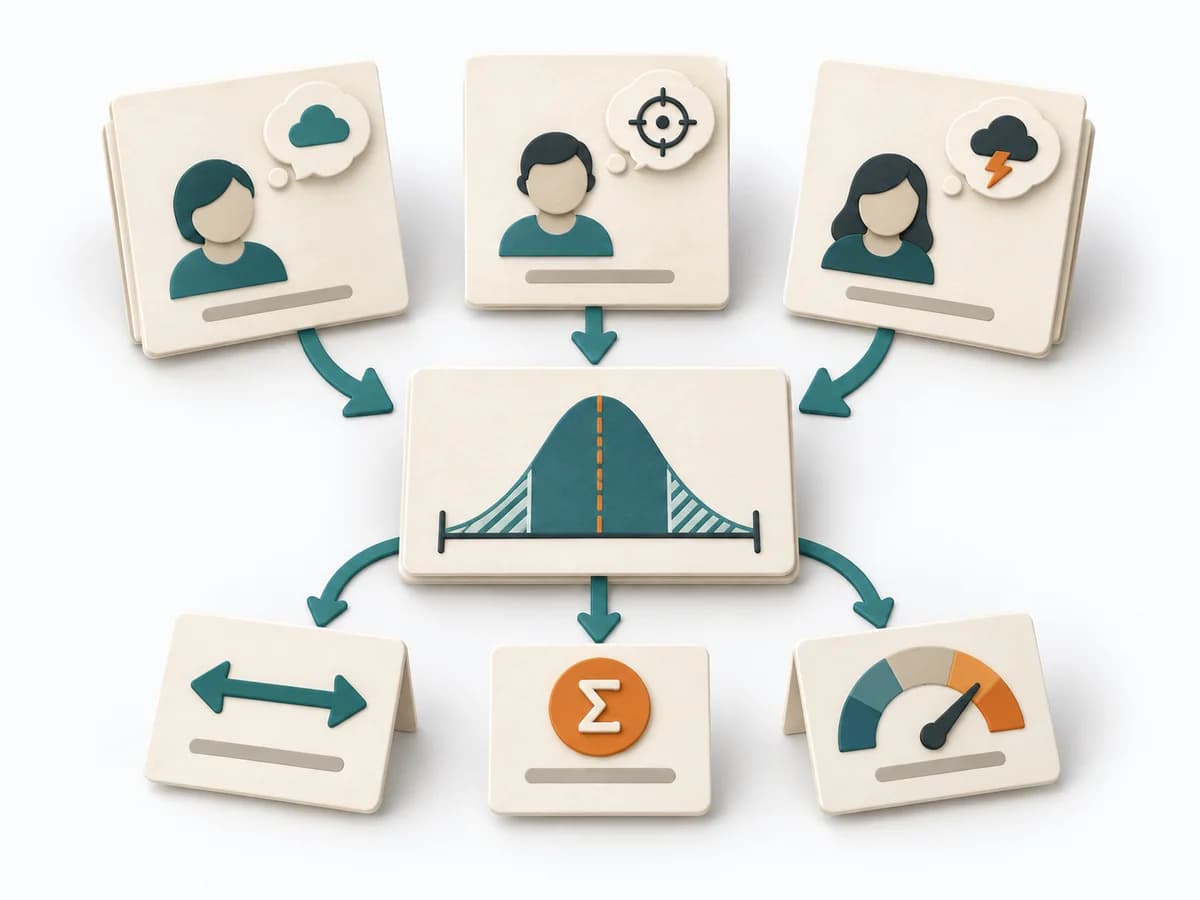 Decision Making Three-Point Estimation |
|---|---|---|---|---|
Purposedifferent | Scenario Planning opens the view to several plausible futures instead of a single forecast. The method protects strategies from depending on too narrow an expected path. | When size or effort can only be estimated roughly, Dot Estimation condenses the group's experience into a quick range. It turns individual contributions into a visible selection. The result is captured as an Effort Heatmap, Risk Signals, and Discussion Targets. | A single opinion rarely holds up for planning when the future is genuinely uncertain. It separates options, evaluation criteria, and open risks. The result is captured as an Estimate Range, Assumption Log, and Expert Consensus Notes. | A single estimate for effort, time, or risk often looks too smooth for the real uncertainty behind it. It separates options, evaluation criteria, and open risks. The result is captured as a Three-Point Estimate, Risk Range, and Assumption Notes. |
Complexitydifferent | High | Low | High | Medium |
Timedifferent | 0.5-2 Tage | 5-20 min | 1-4 h or multiple rounds | 10-30 min je Item |
Participantsdifferent | 4-12 | 3-20 | 4-12 Experten | 1-8 |
Formatdifferent | Workshop | Workshop | Workshop + async | Workshop + async |
Outputdifferent | Scenario Set, Strategic Implications, Robust Options | Effort Heatmap, Risk Signals, Discussion Targets | Estimate Range, Assumption Log, Expert Consensus Notes | Three-Point Estimate, Risk Range, Assumption Notes |
Tagsno overlap | StrategyUncertaintyPlanning | EstimationEffortRisk | EstimationExpertsForecasting | EstimationUncertaintyForecasting |