View methods side by side.
Choose up to four methods. Add them using the search and share the comparison by copying its link.
| Criterion | 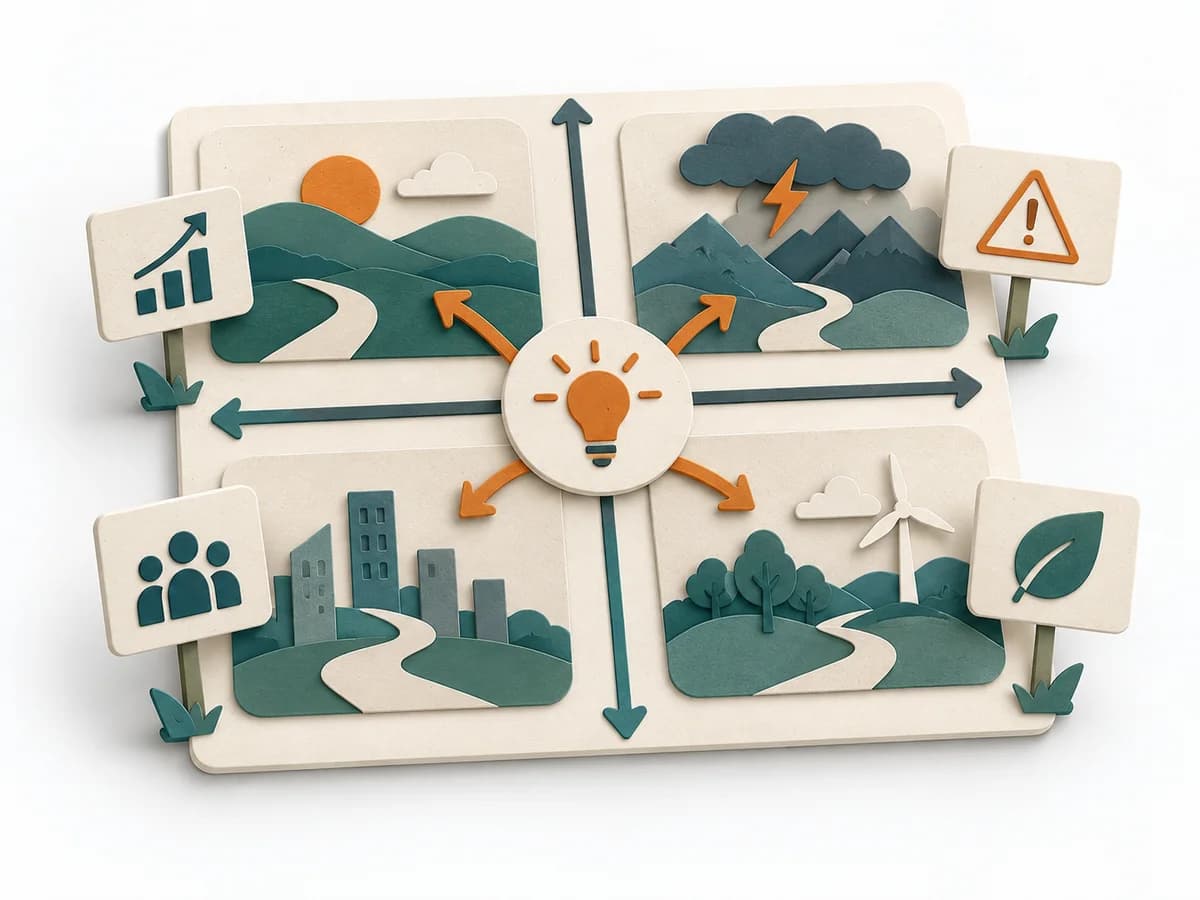 Business Strategy Scenario Planning | 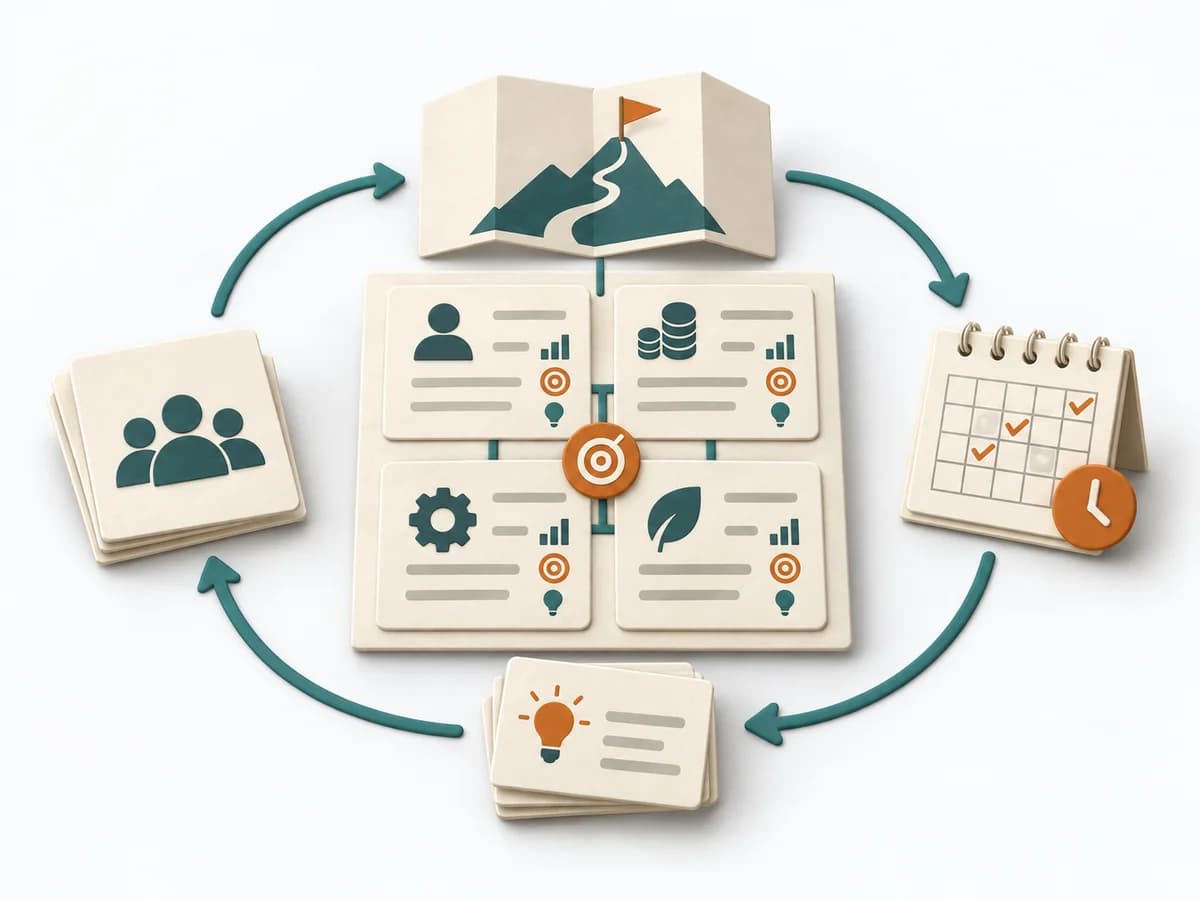 Business Strategy Balanced Scorecard | 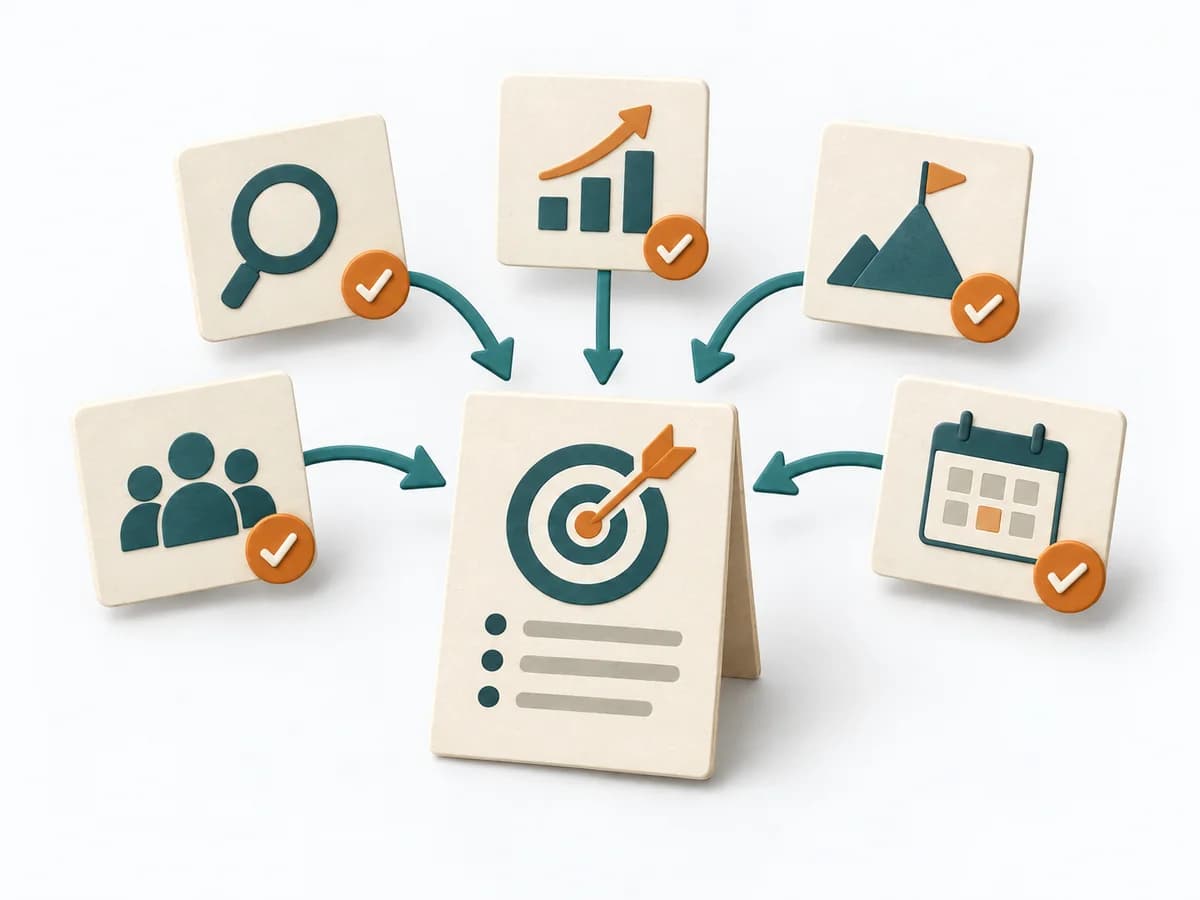 Product Strategy SMART Goals | 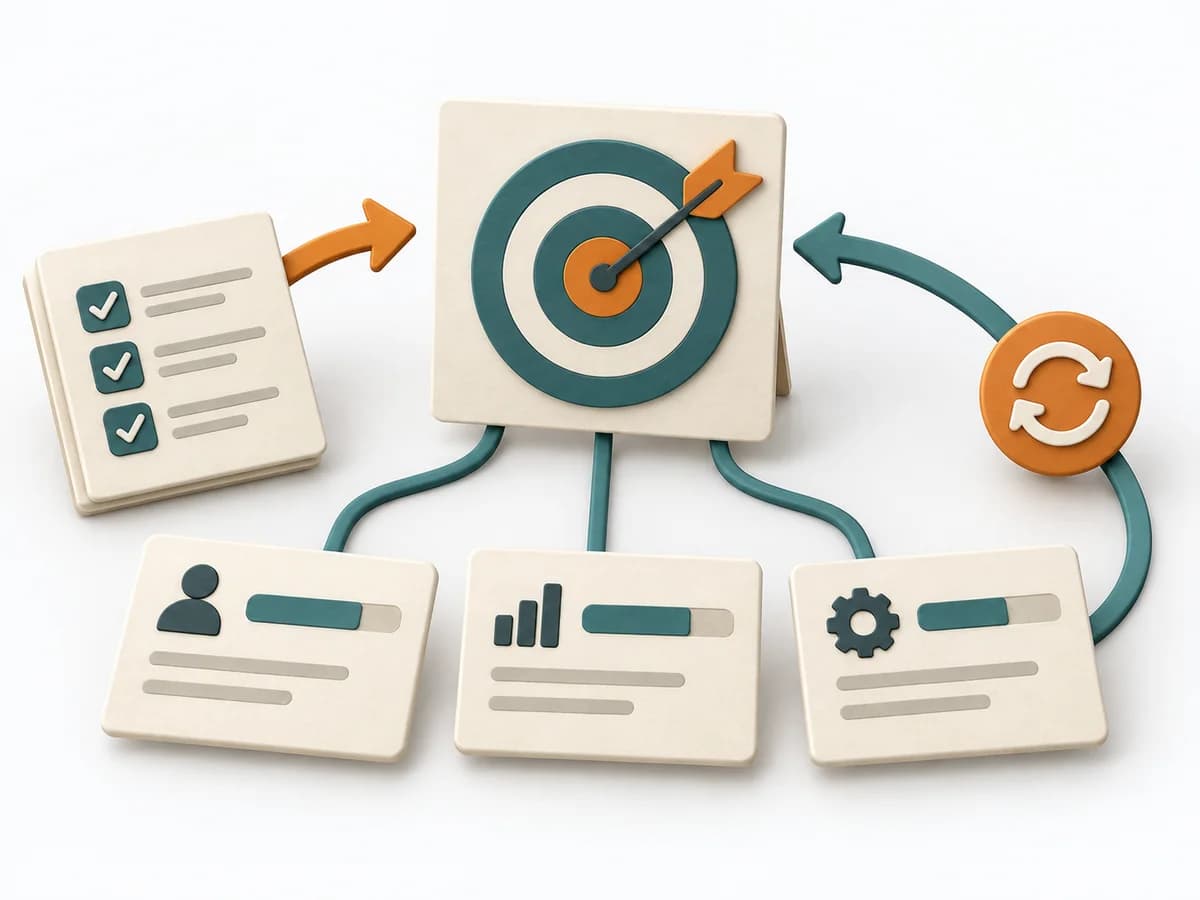 Product Strategy OKRs |
|---|---|---|---|---|
Purposedifferent | Scenario Planning opens the view to several plausible futures instead of a single forecast. The method protects strategies from depending on too narrow an expected path. | Balanced Scorecard translates strategy into a few interconnected perspectives and metrics. It holds impact, steering, and learning together in daily work instead of narrowing strategy down to financial figures. | When goals are formulated too generally, it brings measurability, direction, and timing into shape. It prevents intentions from staying without clear verification. | When strategic direction needs to become measurable, it connects ambition with checkable results. It makes goals connectable to focus and review. |
Complexitydifferent | High | High | Low | Medium |
Timedifferent | 0.5-2 Tage | Halber Tag bis mehrere Wochen | 15-30 min | 1-2 h Setup |
Participantsdifferent | 4-12 | 4-12 | 1-8 | 2-20 |
Formatdifferent | Workshop | Workshop + async | Workshop + async | Workshop + async |
Outputdifferent | Scenario Set, Strategic Implications, Robust Options | Balanced Scorecard, Strategic Measures, Initiative Map | SMART Goal, Measurement Note, Deadline | OKR set, Measurement plan, Review cadence |
Tagsno overlap | StrategyUncertaintyPlanning | StrategyMetricsExecution | GoalsPlanningMeasurementAlignment | GoalsAlignmentOutcomesMeasurement |