View methods side by side.
Choose up to four methods. Add them using the search and share the comparison by copying its link.
| Criterion | 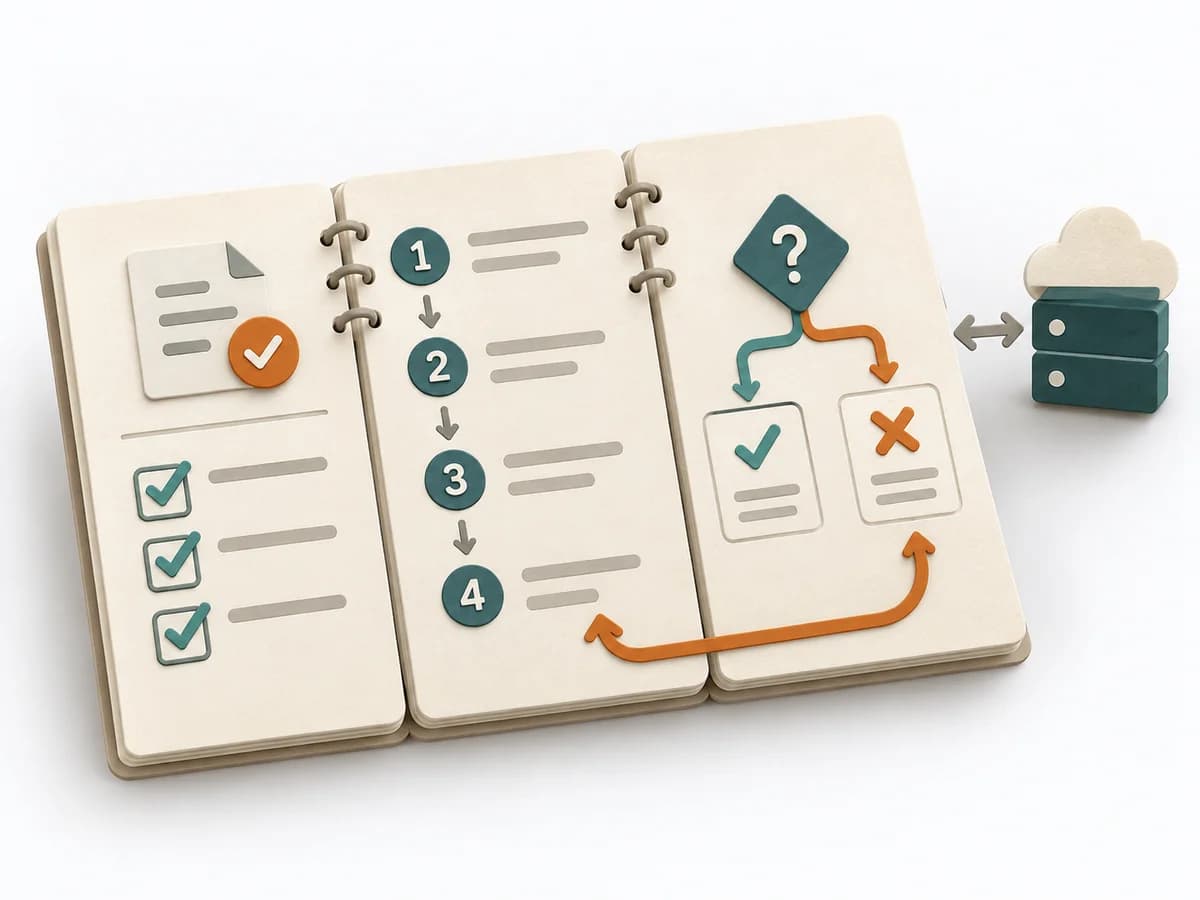 Operations Runbook |  Decision Making Decision Tree | 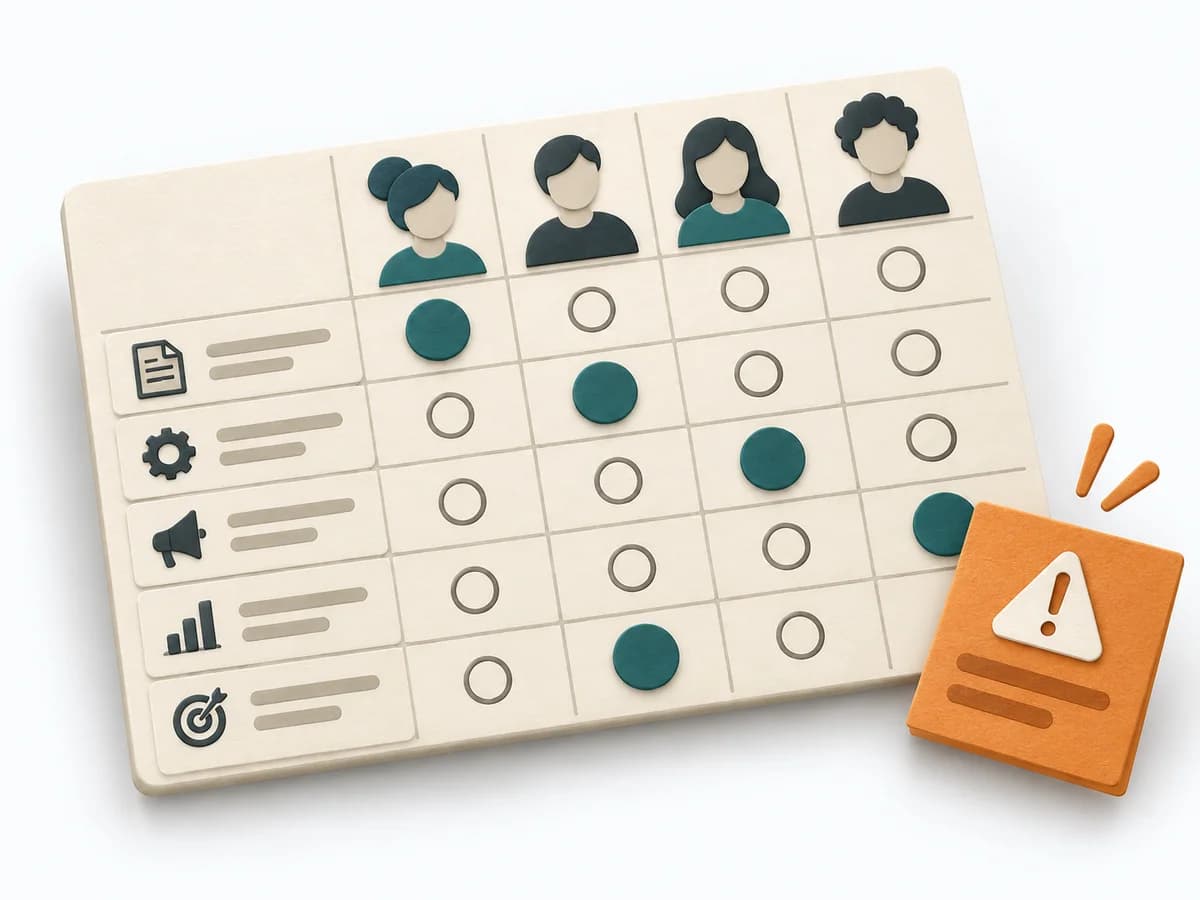 Operations RACI Matrix |  Architecture Architecture Decision Record |
|---|---|---|---|---|
Purposedifferent | For recurring operational tasks or incidents, the method keeps solid action logic ready. It reduces uncertainty when time pressure, role changes, or rare situations demand fast access. | For decisions with follow-on paths and dependencies, a linear comparison is often not enough. A Decision Tree shows how options branch under conditions and which consequences hang on each branch. | With unclear responsibilities across several roles or areas, the method creates unambiguous accountability logic. It reduces friction because decision, execution, contribution, and information become separately visible. | An ADR permanently records an architecture decision with context, trade-offs, and consequence. It creates continuity for later changes because the decision path stays traceable. |
Complexitydifferent | Low | Medium | Low | Low |
Timedifferent | 20-60 min | 30-90 min | 45-90 min | 15-45 min |
Participantsdifferent | 1-4 | 1-6 | 2-8 | 1-3 |
Formatdifferent | Async | Workshop + async | Workshop + async | Async |
Outputdifferent | Runbook, Checklist, Escalation Path | Decision Tree, Option Map, Assumption List | RACI Matrix, Responsibility Map, Decision Notes | ADR File, Decision Log, Rationale |
Tagsno overlap | OperationsReliabilityDocumentation | DecisionTreeOptions | RolesResponsibilityGovernanceOperations | ArchitectureRationaleDocumentationGovernance |