View methods side by side.
Choose up to four methods. Add them using the search and share the comparison by copying its link.
| Criterion | 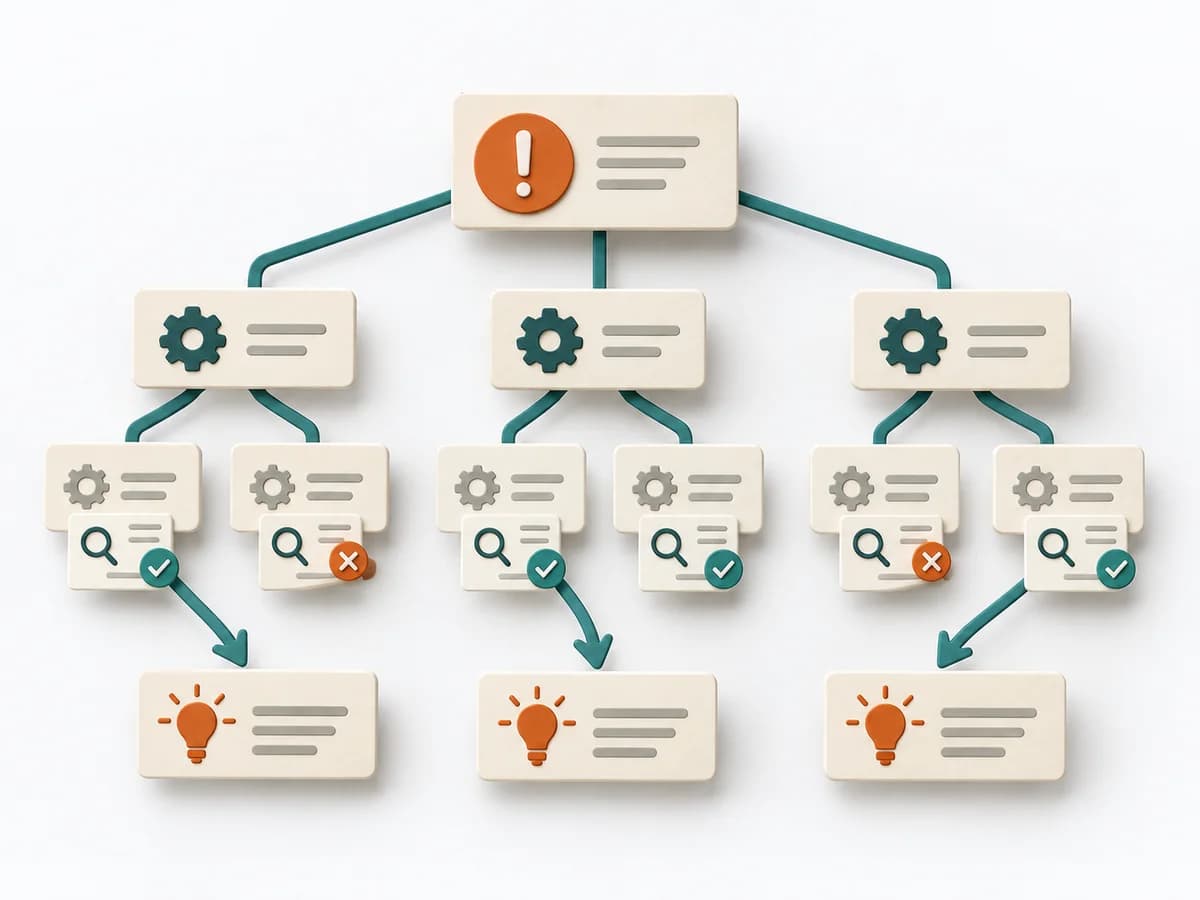 Operations Root Cause Tree Analysis |  Operations Failure Mode and Effects Analysis | 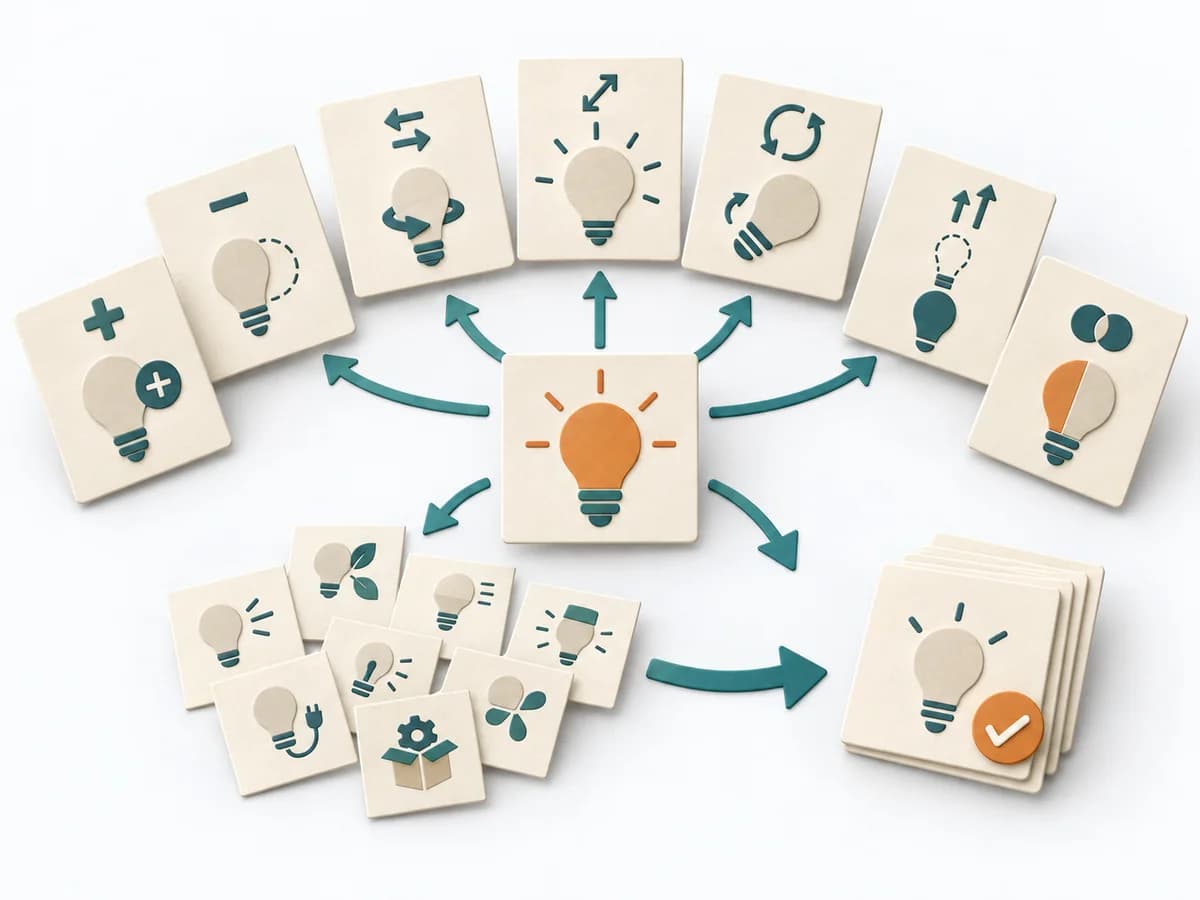 Innovation SCAMPER |  Innovation Reverse Brainstorming |
|---|---|---|---|---|
Purposedifferent | For a problem with several suspected causes, the method builds a causal structure instead of a mere list. It makes visible how causes connect and where the strongest points of leverage lie. | For a process, product, or service with noticeable failure risks, the method assesses possible failure modes in advance. It directs attention to combinations of occurrence, effect, and detectability. | For an existing solution under pressure to change, the method deliberately opens space for systematic variants. It directs attention to rebuilding, combining, and repurposing rather than only new basic ideas. This produces concrete evolution paths for products, offerings, or workflows. | For persistent errors or blockages, the method shifts the view to the opposite of the desired effect. It exposes the mechanics of failure and makes hidden causes easier to grasp. This makes improvement more concrete and the problem clearer. |
Complexitydifferent | Medium | High | Low | Low |
Timedifferent | 1-3 h | 2-6 h | 30-60 min | 30-60 min |
Participantsdifferent | 2-8 | 3-10 | 2-10 | 3-12 |
Formatsame | Workshop | Workshop | Workshop | Workshop |
Outputdifferent | Cause Tree, Evidence Notes, Countermeasures | FMEA Table, Risk Priority, Mitigation Actions | SCAMPER Idea List, Concept Shortlist, Variation Notes | Reverse Ideas, Risk Themes, Solution Ideas |
Tagsno overlap | Root causeTreeIncidentQuality | RiskQualityOperationsRoot cause | BrainstormingIdeationCreativityReframingInnovation | BrainstormingIdeationCreativityRisk |