View methods side by side.
Choose up to four methods. Add them using the search and share the comparison by copying its link.
| Criterion | 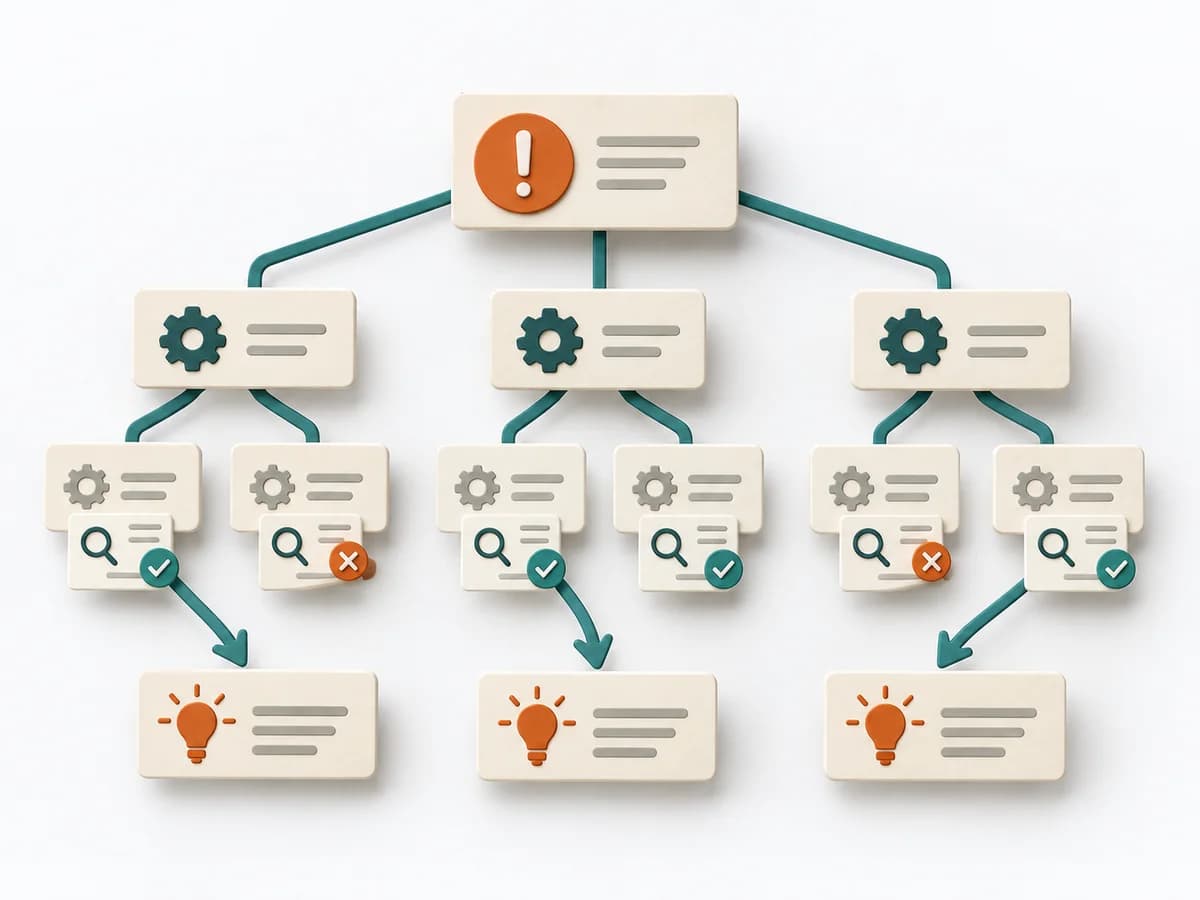 Operations Root Cause Tree Analysis |  Decision Making Eisenhower Matrix |  Decision Making Pareto Analysis |  Operations Barrier Analysis |
|---|---|---|---|---|
Purposedifferent | For a problem with several suspected causes, the method builds a causal structure instead of a mere list. It makes visible how causes connect and where the strongest points of leverage lie. | It separates true priorities from noise so it becomes clear what should be done now, scheduled, delegated, or dropped. | In many problem situations, effect is distributed unequally across many causes. A Pareto Analysis separates the few drivers with high leverage from the long remainder and focuses attention on what measurably moves the needle. | For a risk that can only be managed through multiple layers of protection, the method examines the effectiveness of each barrier. It shows where safeguards are missing, too weak, or fail under real conditions. |
Complexitydifferent | Medium | Low | Low | Medium |
Timedifferent | 1-3 h | 15-30 min | 30-60 min | 2-4 h |
Participantsdifferent | 2-8 | 1-6 | 1-6 | 2-6 |
Formatdifferent | Workshop | Workshop + async | Workshop + async | Workshop + async |
Outputdifferent | Cause Tree, Evidence Notes, Countermeasures | Eisenhower Matrix, Action List, Delegation Notes | Pareto Chart, Top Causes, Focus List | Barrier Inventory, Failure Analysis per Barrier, Action Backlog |
Tagsno overlap | Root causeTreeIncidentQuality | PrioritizationFocusTasks | PrioritizationQualityFocusRoot cause | Root causeSafetyIncident |