View methods side by side.
Choose up to four methods. Add them using the search and share the comparison by copying its link.
| Criterion | 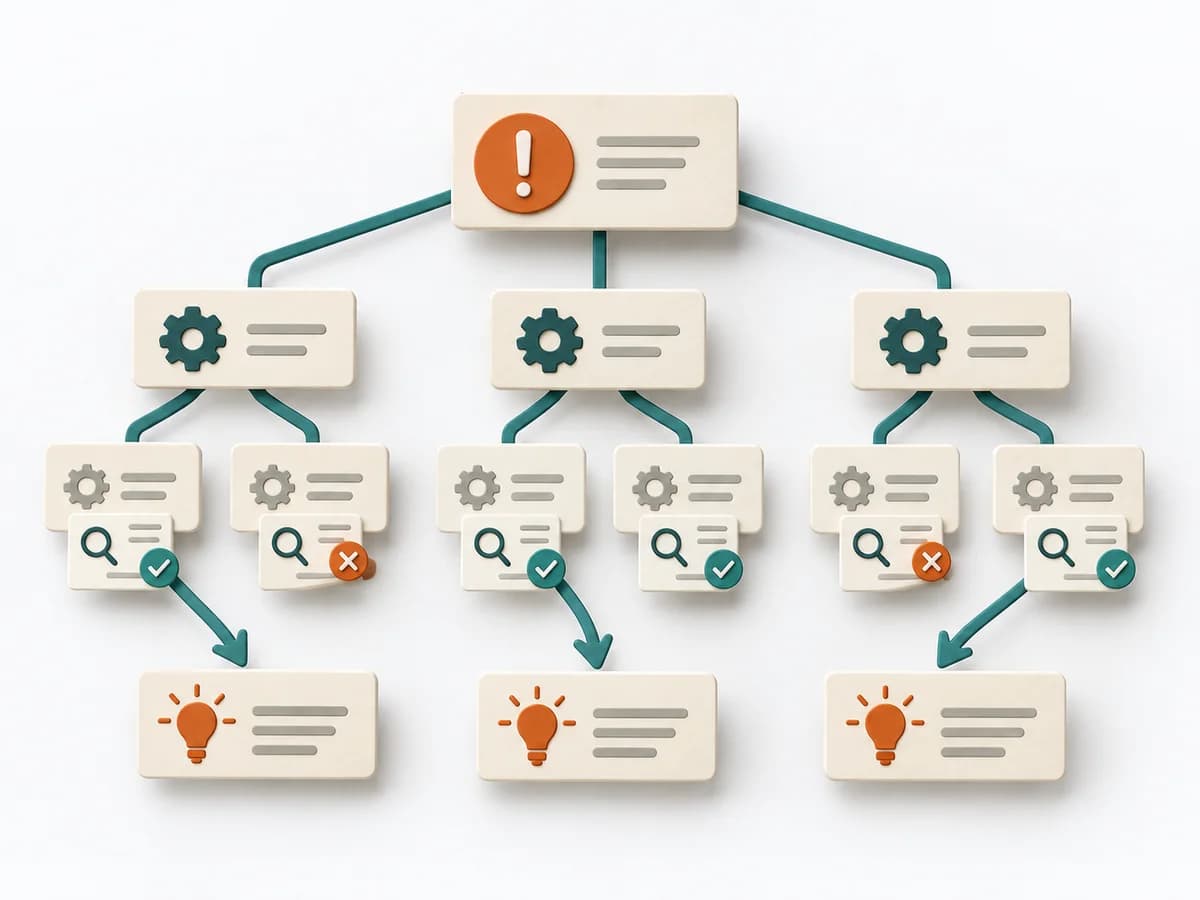 Operations Root Cause Tree Analysis |  Operations 5 Whys |  Innovation Lotus Blossom |  Operations 8D Problem Solving |
|---|---|---|---|---|
Purposedifferent | For a problem with several suspected causes, the method builds a causal structure instead of a mere list. It makes visible how causes connect and where the strongest points of leverage lie. | For a single, hard-to-explain deviation, the method exposes the causal chain behind the visible symptom. It keeps the cause open until a controllable condition emerges instead of a mere description. | When a central question feels too large, the method breaks it into neighboring topic fields with their own depth of ideation. It holds structure and openness at the same time, so adjacent perspectives don't get lost. This grows an idea space out of a core problem. | For an acute quality or delivery problem, the method structures immediate protection and root cause work together. It keeps the situation stable while the actual cause is investigated cleanly. |
Complexitydifferent | Medium | Low | Low | High |
Timedifferent | 1-3 h | 15-30 min | 45-90 min | 1-6 Wochen |
Participantsdifferent | 2-8 | 2-6 | 3-10 | 4-10 |
Formatdifferent | Workshop | Workshop | Workshop | Workshop + async |
Outputdifferent | Cause Tree, Evidence Notes, Countermeasures | Root cause notes, Countermeasures | Lotus Diagram, Idea Themes, Shortlist | 8D Report, Containment Plan, Root Cause Evidence, Corrective Action Plan |
Tagsno overlap | Root causeTreeIncidentQuality | Root causeIncidentLeanProblem solving | BrainstormingIdeationCreativityDivergenceWorkshop | QualityProblem solvingRoot cause |