View methods side by side.
Choose up to four methods. Add them using the search and share the comparison by copying its link.
| Criterion |  Operations Root Cause Analysis | 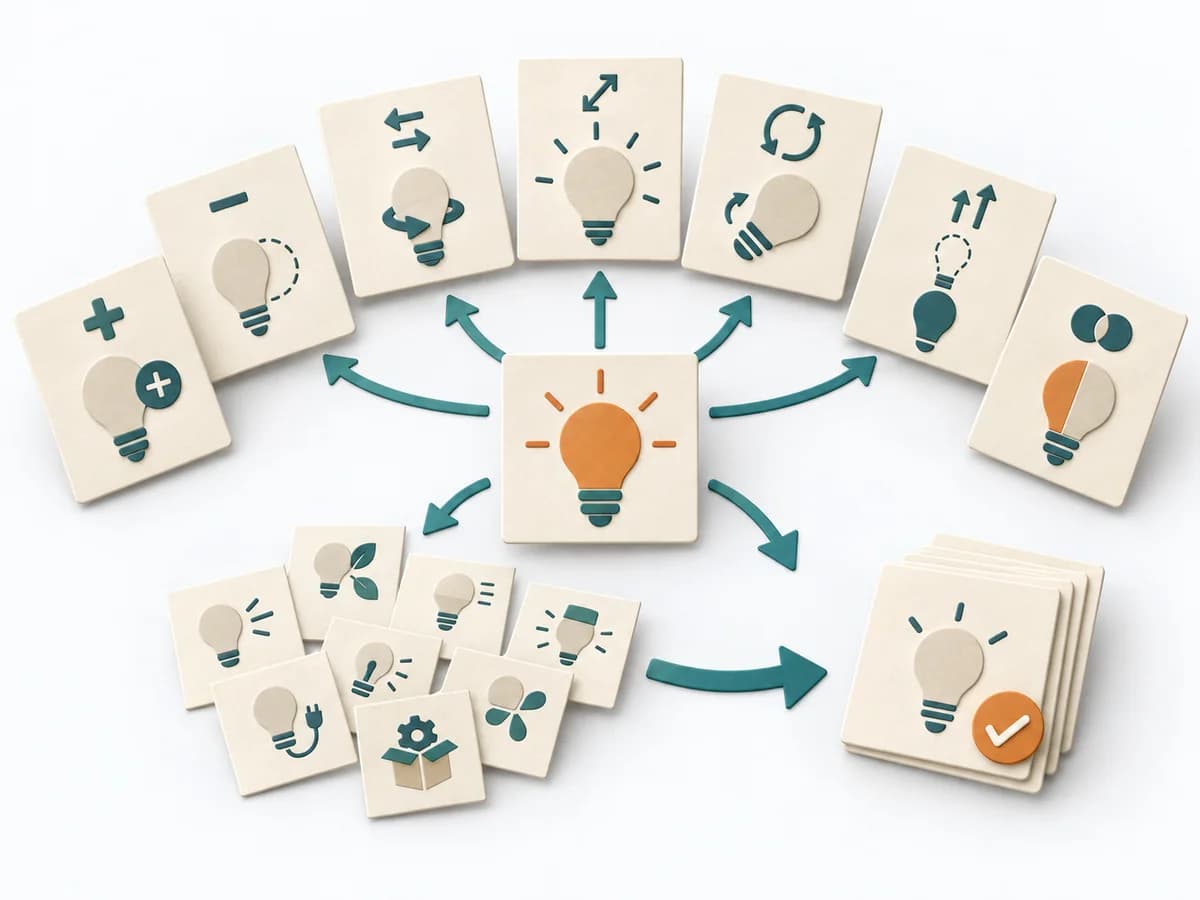 Innovation SCAMPER |  Innovation Design Charrette |  Operations 5 Whys |
|---|---|---|---|---|
Purposedifferent | When a problem keeps recurring and the cause stays unclear, the method exposes the underlying mechanism. It separates symptom, guess, and robust explanation from one another. | For an existing solution under pressure to change, the method deliberately opens space for systematic variants. It directs attention to rebuilding, combining, and repurposing rather than only new basic ideas. This produces concrete evolution paths for products, offerings, or workflows. | In a tightly timed design process with many participants, the method pools several lines of thinking in a short time. It brings parallel design energy without letting the discussion tip into endless coordination. This quickly produces solid directions for architecture or space. | For a single, hard-to-explain deviation, the method exposes the causal chain behind the visible symptom. It keeps the cause open until a controllable condition emerges instead of a mere description. |
Complexitydifferent | Medium | Low | Medium | Low |
Timedifferent | 1-4 h | 30-60 min | Halber Tag bis mehrere Tage | 15-30 min |
Participantsdifferent | 3-8 | 2-10 | 10-50 | 2-6 |
Formatdifferent | Workshop + async | Workshop | Workshop | Workshop |
Outputdifferent | Problem Statement, Cause Hypotheses, Confirmed Causes, Action Plan | SCAMPER Idea List, Concept Shortlist, Variation Notes | Sketches and Concepts, Consolidated Solution Sketch, Prioritized Direction | Root cause notes, Countermeasures |
Tagsno overlap | Root causeProblem solvingQualityIncident | BrainstormingIdeationCreativityReframingInnovation | BrainstormingWorkshopCollaborationIdeation | Root causeIncidentLeanProblem solving |