View methods side by side.
Choose up to four methods. Add them using the search and share the comparison by copying its link.
| Criterion | 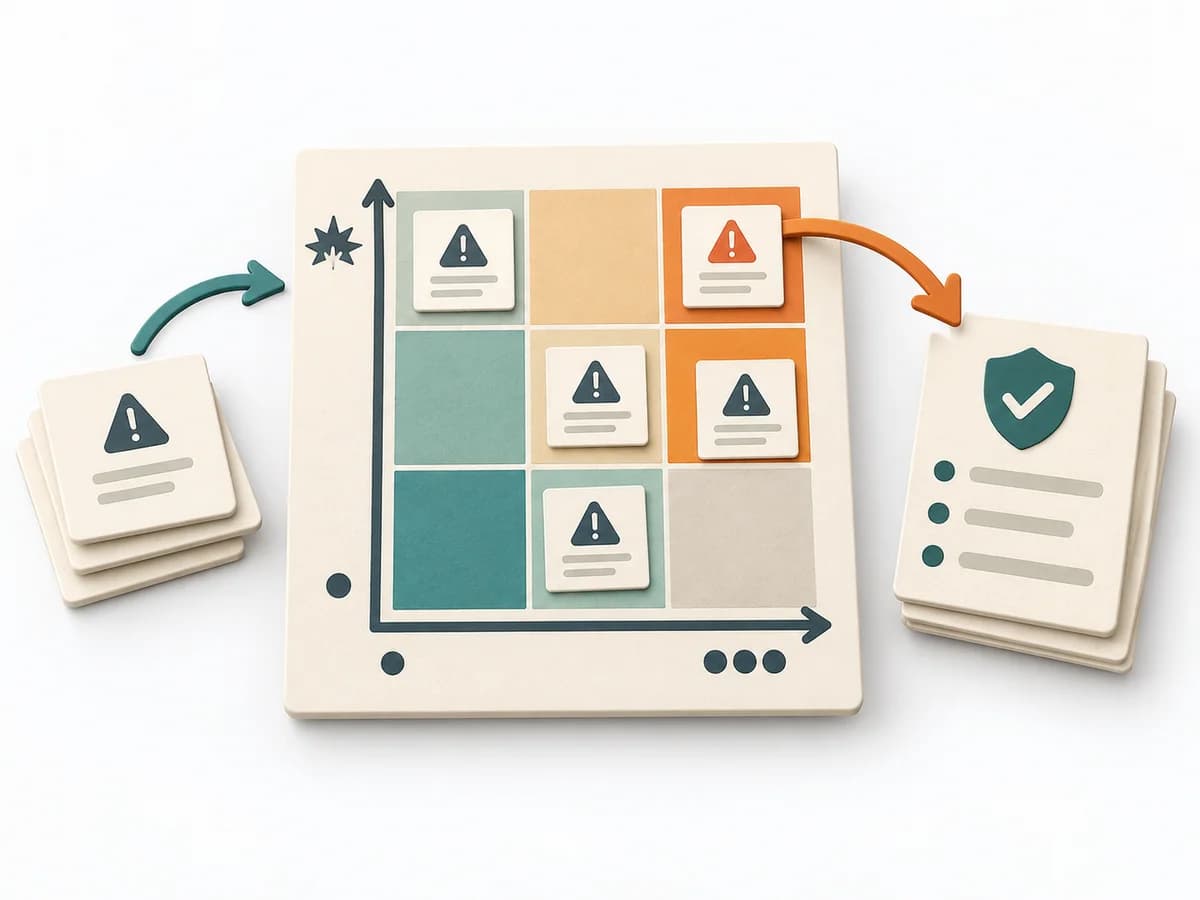 Decision Making Risk Matrix |  Knowledge Modeling IBIS | 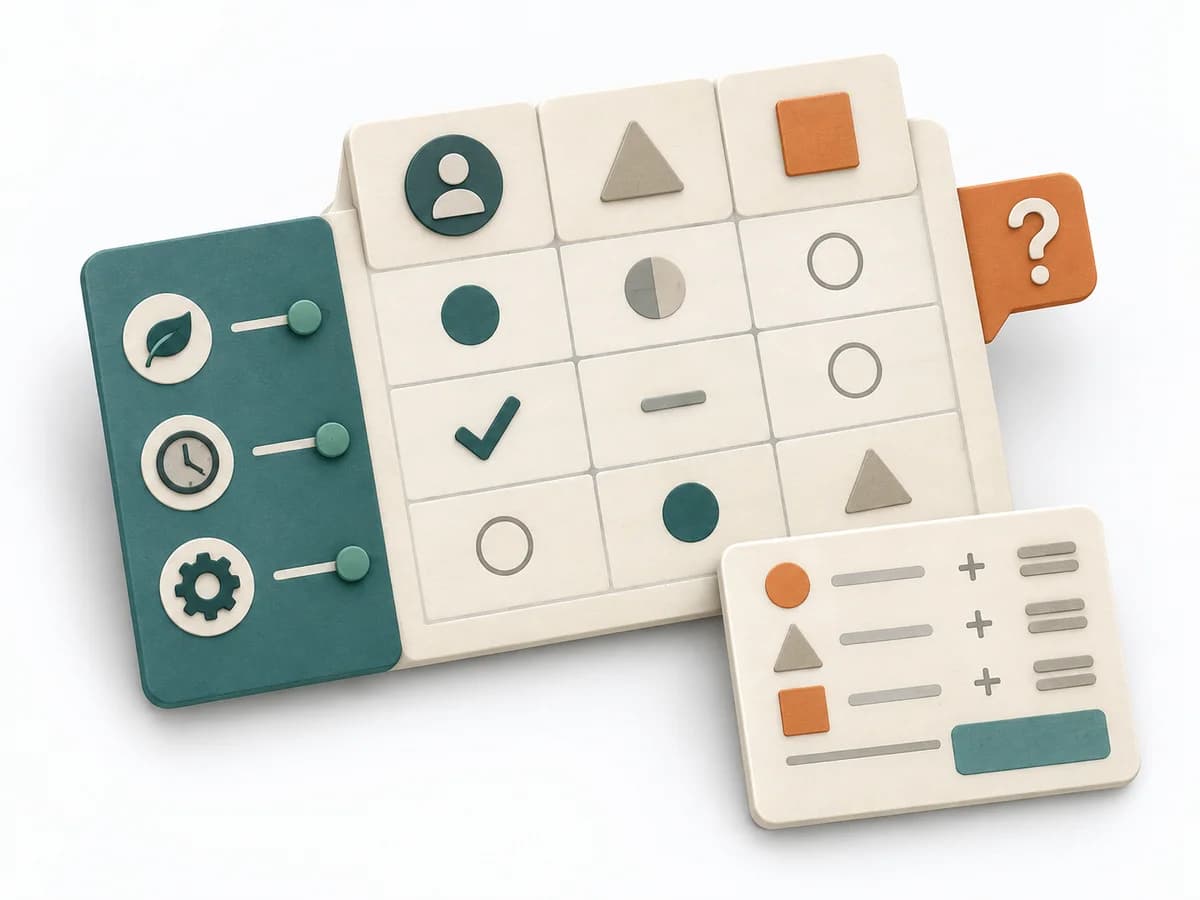 Decision Making Decision Matrix |  Product Strategy RICE Scoring |
|---|---|---|---|---|
Purposedifferent | When a project faces many possible disruptions, it quickly becomes unclear which risks deserve attention first. It separates options, evaluation criteria, and open risks. The result is captured as a Risk Matrix and a Top Risk List. | IBIS structures thinking about complex questions as a sequence of issues, ideas, and arguments. The method keeps discussions open without forcing them into premature consensus. | When several options collide with several criteria, comparison quickly becomes subjective. A Decision Matrix makes the trade-off visible and brings weighting, criteria, and options into a shared logic. | When many initiatives compete for the same resources, it brings reach, impact, confidence, and effort into one shared ranking. It makes prioritization economically connectable. |
Complexitydifferent | Low | Medium | Medium | Medium |
Timedifferent | 30-60 min | 1-3 h | 45-90 min | 60-90 min |
Participantsdifferent | 3-10 | 2-8 | 2-8 | 2-10 |
Formatsame | Workshop + async | Workshop + async | Workshop + async | Workshop + async |
Outputdifferent | Risk Matrix, Top Risk List | Issue Map, Positions, Argument Notes | Decision Matrix, Scoring Rationale, Selected Option | RICE Scores, Ranked List, Assumption Log |
Tagsno overlap | RiskDecisionPrioritizationAssessment | RationaleKnowledgeDecision | DecisionCriteriaScoringTradeoffs | PrioritizationScoringRoadmapTradeoffs |