View methods side by side.
Choose up to four methods. Add them using the search and share the comparison by copying its link.
| Criterion |  Architecture Request for Comments | 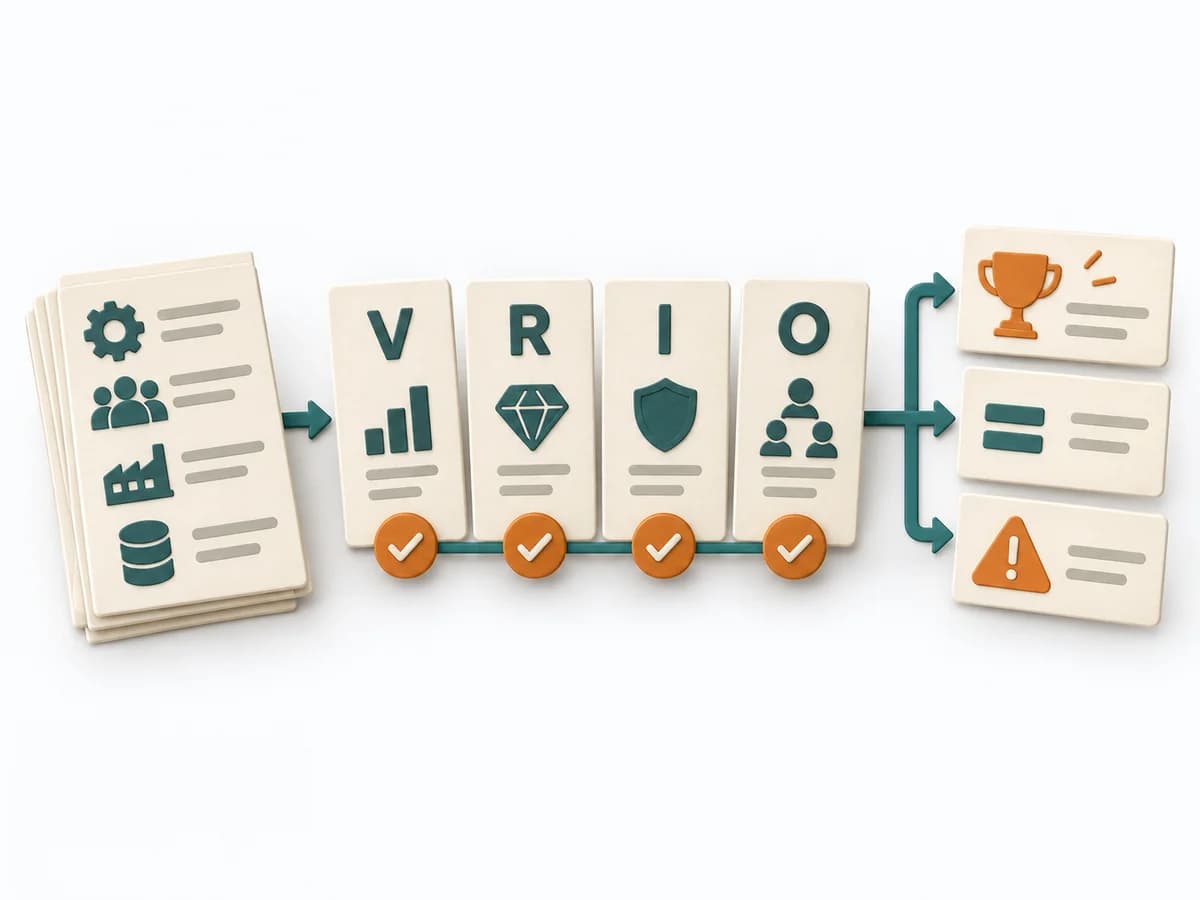 Business Strategy VRIO Framework |  Business Strategy Value Chain Analysis |  Architecture Architecture Decision Record |
|---|---|---|---|---|
Purposedifferent | An RFC clarifies architecture context, options, and consequences. It structures technical context, alternatives, tradeoffs, open questions, and review feedback, and captures the result as an RFC document, reviewer comments, and a decision rationale. | The VRIO Framework rates resources and capabilities on whether they are Valuable, Rare, Inimitable, and Organized. It compares strengths, risks, market logic, and courses of action. The result is captured as a VRIO table and strategic actions. | Value Chain Analysis shows where value is created, costs accrue, and differentiation becomes possible along the process. It compares strengths, risks, market logic, and courses of action. The result is captured as a value-chain map and lever list. | An ADR permanently records an architecture decision with context, trade-offs, and consequence. It creates continuity for later changes because the decision path stays traceable. |
Complexitydifferent | Medium | Medium | High | Low |
Timedifferent | 1-3 Wochen vom Draft bis zur Entscheidung | 90-180 min | Half day | 15-45 min |
Participantsdifferent | 3-20 Reviewer | 3-6 | 3-8 | 1-3 |
Formatdifferent | Async | Workshop | Workshop | Async |
Outputdifferent | RFC document, Reviewer comments, Decision rationale, Follow-up ADR or tickets | VRIO Table, Strategic Actions | Value Chain Map, Lever List | ADR File, Decision Log, Rationale |
Tagsno overlap | ArchitectureDecisionAsyncGovernance | StrategyDiagnosisBusiness modelCapability | StrategyBusiness modelDiagnosisAnalysis | ArchitectureRationaleDocumentationGovernance |