View methods side by side.
Choose up to four methods. Add them using the search and share the comparison by copying its link.
| Criterion | 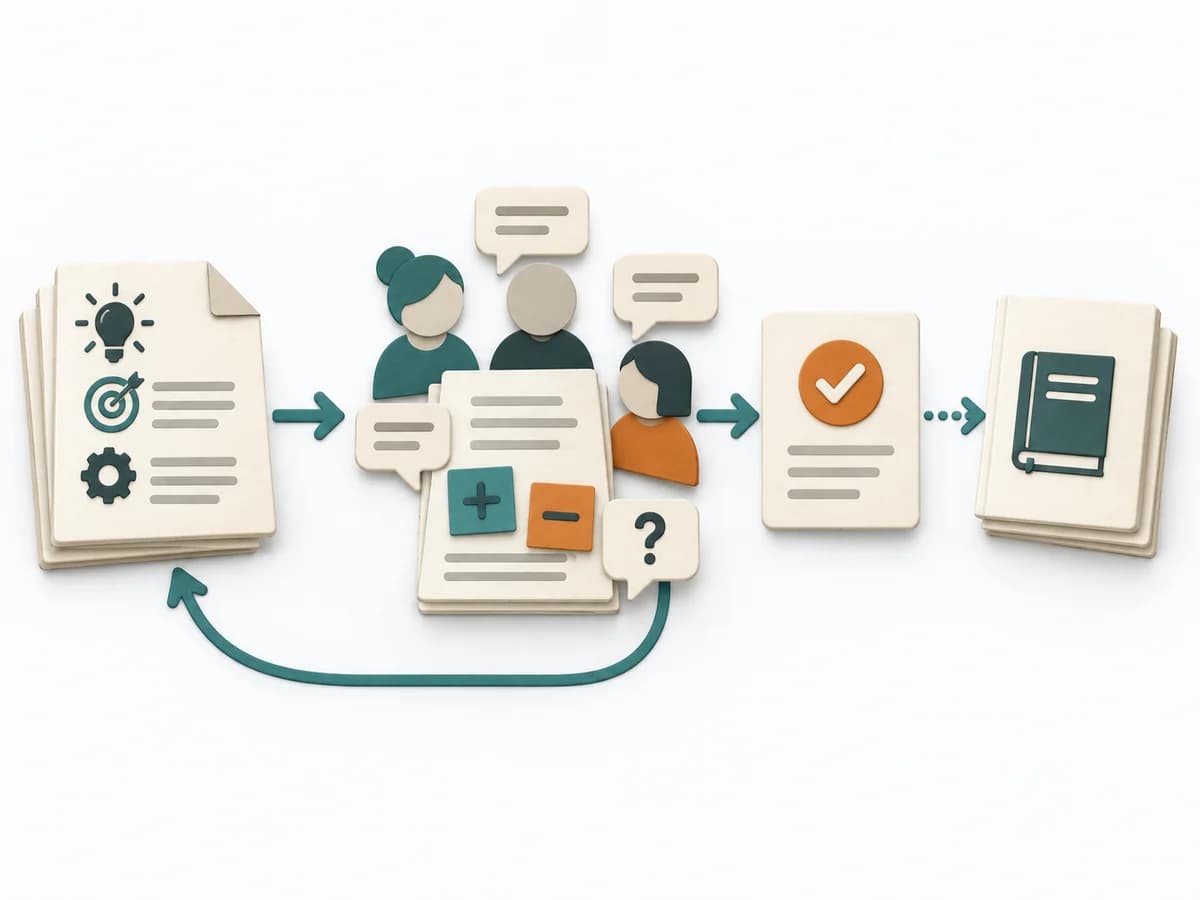 Architecture Request for Comments |  Product Discovery Smoke Test | 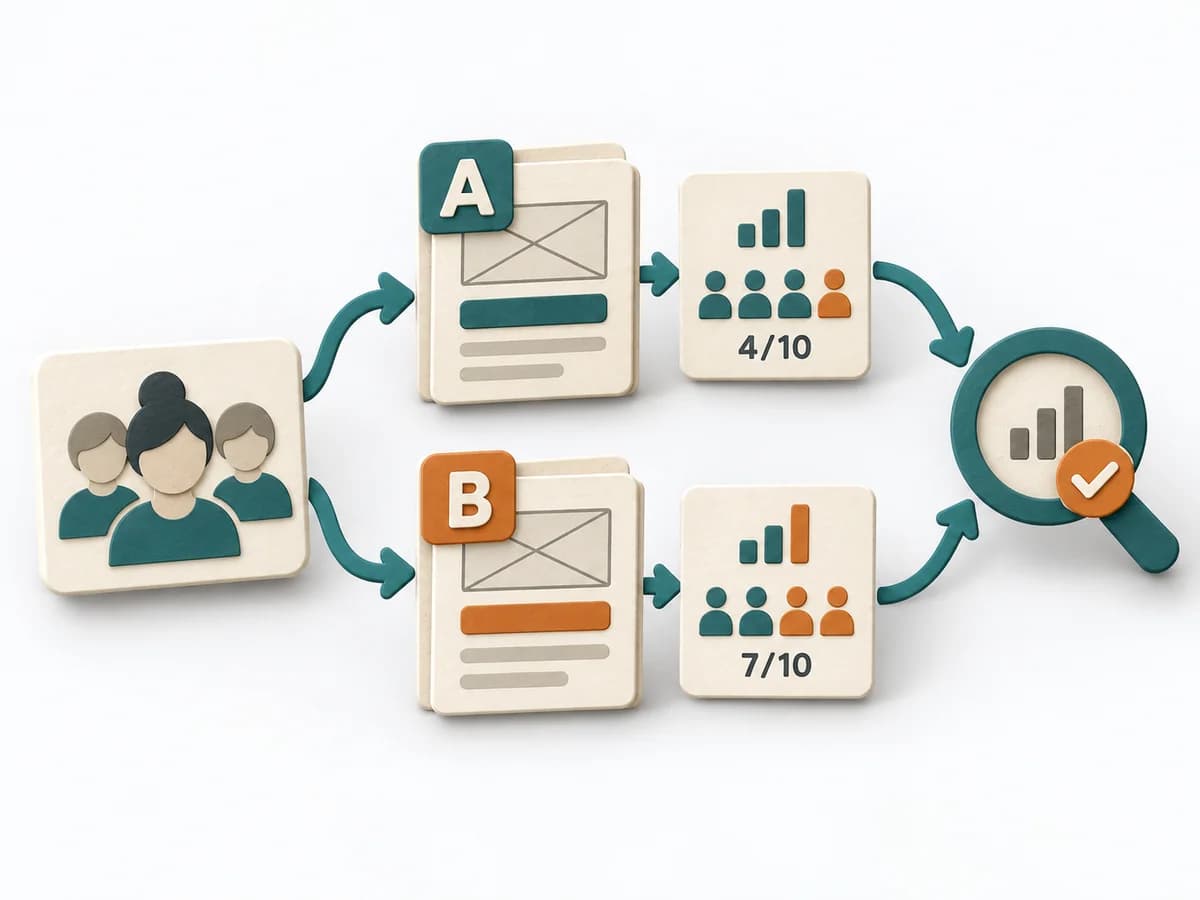 Growth A/B Testing |  Product Discovery Fake Door Test |
|---|---|---|---|---|
Purposedifferent | An RFC clarifies architecture context, options, and consequences. It structures technical context, alternatives, tradeoffs, open questions, and review feedback, and captures the result as an RFC document, reviewer comments, and a decision rationale. | When demand only needs to be roughly verified, it tests interest with minimal effort. It measures whether people would take a next step at all. | When two variants compete, discussions quickly decide by taste rather than effect. A/B Testing checks behavior under controlled conditions and separates real improvement from chance or expectation effects. | When demand is still unclear, it measures interest in a feature before it is built. It separates real behavior from polite agreement and deliberately keeps build effort small. |
Complexitydifferent | Medium | Low | High | Medium |
Timedifferent | 1-3 Wochen vom Draft bis zur Entscheidung | 1-5 Tage | 1-4 Wochen | 1-5 Tage |
Participantsdifferent | 3-20 Reviewer | Nutzertraffic | 1-6 | Nutzertraffic |
Formatsame | Async | Async | Async | Async |
Outputdifferent | RFC document, Reviewer comments, Decision rationale, Follow-up ADR or tickets | Interest Metrics, Conversion Signal, Learning Note | Experiment results, Decision log, Learning summary | Click Data, Interest Signal, Learning Decision |
Tagsno overlap | ArchitectureDecisionAsyncGovernance | ValidationExperimentsDemandGrowth | ExperimentsGrowthAnalyticsValidation | ValidationExperimentsDemandDiscovery |