View methods side by side.
Choose up to four methods. Add them using the search and share the comparison by copying its link.
| Criterion |  Architecture Request for Comments | 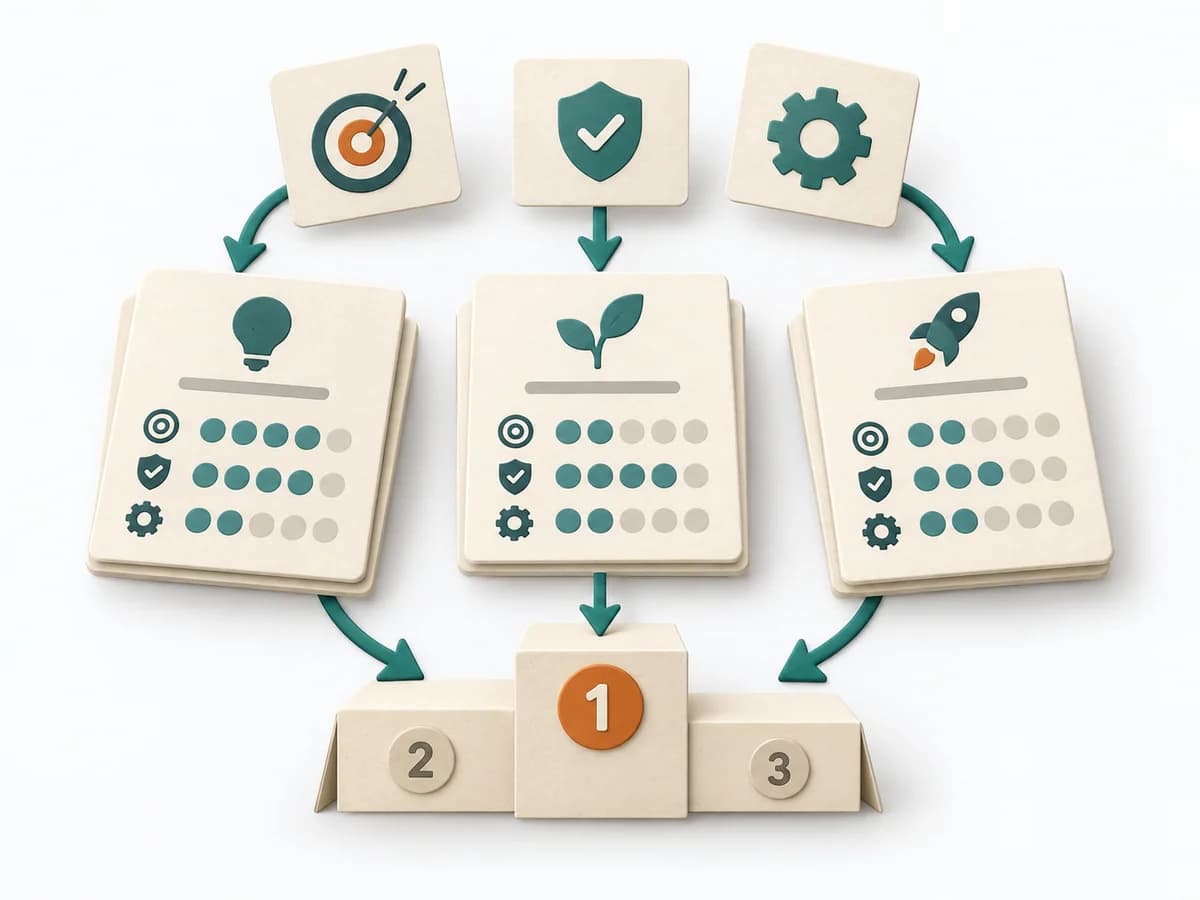 Product Strategy ICE Scoring |  Product Discovery Smoke Test | 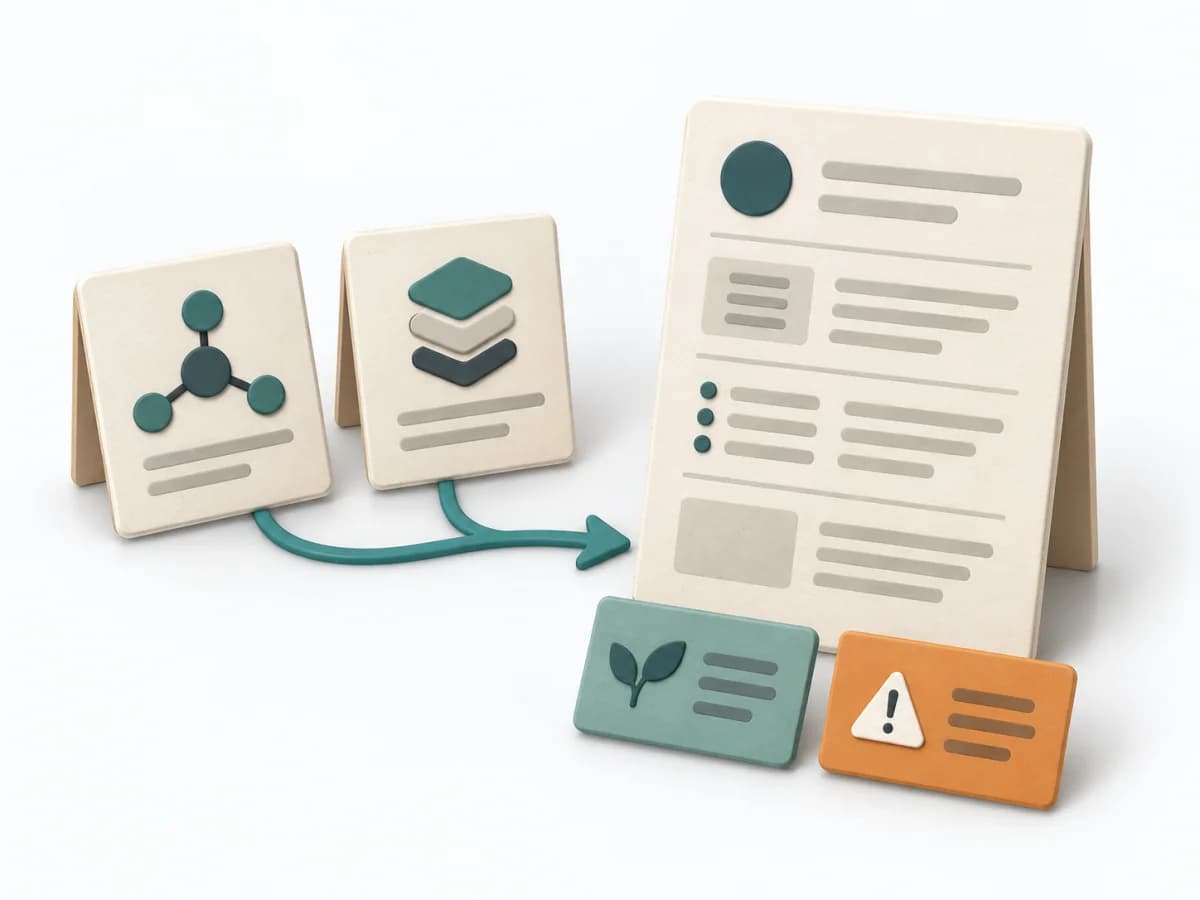 Architecture Architecture Decision Record |
|---|---|---|---|---|
Purposedifferent | An RFC clarifies architecture context, options, and consequences. It structures technical context, alternatives, tradeoffs, open questions, and review feedback, and captures the result as an RFC document, reviewer comments, and a decision rationale. | When ideas need sorting quickly, it condenses impact, confidence, and effort into one compact score. It connects customer value, product logic, and decision priorities. The result is captured as an ICE table and top-ideas list. | When demand only needs to be roughly verified, it tests interest with minimal effort. It measures whether people would take a next step at all. | An ADR permanently records an architecture decision with context, trade-offs, and consequence. It creates continuity for later changes because the decision path stays traceable. |
Complexitydifferent | Medium | Low | Low | Low |
Timedifferent | 1-3 Wochen vom Draft bis zur Entscheidung | 30-60 min | 1-5 Tage | 15-45 min |
Participantsdifferent | 3-20 Reviewer | 2-8 | Nutzertraffic | 1-3 |
Formatdifferent | Async | Workshop + async | Async | Async |
Outputdifferent | RFC document, Reviewer comments, Decision rationale, Follow-up ADR or tickets | ICE Table, Top Idea List | Interest Metrics, Conversion Signal, Learning Note | ADR File, Decision Log, Rationale |
Tagsno overlap | ArchitectureDecisionAsyncGovernance | PrioritizationScoringGrowthDecision | ValidationExperimentsDemandGrowth | ArchitectureRationaleDocumentationGovernance |