View methods side by side.
Choose up to four methods. Add them using the search and share the comparison by copying its link.
| Criterion |  Architecture Request for Comments |  Decision Making Argument Mapping |  Agile Start Stop Continue | 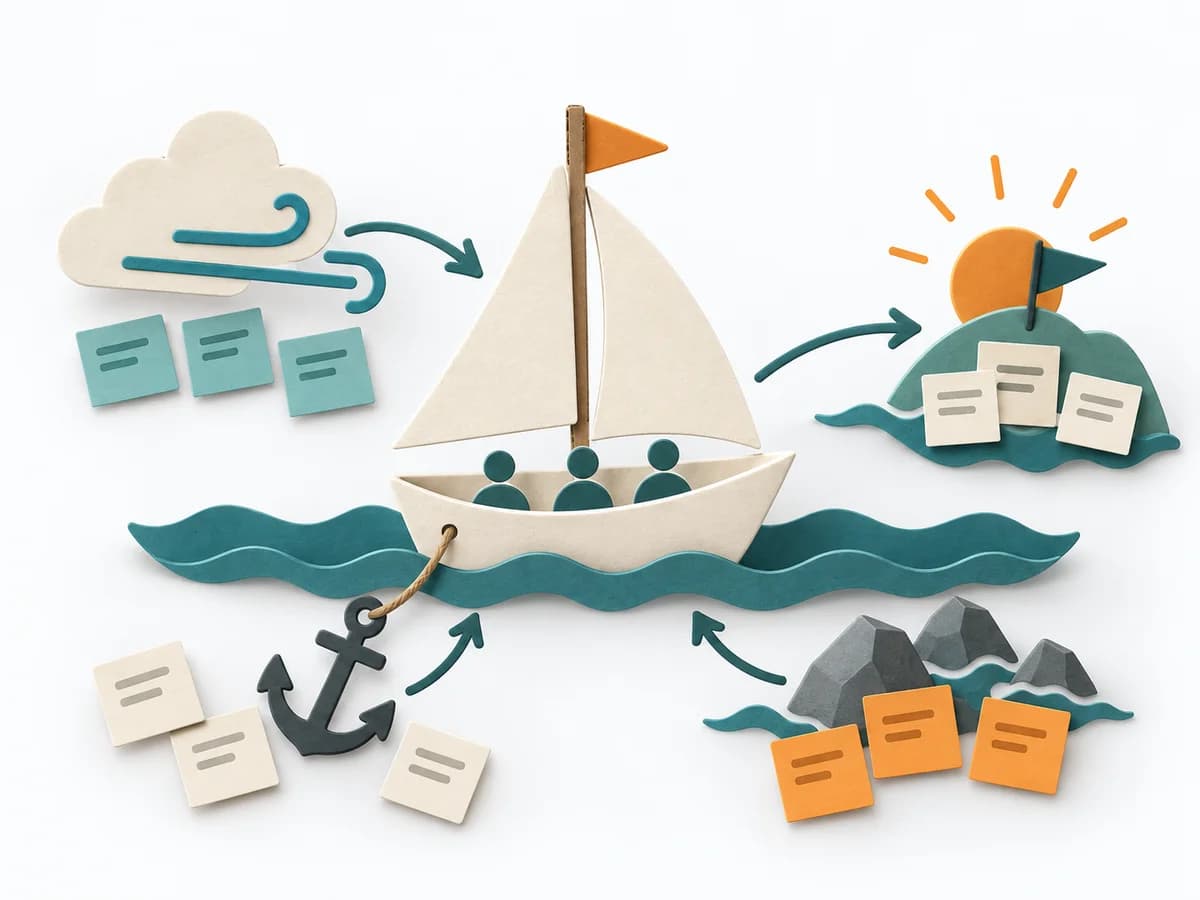 Agile Sailboat Retrospective |
|---|---|---|---|---|
Purposedifferent | An RFC clarifies architecture context, options, and consequences. It structures technical context, alternatives, tradeoffs, open questions, and review feedback, and captures the result as an RFC document, reviewer comments, and a decision rationale. | When statements, evidence, and counterarguments get mixed up, a debate quickly loses its structure. Argument Mapping breaks a thesis down into its reasoning and makes visible what it really rests on. | When a team wants to deliberately adjust its working behavior, it makes habits visible and assessable. It focuses on concrete changes instead of diffuse mood. | When a team wants to read momentum, brakes, and risks together, it offers an easily understandable picture of the situation. It makes drive, obstacles, and headwind visible in the same picture. |
Complexitydifferent | Medium | Medium | Low | Low |
Timedifferent | 1-3 Wochen vom Draft bis zur Entscheidung | 1-3 h | 30-60 min | 45-90 min |
Participantsdifferent | 3-20 Reviewer | 1-8 | 3-12 | 4-12 |
Formatdifferent | Async | Workshop + async | Workshop | Workshop |
Outputdifferent | RFC document, Reviewer comments, Decision rationale, Follow-up ADR or tickets | Argument Map, Evidence Gaps, Decision Rationale | Start Stop Continue Board, Improvement Actions | Sailboat Board, Risks, Improvement Actions |
Tagsno overlap | ArchitectureDecisionAsyncGovernance | SensemakingDecisionRationale | RetrospectiveImprovementTeamReflection | RetrospectiveTeamImprovement |