View methods side by side.
Choose up to four methods. Add them using the search and share the comparison by copying its link.
| Criterion | 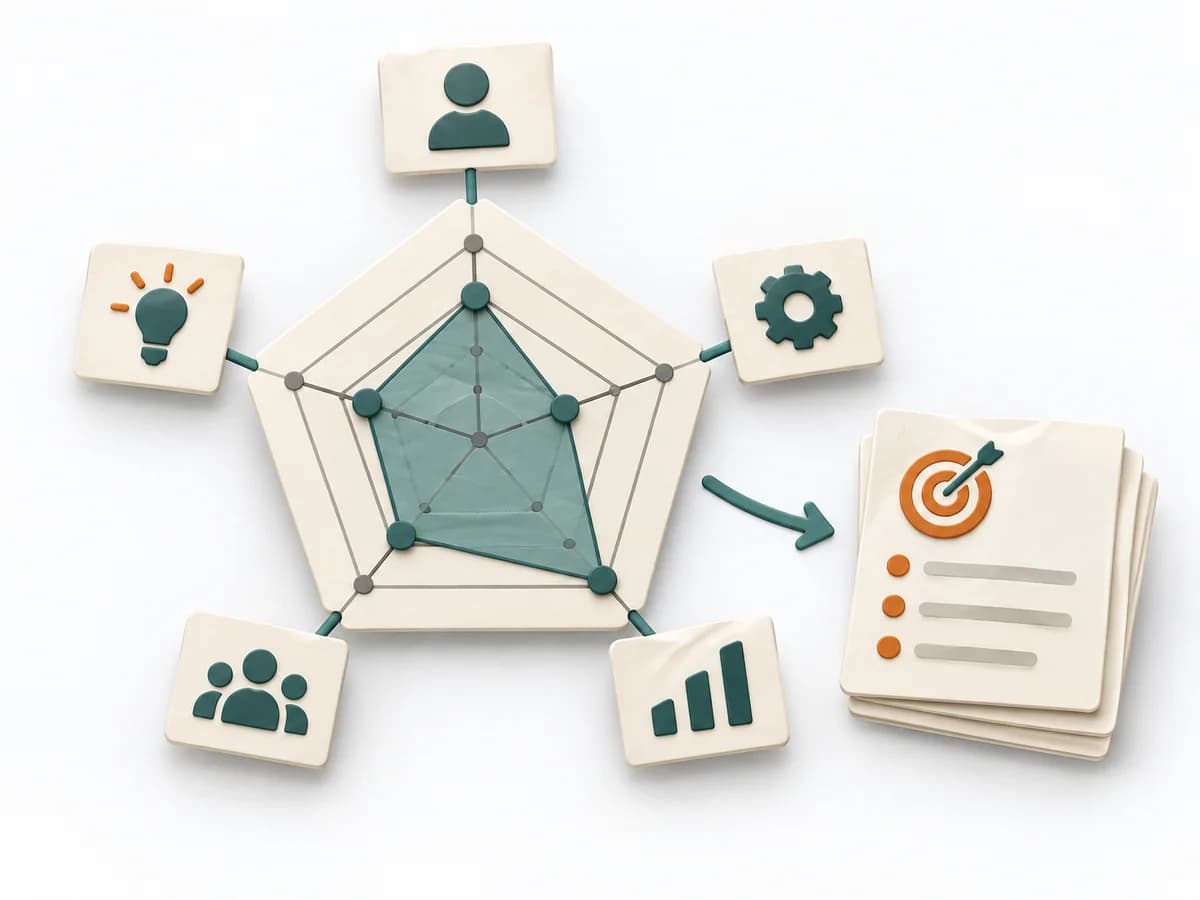 Decision Making Radar | 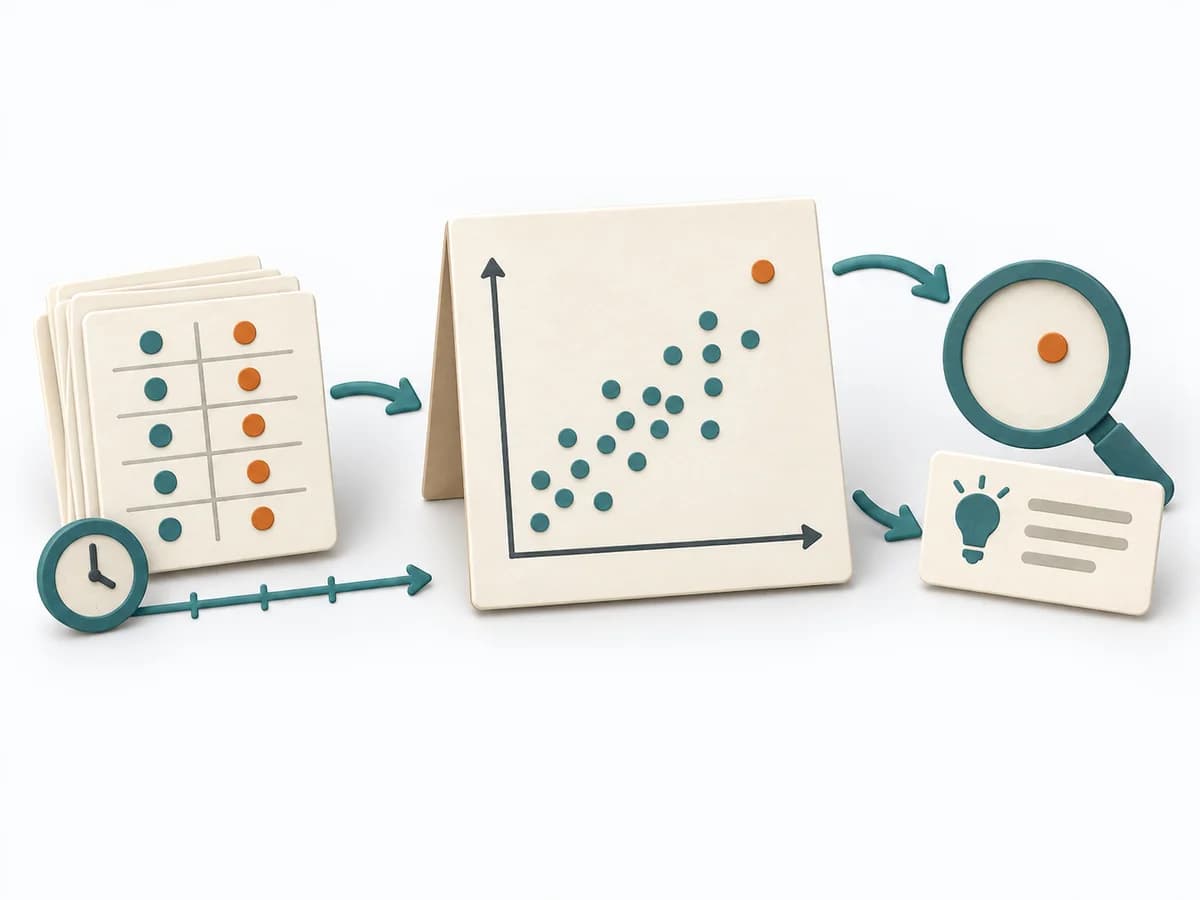 Operations Scatter Diagram |  Architecture LASR (Lightweight Approach for Software Reviews) |  Operations 5 Whys |
|---|---|---|---|---|
Purposedifferent | When capabilities, maturity levels, or market positions need to be compared across several dimensions, overview is easily lost. Radar brings different characteristics into a shared picture and shows patterns faster than tables do. | When the question is whether two measures are related, the method makes patterns in the data picture visible. It separates felt correlations from relationships that actually show up in the data. | LASR helps development teams identify where their software falls short of important quality goals and which improvements to consider. A small group with existing system knowledge can make an initial assessment and investigate open questions in more detail. | For a single, hard-to-explain deviation, the method exposes the causal chain behind the visible symptom. It keeps the cause open until a controllable condition emerges instead of a mere description. |
Complexitydifferent | Medium | Low | Medium | Low |
Timedifferent | 1-2 h | 30-90 min | 3–4 h for initial assessment; preparation and deeper analysis additional | 15-30 min |
Participantsdifferent | 2-10 | 1-4 | 1 or a small team; particularly suitable for 3–4 people | 2-6 |
Formatdifferent | Workshop + async | Workshop + async | Workshop + async | Workshop |
Outputdifferent | Radar Map, Capability Scores, Action Areas | Scatter Plot, Korrelationsnotiz, Hypothesenliste | Lean Mission Statement describing the software’s purpose, Prioritized quality goals and evaluation criteria, Risks and estimated gaps against quality goals, More closely examined findings and open checks | Root cause notes, Countermeasures |
Tagsno overlap | AssessmentPortfolioCapability | Root causeQualityVisualization | ArchitectureQualityRiskAssessmentLean | Root causeIncidentLeanProblem solving |