View methods side by side.
Choose up to four methods. Add them using the search and share the comparison by copying its link.
| Criterion | 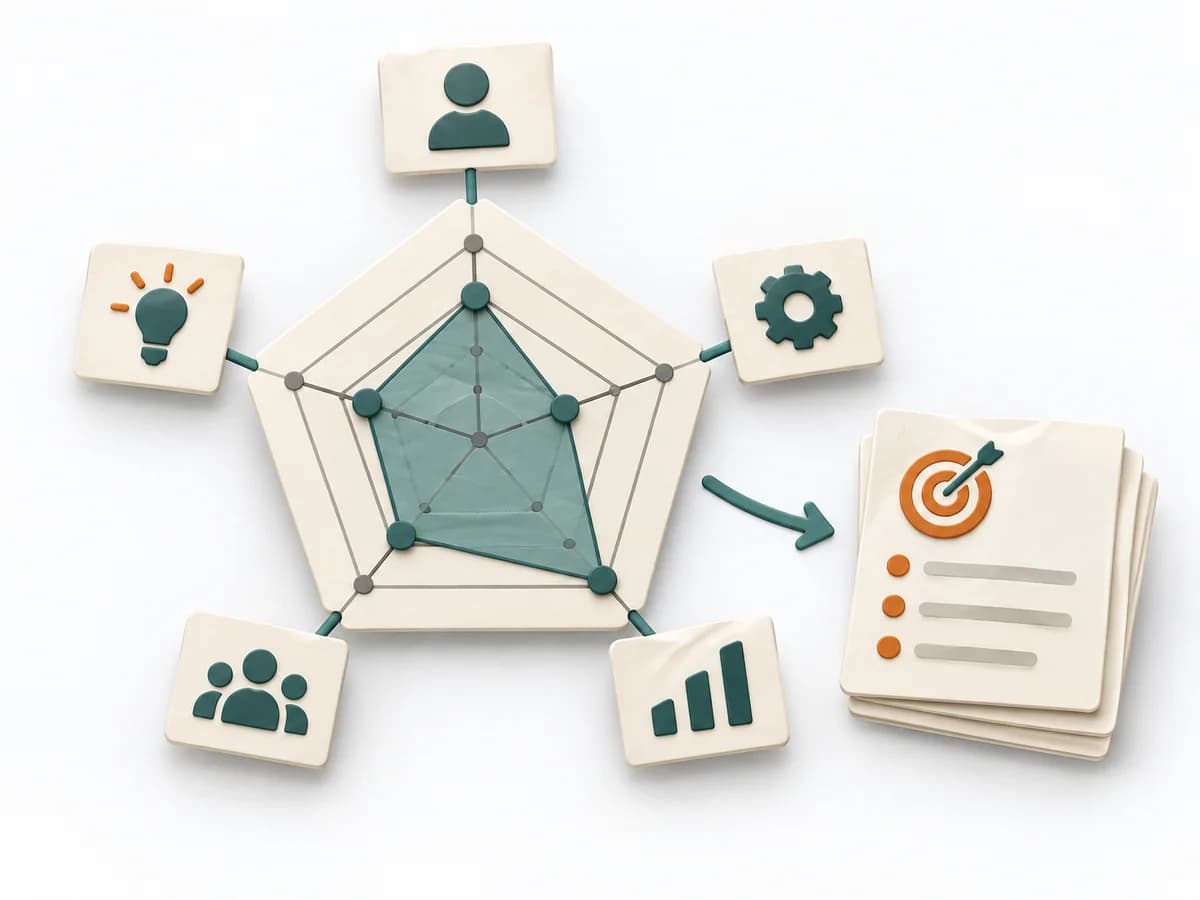 Decision Making Radar | 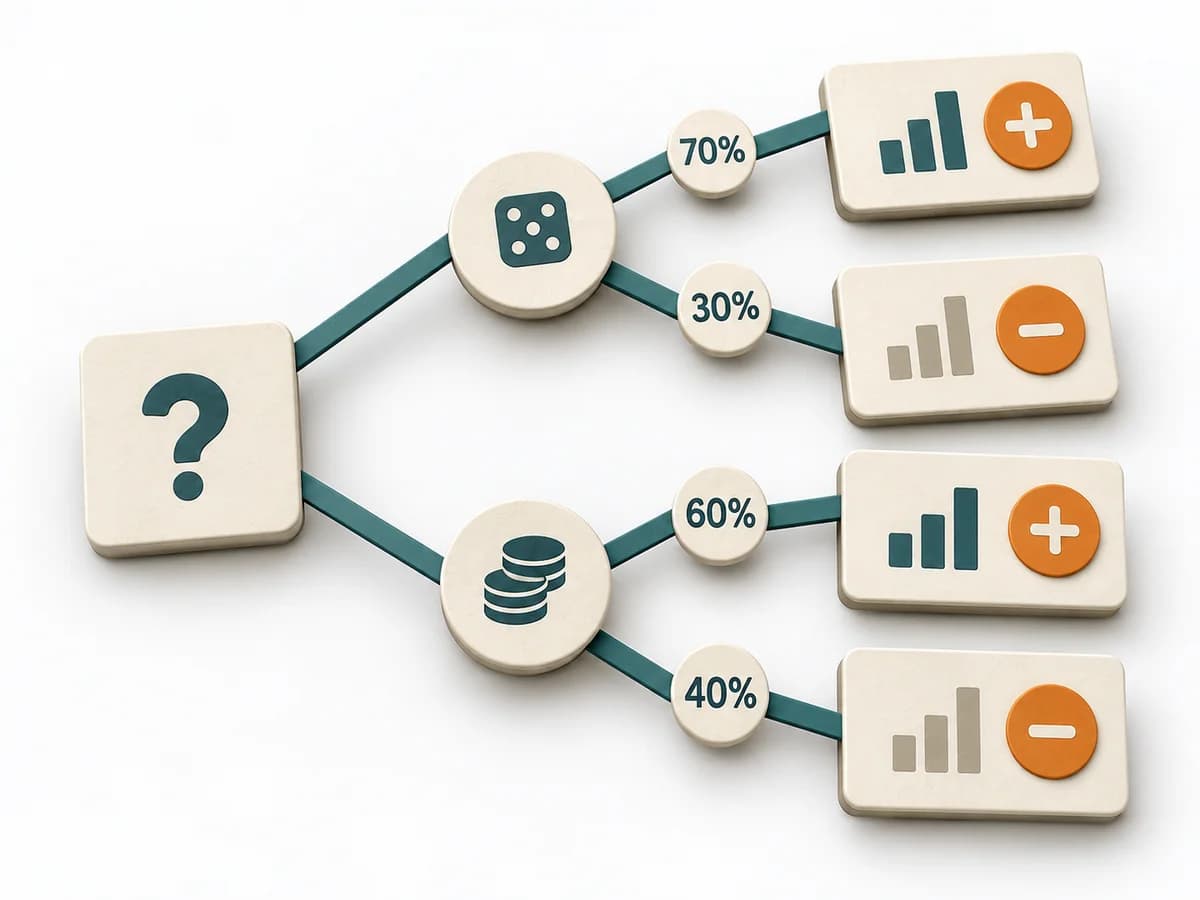 Decision Making Decision Tree |  Facilitation Consensus Workshop |  Facilitation Six Thinking Hats |
|---|---|---|---|---|
Purposedifferent | When capabilities, maturity levels, or market positions need to be compared across several dimensions, overview is easily lost. Radar brings different characteristics into a shared picture and shows patterns faster than tables do. | For decisions with follow-on paths and dependencies, a linear comparison is often not enough. A Decision Tree shows how options branch under conditions and which consequences hang on each branch. | When a group needs a solid decision without outvoting individual factions, a Consensus Workshop creates a negotiable common ground. It makes agreement, reservations, and open tensions discussable at the same time. | When a topic gets stuck too quickly in the same thinking mode, Six Thinking Hats deliberately separates the perspectives. This means facts, risks, creativity, and emotional signals get worked through one after another instead of mixed together. |
Complexitysame | Medium | Medium | Medium | Medium |
Timedifferent | 1-2 h | 30-90 min | 1-3 h | 45-90 min |
Participantsdifferent | 2-10 | 1-6 | 5-30 | 4-12 |
Formatdifferent | Workshop + async | Workshop + async | Workshop | Workshop |
Outputdifferent | Radar Map, Capability Scores, Action Areas | Decision Tree, Option Map, Assumption List | Consensus Clusters, Theme Titles, Priority Areas | Perspective Notes, Decision Inputs, Action Items |
Tagsno overlap | AssessmentPortfolioCapability | DecisionTreeOptions | FacilitationConsensusWorkshopAlignment | FacilitationOptionsDecision |