View methods side by side.
Choose up to four methods. Add them using the search and share the comparison by copying its link.
| Criterion | 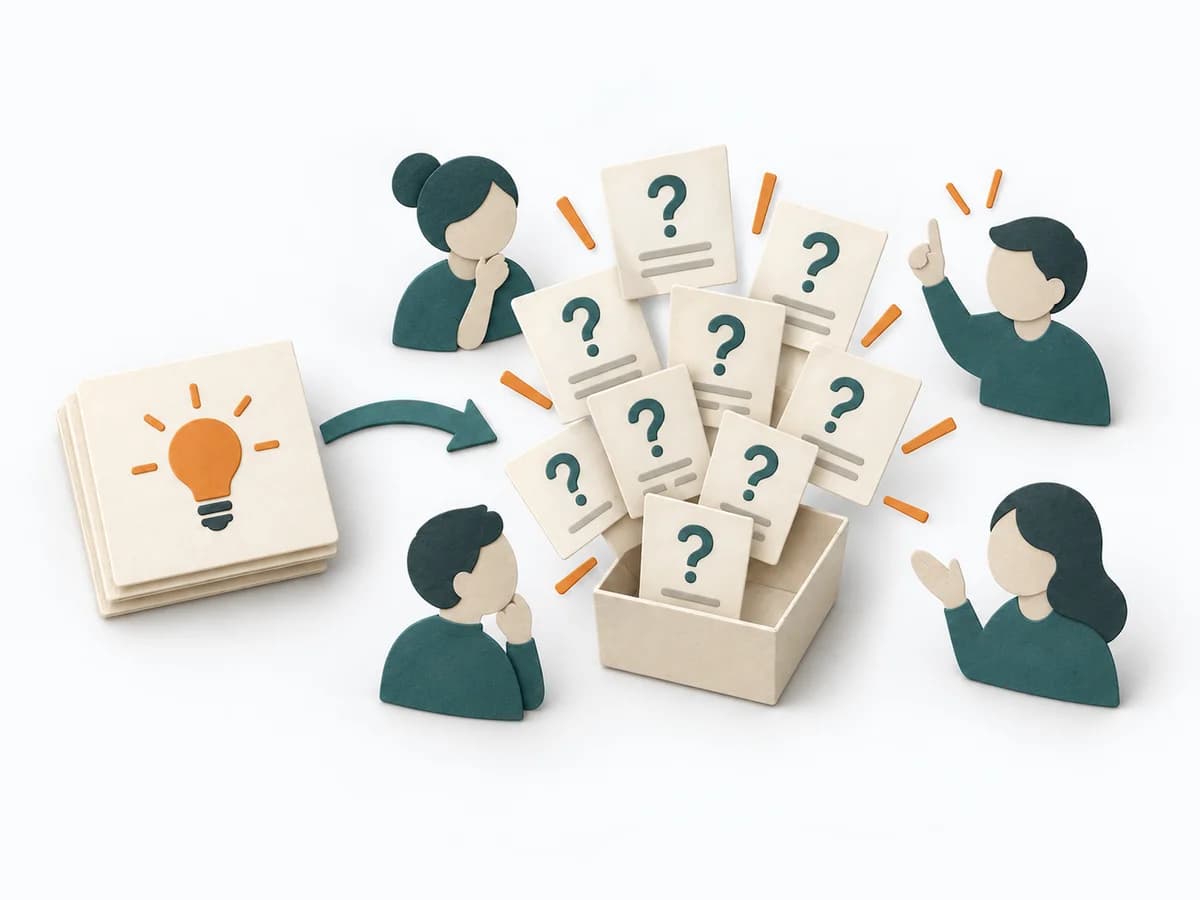 Facilitation Question Burst |  Systems Thinking Polarity Mapping | 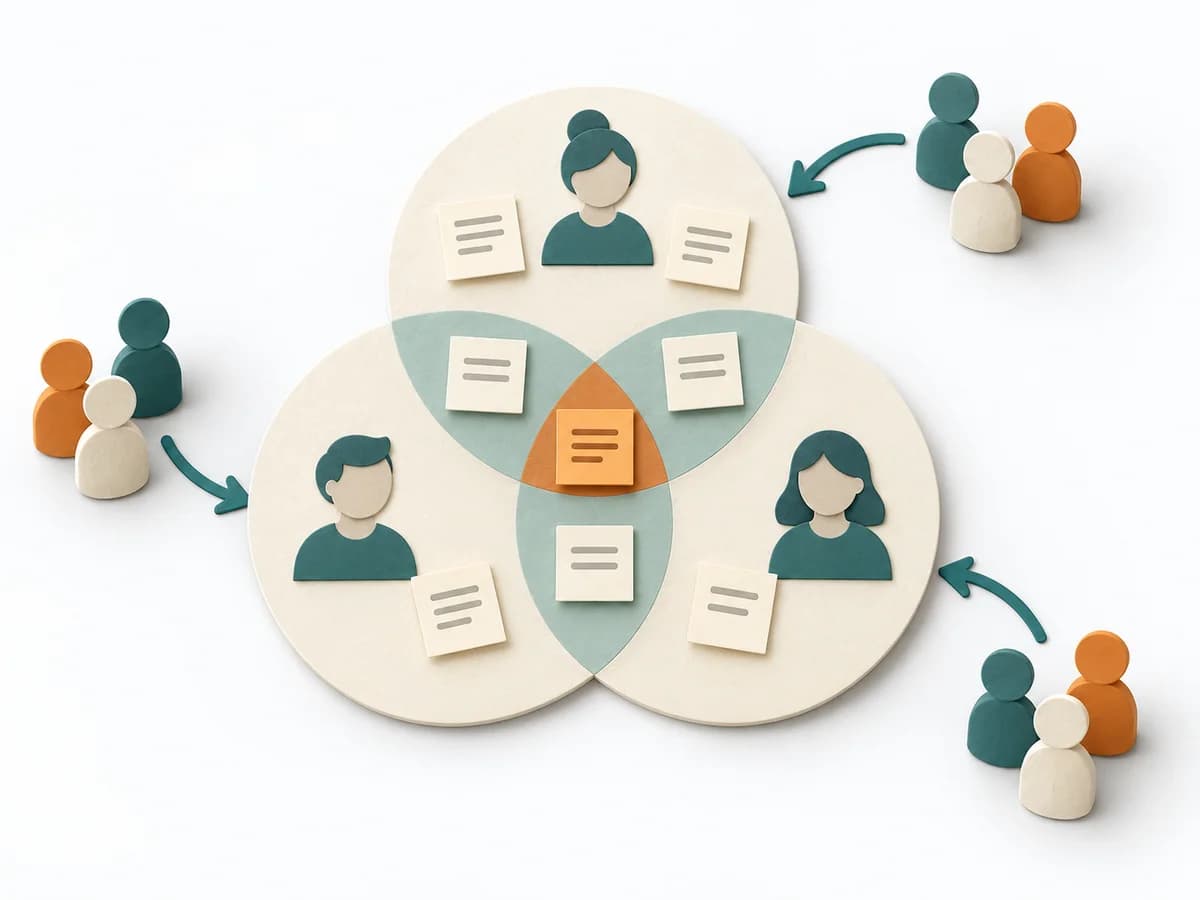 Facilitation 3-Circle Venn Diagram |  Facilitation Alignment Mapping |
|---|---|---|---|---|
Purposedifferent | When a problem gets covered up too quickly with answers, Question Burst puts the better question at the center. The format opens the thinking space before the group commits to an interpretation. | Polarity Mapping makes tensions between two opposing poles tangible, such as standardization and adaptation or control and autonomy. The method guards against making apparent either-or decisions prematurely. | When three perspectives matter at the same time, a Three-Circle Venn Diagram shows the overlaps and remainders precisely. It makes visible where shared effect arises and where only a partial perspective applies. | When several people work toward one goal but hold different mental maps, Alignment Mapping makes the discrepancies visible. It arranges goals, assumptions, and priorities so shared direction becomes verifiable. |
Complexitydifferent | Low | Medium | Low | Medium |
Timedifferent | 15-30 min | 1-2 h | 15-45 min | 1-2 h |
Participantsdifferent | 2-8 | 3-12 | 2-8 | 4-12 |
Formatdifferent | Workshop | Workshop | Workshop + async | Workshop |
Outputdifferent | Question List, Reframed Challenge, Learning Prompts | Polarity Map, Warning Signs, Balance Actions | Venn Diagram, Overlap Notes, Differentiators | Alignment Map, Open Issues, Decision Questions |
Tagsno overlap | QuestionsReframingFacilitationSensemaking | Systems thinkingTradeoffsLeadership | ComparisonFacilitationAlignment | AlignmentStakeholdersStrategyFacilitation |