View methods side by side.
Choose up to four methods. Add them using the search and share the comparison by copying its link.
| Criterion | 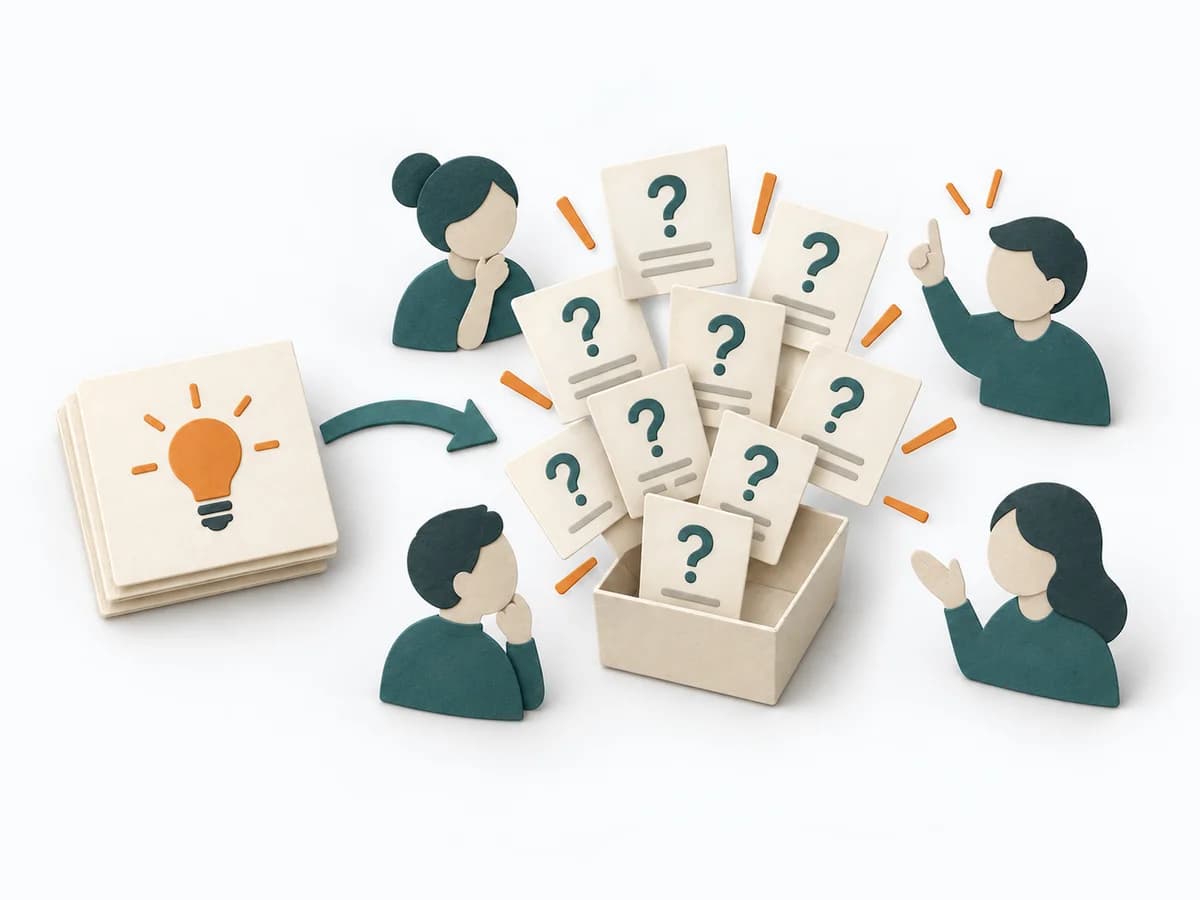 Facilitation Question Burst |  Knowledge Modeling IBIS | 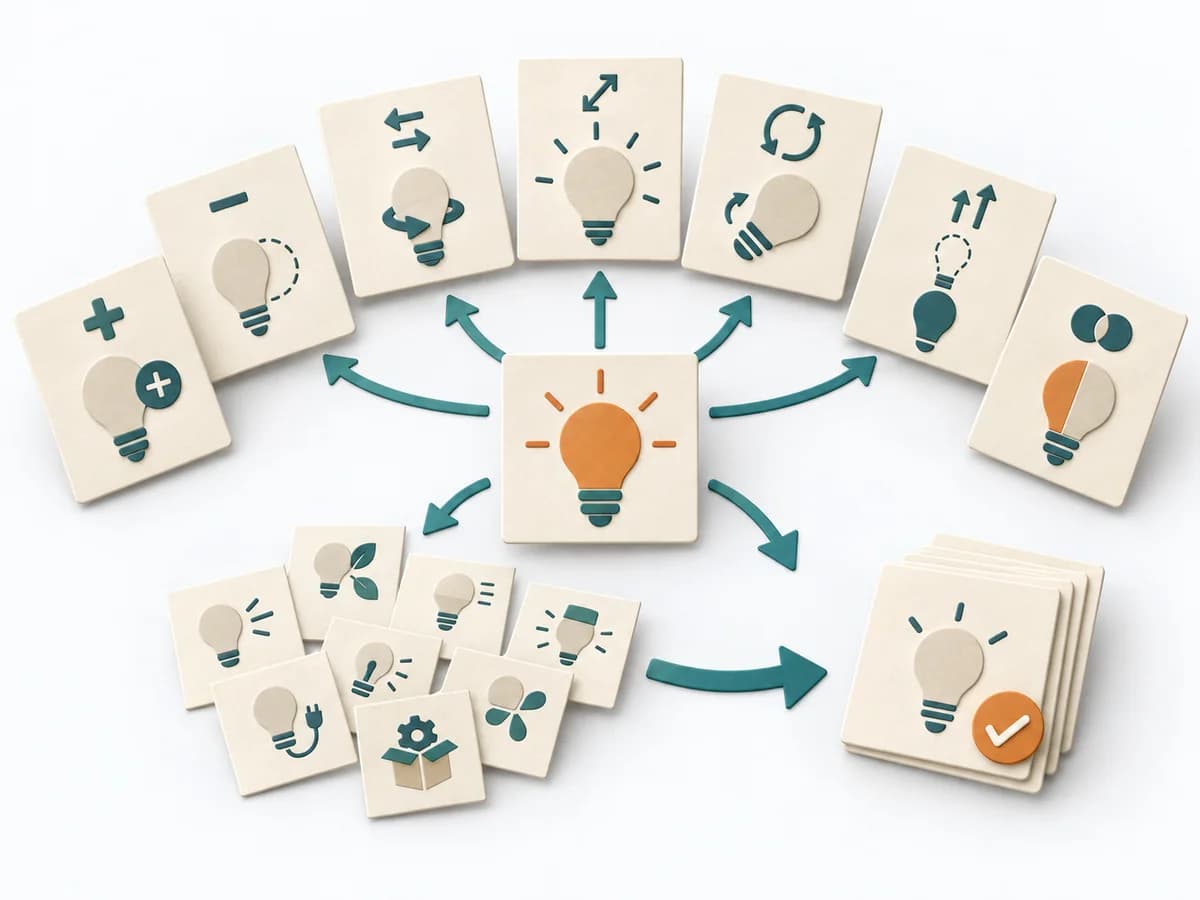 Innovation SCAMPER |  Decision Making Argument Mapping |
|---|---|---|---|---|
Purposedifferent | When a problem gets covered up too quickly with answers, Question Burst puts the better question at the center. The format opens the thinking space before the group commits to an interpretation. | IBIS structures thinking about complex questions as a sequence of issues, ideas, and arguments. The method keeps discussions open without forcing them into premature consensus. | For an existing solution under pressure to change, the method deliberately opens space for systematic variants. It directs attention to rebuilding, combining, and repurposing rather than only new basic ideas. This produces concrete evolution paths for products, offerings, or workflows. | When statements, evidence, and counterarguments get mixed up, a debate quickly loses its structure. Argument Mapping breaks a thesis down into its reasoning and makes visible what it really rests on. |
Complexitydifferent | Low | Medium | Low | Medium |
Timedifferent | 15-30 min | 1-3 h | 30-60 min | 1-3 h |
Participantsdifferent | 2-8 | 2-8 | 2-10 | 1-8 |
Formatdifferent | Workshop | Workshop + async | Workshop | Workshop + async |
Outputdifferent | Question List, Reframed Challenge, Learning Prompts | Issue Map, Positions, Argument Notes | SCAMPER Idea List, Concept Shortlist, Variation Notes | Argument Map, Evidence Gaps, Decision Rationale |
Tagsno overlap | QuestionsReframingFacilitationSensemaking | RationaleKnowledgeDecision | BrainstormingIdeationCreativityReframingInnovation | SensemakingDecisionRationale |