View methods side by side.
Choose up to four methods. Add them using the search and share the comparison by copying its link.
Selected:Quality Attribute WorkshopAffinity DiagrammingRisk StormingFailure Mode and Effects Analysis
| Criterion |  Architecture Quality Attribute Workshop | 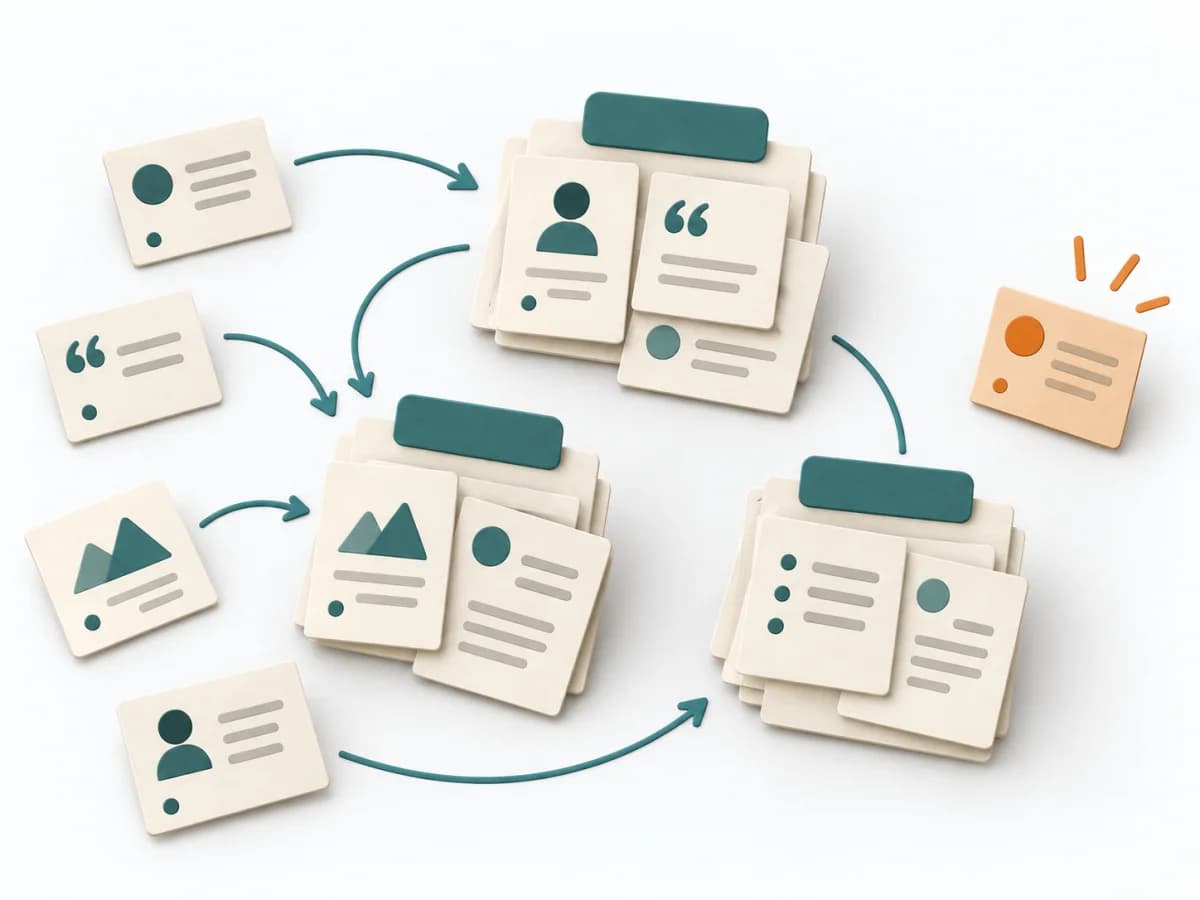 UX Research Affinity Diagramming | 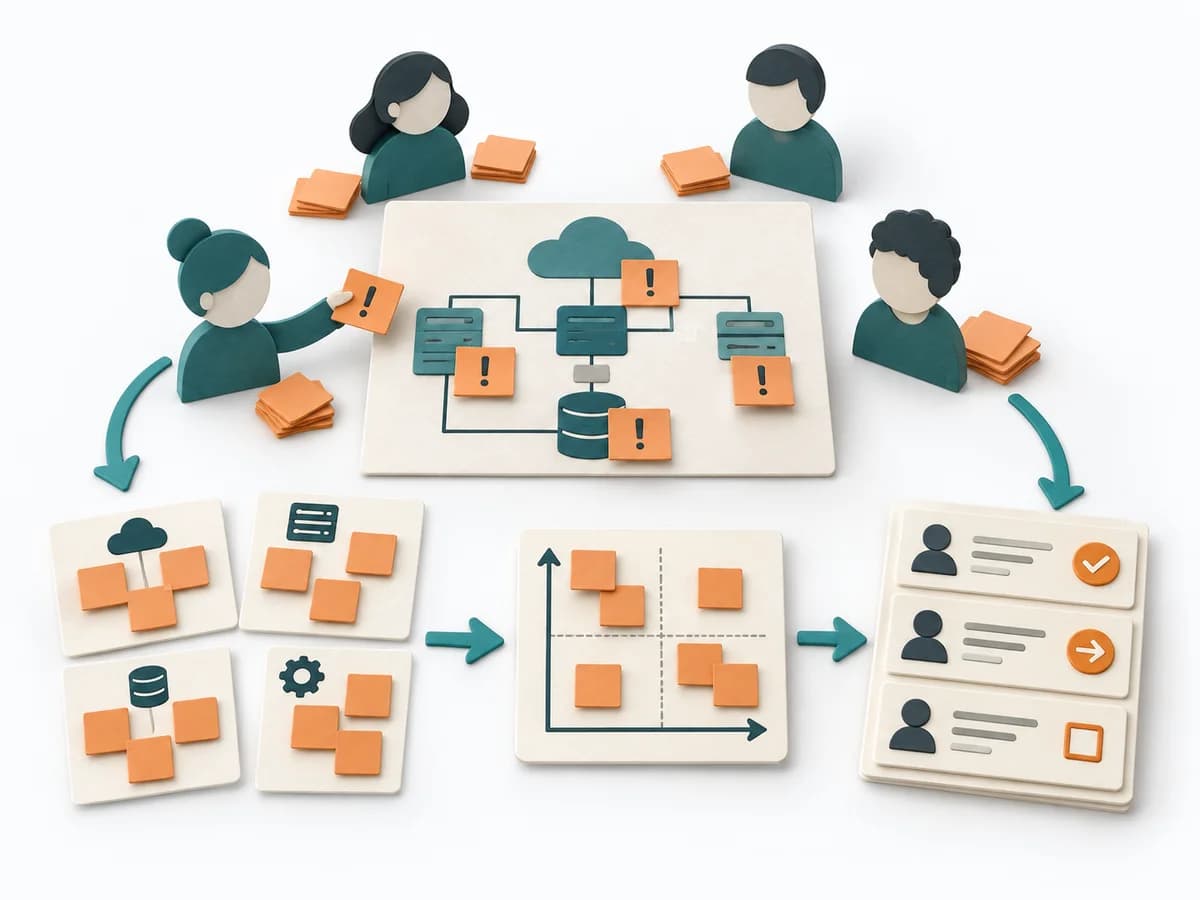 Architecture Risk Storming |  Operations Failure Mode and Effects Analysis |
|---|---|---|---|---|
Purposedifferent | A Quality Attribute Workshop translates quality requirements into concrete scenarios and architecture impulses. The method brings product, engineering, and operations to the same view of desired properties. | When research notes, feedback, or observations sit unconnected side by side, affinity diagramming sorts the raw material into solid themes. Many individual points turn into patterns that make decisions and opportunities clearer. | Helps clarify architecture context, options, and consequences in concrete terms. It organizes technical context, alternatives, and consequences. The result is captured as an Annotated Diagram, a Prioritized Risk List, and an Action Backlog. | For a process, product, or service with noticeable failure risks, the method assesses possible failure modes in advance. It directs attention to combinations of occurrence, effect, and detectability. |
Complexitydifferent | Medium | Low | Low | High |
Timedifferent | 2-4 h | 45–90 min | 60-90 min | 2-6 h |
Participantsdifferent | 5-15 | 3-10 | 4-12 | 3-10 |
Formatsame | Workshop | Workshop | Workshop | Workshop |
Outputdifferent | Quality Scenarios, Priority List, Architecture Concerns | Theme clusters, Insight statements, Opportunity areas | Annotated Diagram, Prioritized Risk List, Action Backlog | FMEA Table, Risk Priority, Mitigation Actions |
Tagsno overlap | RequirementsArchitectureWorkshop | SynthesisQualitativeRoot cause | RiskArchitectureWorkshopValidation | RiskQualityOperationsRoot cause |