View methods side by side.
Choose up to four methods. Add them using the search and share the comparison by copying its link.
| Criterion |  Operations Process Mapping | 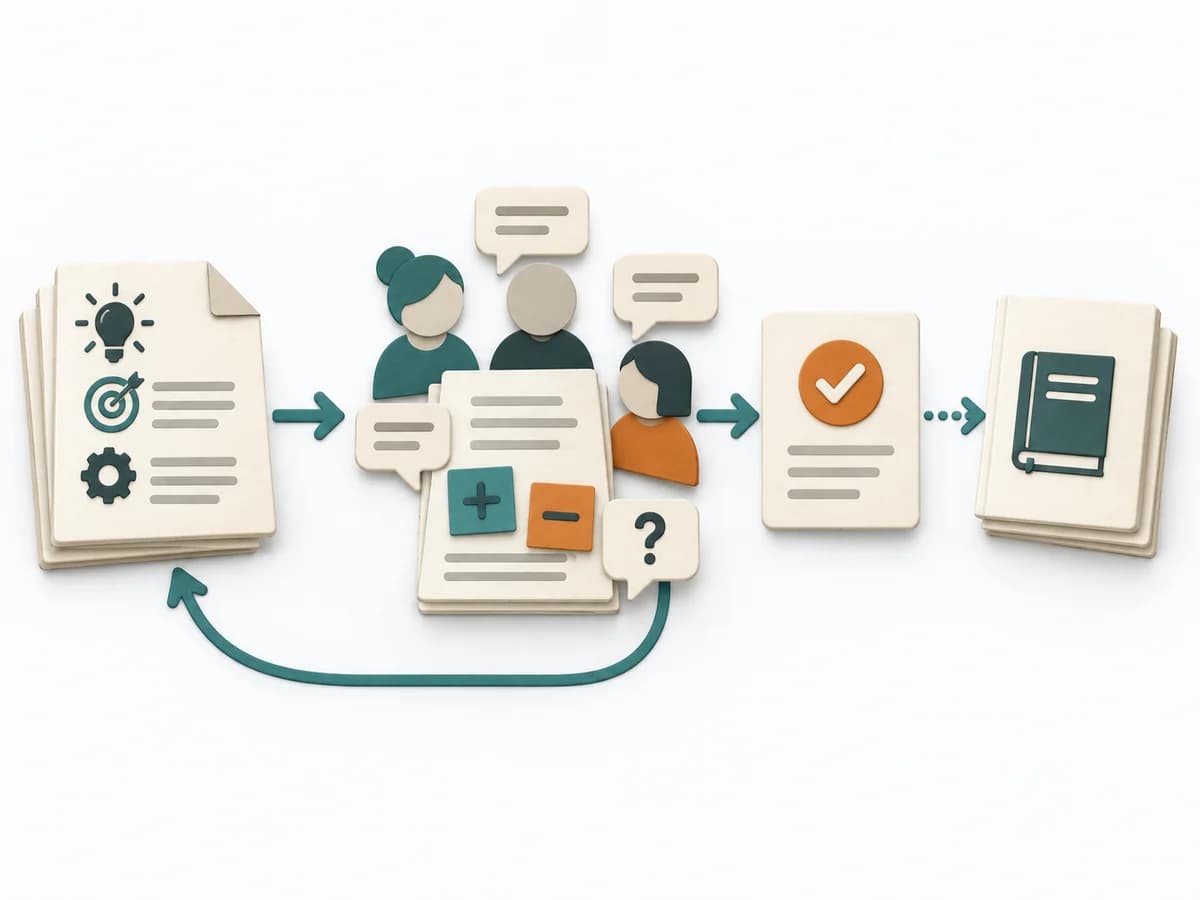 Architecture Request for Comments |  Decision Making Argument Mapping |  Operations After-Action Review |
|---|---|---|---|---|
Purposedifferent | With a confusing workflow that has many handoffs, the method makes the actual process visible. It shows where work is passed on, delayed, or duplicated, so improvement targets the right spots. | An RFC clarifies architecture context, options, and consequences. It structures technical context, alternatives, tradeoffs, open questions, and review feedback, and captures the result as an RFC document, reviewer comments, and a decision rationale. | When statements, evidence, and counterarguments get mixed up, a debate quickly loses its structure. Argument Mapping breaks a thesis down into its reasoning and makes visible what it really rests on. | After missions or project phases with unclear outcomes, the method makes visible what actually happened and what can be learned from it. It separates course, effect, and causes so experience turns into solid improvement. |
Complexitydifferent | Medium | Medium | Medium | Low |
Timedifferent | 1-3 h | 1-3 Wochen vom Draft bis zur Entscheidung | 1-3 h | 20-45 min |
Participantsdifferent | 3-10 | 3-20 Reviewer | 1-8 | 3-12 |
Formatdifferent | Workshop | Async | Workshop + async | Workshop + async |
Outputdifferent | Process Map, Handoff List, Improvement Backlog | RFC document, Reviewer comments, Decision rationale, Follow-up ADR or tickets | Argument Map, Evidence Gaps, Decision Rationale | Lessons learned, Action items, Event summary |
Tagsno overlap | ProcessOperationsImprovement | ArchitectureDecisionAsyncGovernance | SensemakingDecisionRationale | LearningOperationsImprovement |