View methods side by side.
Choose up to four methods. Add them using the search and share the comparison by copying its link.
| Criterion | 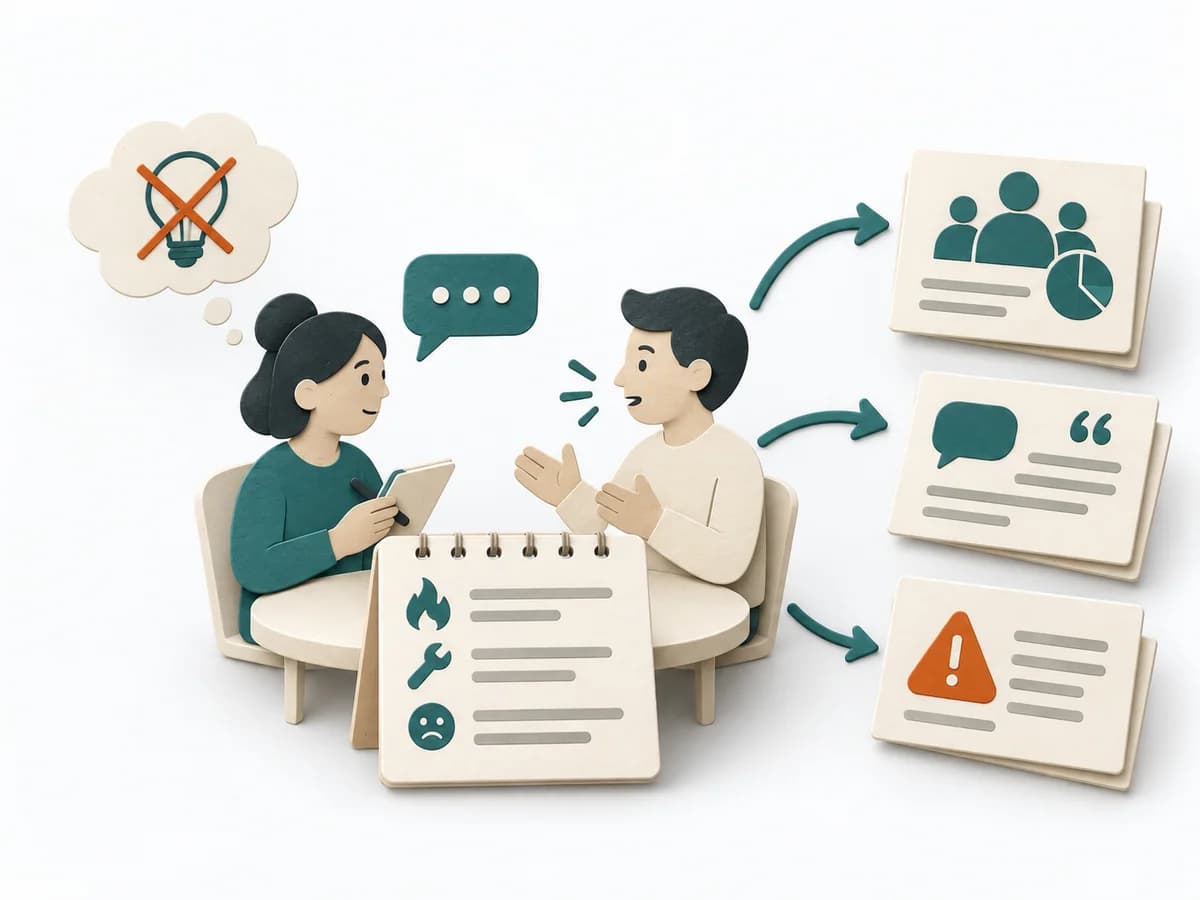 Product Discovery Problem Interview | 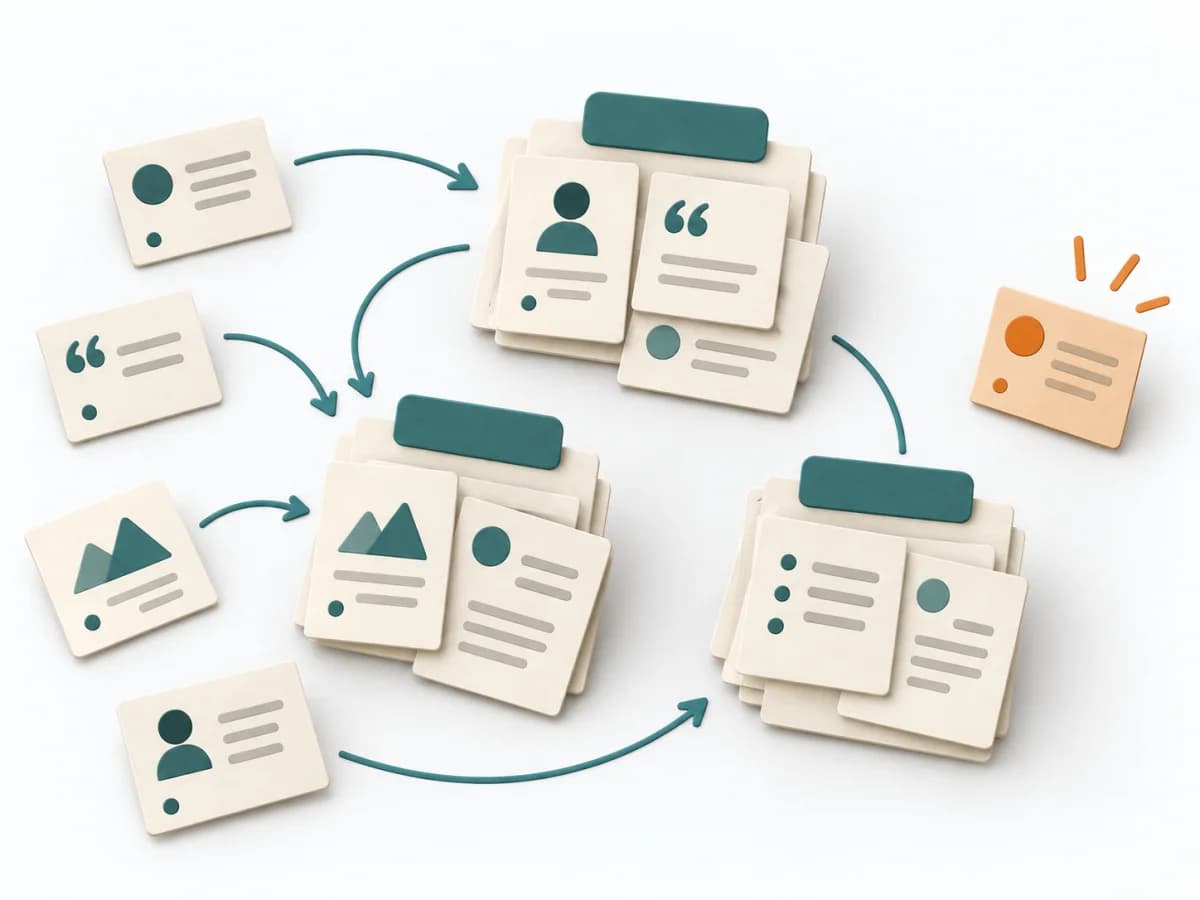 UX Research Affinity Diagramming | 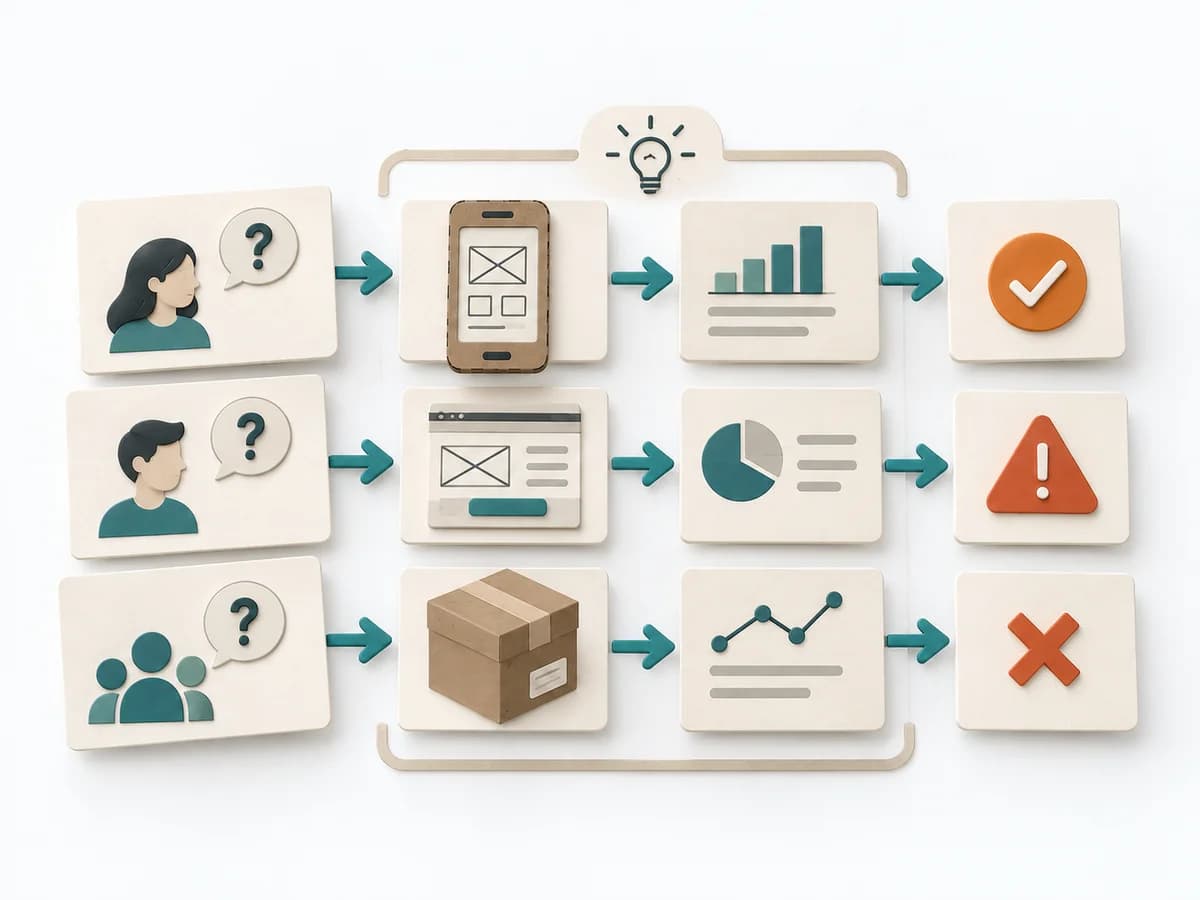 Product Discovery MVP Test Matrix | 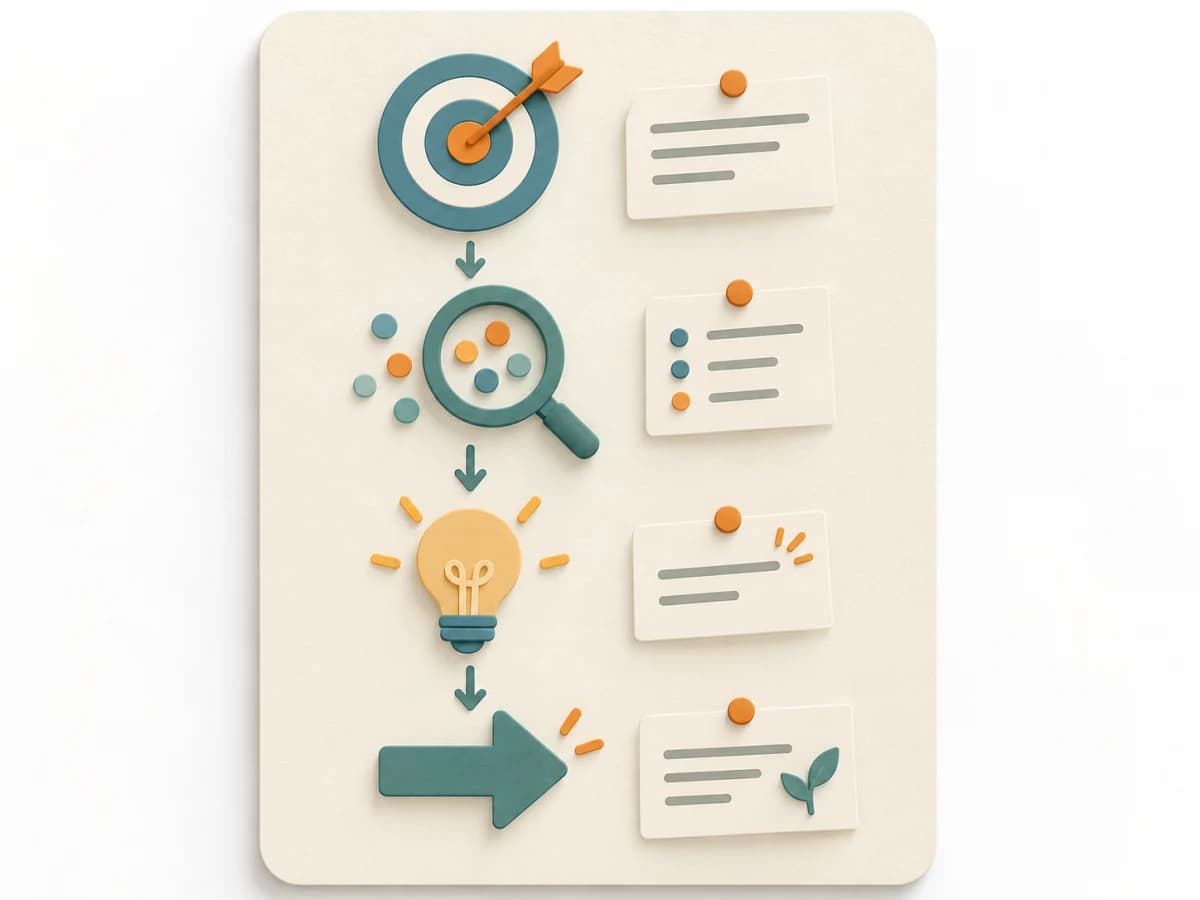 Product Discovery Learning Card |
|---|---|---|---|---|
Purposedifferent | When the picture of the problem still needs to become solid, it asks about real situations and consequences. It separates genuine suffering from mere interest in a solution. | When research notes, feedback, or observations sit unconnected side by side, affinity diagramming sorts the raw material into solid themes. Many individual points turn into patterns that make decisions and opportunities clearer. | When several minimal variants compete to answer the same question, it makes comparing and choosing between them cleaner. It separates problem, assumption, solution, and evidence. The result is captured as a Test Matrix and a Test Plan. | The Learning Card connects traceable test results to a reasoned next action while keeping the limits of the insight visible. |
Complexitydifferent | Medium | Low | Medium | Low |
Timedifferent | 30-60 min je Interview | 45–90 min | 45-75 min | 25-40 min |
Participantsdifferent | 5-12 Interviews | 3-10 | 2-8 | 1-5 |
Formatdifferent | Workshop + async | Workshop | Workshop | Workshop + async |
Outputdifferent | Problem Evidence, Risk Notes, Customer Segments | Theme clusters, Insight statements, Opportunity areas | Test Matrix, Test Plan | Learning Card with evidence and next action |
Tagsno overlap | DiscoveryInterviewsValidation | SynthesisQualitativeRoot cause | ExperimentsValidationDiscoveryOptions | ExperimentsValidationDiscoveryLearning |