View methods side by side.
Choose up to four methods. Add them using the search and share the comparison by copying its link.
| Criterion |  Product Discovery Pretotyping | 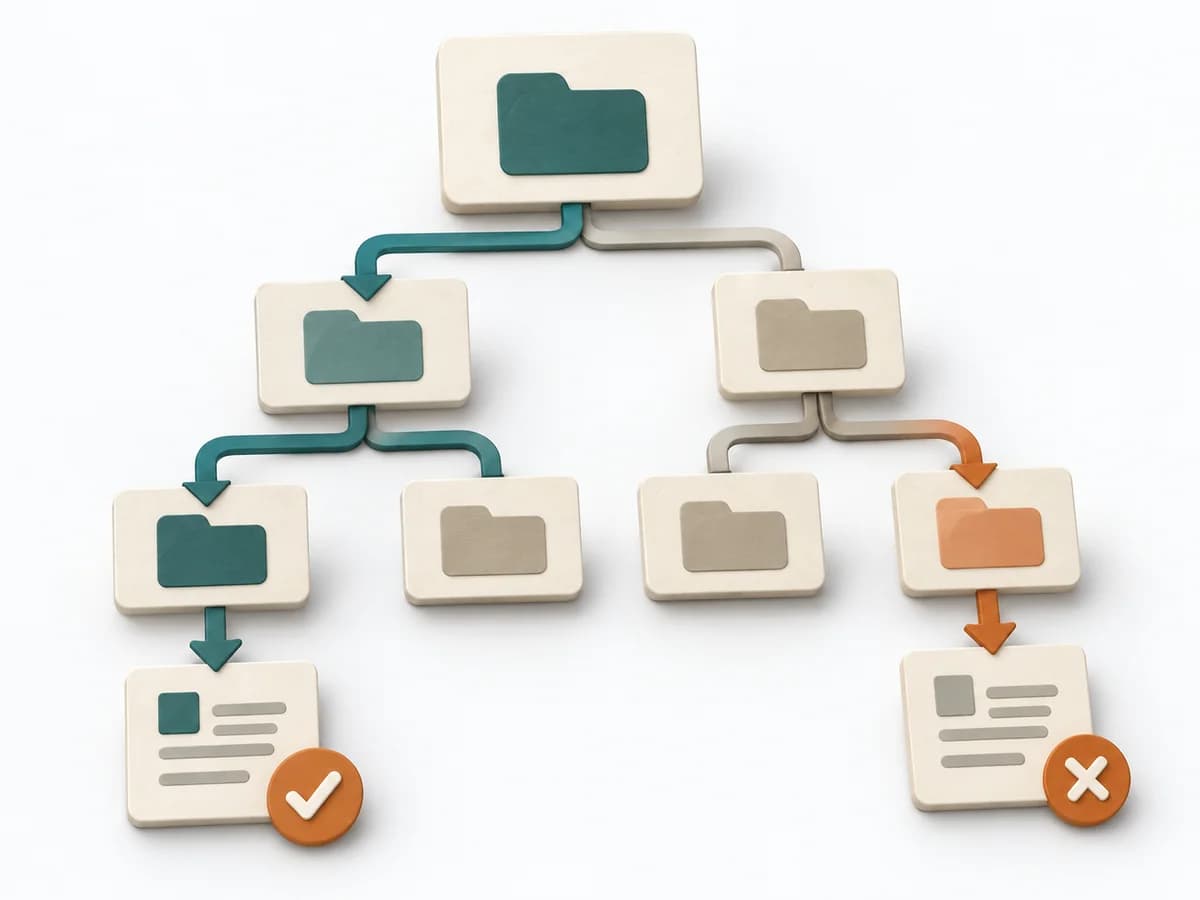 UX Research Tree Testing |  UX Research Card Sorting |  Product Discovery Smoke Test |
|---|---|---|---|---|
Purposedifferent | Pretotyping clarifies whether a customer problem and solution idea create enough real demand. It separates problem, assumption, solution, and evidence, and captures the result as a pretotyping sketch, test setup, and conversion data. | When a navigation exists but search paths still fail, tree testing checks findability without visual distraction. The method shows whether labels, levels, and paths really lead to the intended destination. | When content only makes sense internally and users can't find the structure again, card sorting exposes their mental order. Terms, groups, and naming are then aligned with the target group's expectations. | When demand only needs to be roughly verified, it tests interest with minimal effort. It measures whether people would take a next step at all. |
Complexitydifferent | Low | Medium | Low | Low |
Timedifferent | Stunden bis wenige Tage | 1-2 Tage | 20-45 min | 1-5 Tage |
Participantsdifferent | 1-4 | Based on research question | Based on research question | Nutzertraffic |
Formatdifferent | Workshop + async | Async | Workshop + async | Async |
Outputdifferent | Pretotyping sketch, Test setup, Conversion data, Go or no-go decision | Findability Metrics, Path Analysis, Revised IA | Content groups, Label set, IA hypotheses | Interest Metrics, Conversion Signal, Learning Note |
Tagsno overlap | ValidationDemandMVP | Information architectureNavigationFindability | Information architectureNavigationStructure | ValidationExperimentsDemandGrowth |