View methods side by side.
Choose up to four methods. Add them using the search and share the comparison by copying its link.
| Criterion |  Product Discovery Pretotyping | 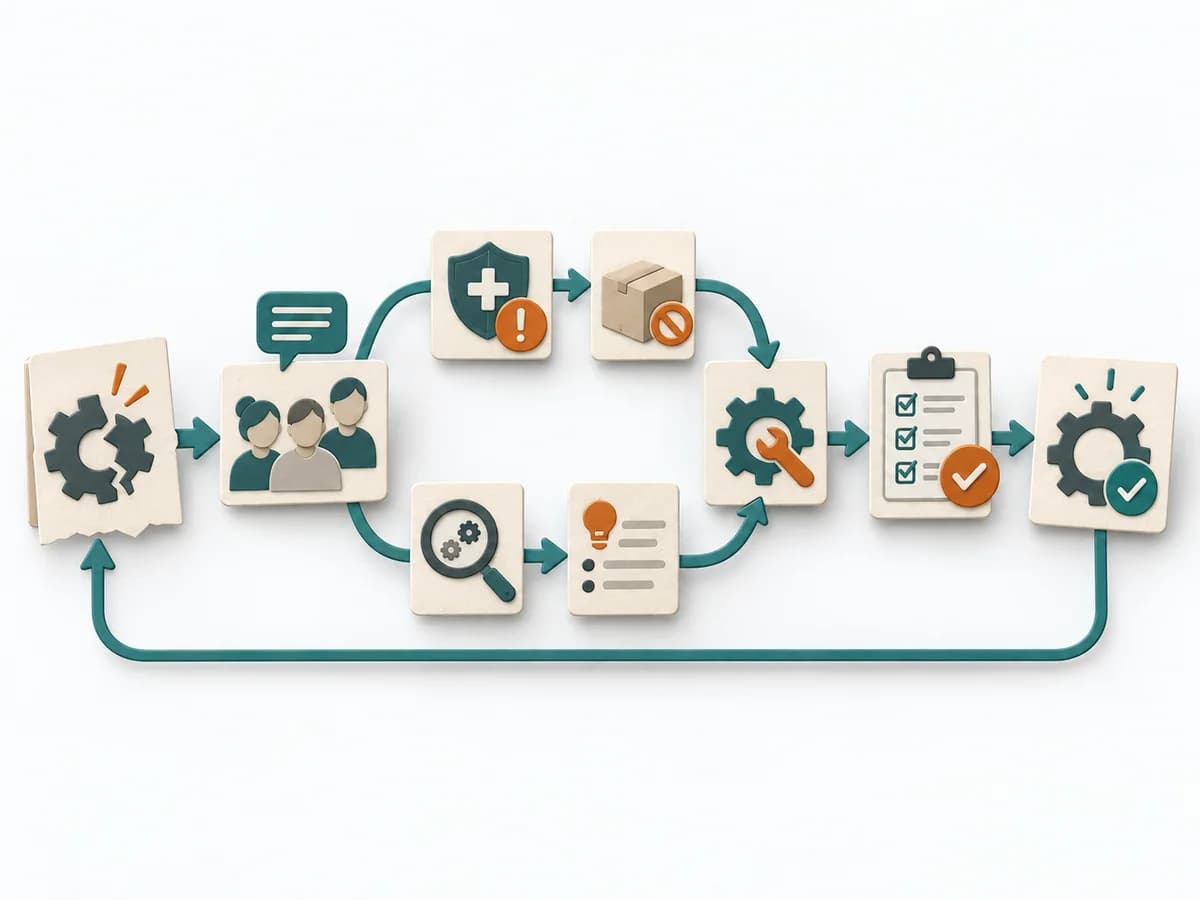 Operations 8D Problem Solving | 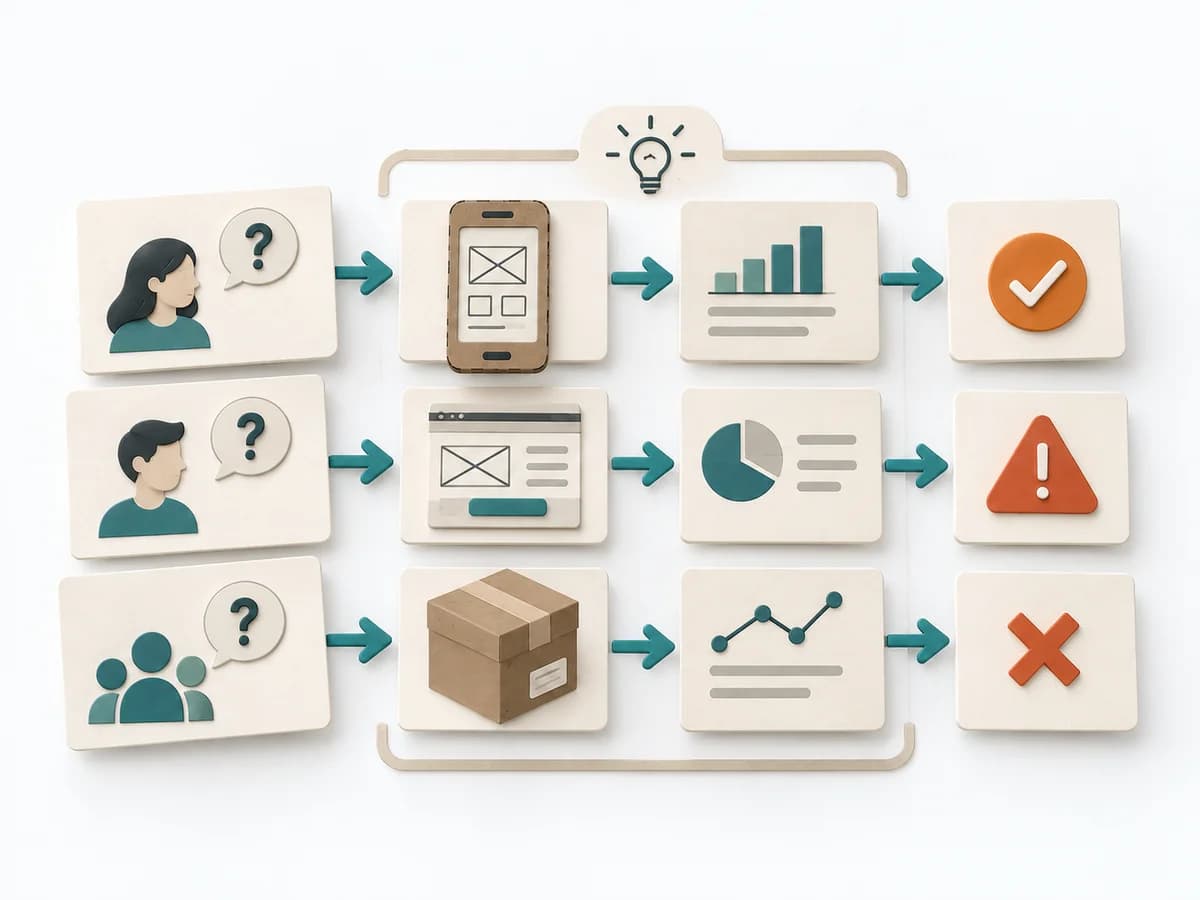 Product Discovery MVP Test Matrix |  Product Discovery Experiment Canvas |
|---|---|---|---|---|
Purposedifferent | Pretotyping clarifies whether a customer problem and solution idea create enough real demand. It separates problem, assumption, solution, and evidence, and captures the result as a pretotyping sketch, test setup, and conversion data. | For an acute quality or delivery problem, the method structures immediate protection and root cause work together. It keeps the situation stable while the actual cause is investigated cleanly. | When several minimal variants compete to answer the same question, it makes comparing and choosing between them cleaner. It separates problem, assumption, solution, and evidence. The result is captured as a Test Matrix and a Test Plan. | When experiments become unreadable after the fact, it arranges hypothesis, signal, and learning goal on a single canvas. It separates problem, assumption, solution, and evidence. The result is captured as a Completed Experiment Canvas and a Success Metric. |
Complexitydifferent | Low | High | Medium | Low |
Timedifferent | Stunden bis wenige Tage | 1-6 Wochen | 45-75 min | 30-60 min |
Participantsdifferent | 1-4 | 4-10 | 2-8 | 1-5 |
Formatdifferent | Workshop + async | Workshop + async | Workshop | Workshop + async |
Outputdifferent | Pretotyping sketch, Test setup, Conversion data, Go or no-go decision | 8D Report, Containment Plan, Root Cause Evidence, Corrective Action Plan | Test Matrix, Test Plan | Completed Experiment Canvas, Success Metric |
Tagsno overlap | ValidationDemandMVP | QualityProblem solvingRoot cause | ExperimentsValidationDiscoveryOptions | ExperimentsValidationDiscoveryHypothesis |