View methods side by side.
Choose up to four methods. Add them using the search and share the comparison by copying its link.
| Criterion |  Decision Making Pre-Mortem | 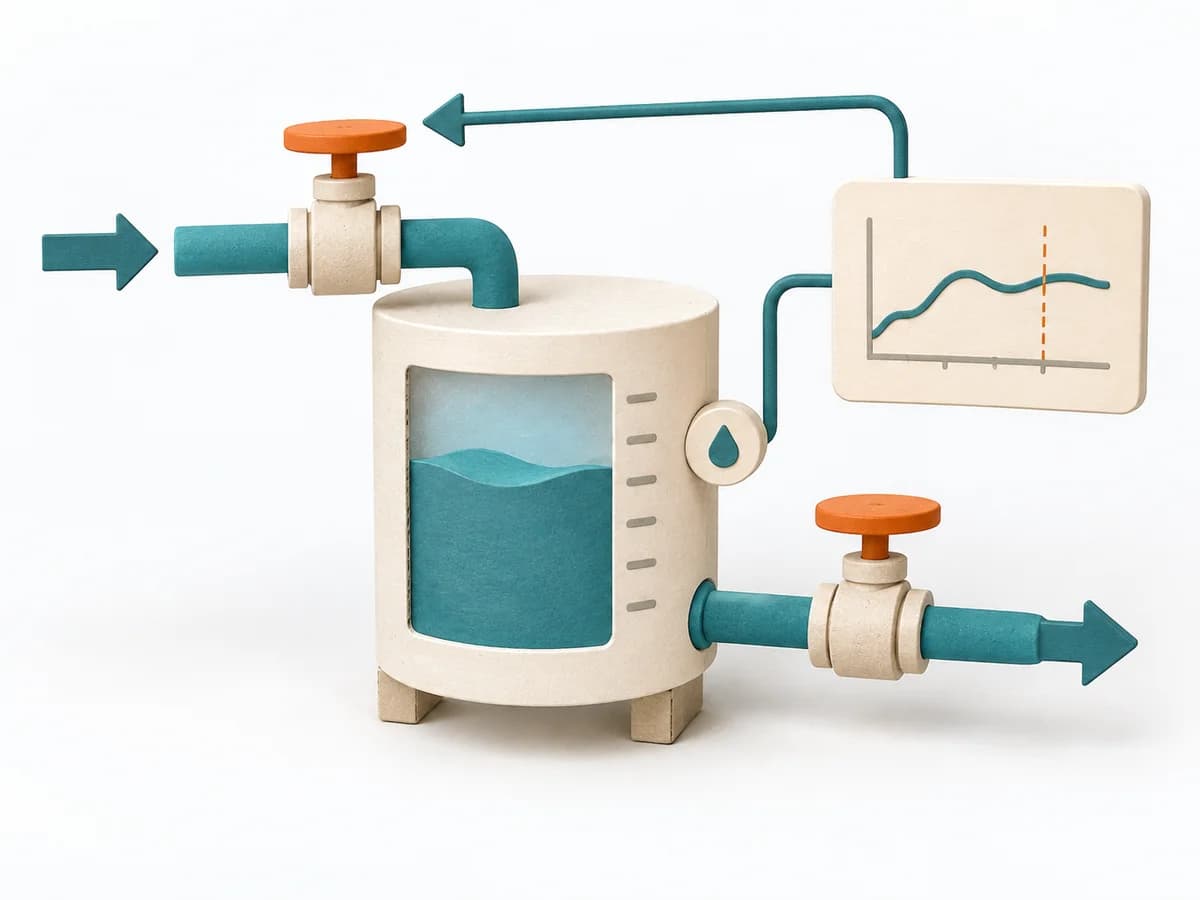 Systems Thinking Stock and Flow Diagram |  Product Discovery Assumption Mapping |  Systems Thinking System Dynamics Simulation |
|---|---|---|---|---|
Purposedifferent | In early initiatives with many uncertainties, planning quickly turns too optimistic. A pre-mortem makes the expected failure visible in advance and sharpens the view of causes, gaps, and countermeasures. | A Stock and Flow Diagram shows how stocks, inflows, and outflows shape a system over time. It is especially suited when growth, delays, or capacity limits determine the dynamics. | When assumptions still sit unordered in the room, it weighs uncertainty against leverage. It makes visible which hypotheses should be checked first. | System Dynamics Simulation makes assumptions about time, delay, and feedback testable through experiments. It draws relationships, patterns, and feedback loops. The result is captured as a simulation model and scenario reports. |
Complexitydifferent | Low | High | Medium | High |
Timedifferent | 20–45 min | 2-6 h | 45-60 min | Mehrere Tage bis Wochen |
Participantsdifferent | Small cross-functional group | 1-6 | 2-8 | 1-5 Modellierende, Stakeholder asynchron |
Formatdifferent | Workshop | Workshop + async | Workshop + async | Async |
Outputdifferent | Risk list, Mitigation plan, Assumption log | Stock and Flow Model, Dynamics Notes, Simulation Hypotheses | Assumption map, Test backlog, Risk ranking | Simulation Model, Scenario Reports |
Tagsno overlap | RiskDecisionFailurePlanning | DynamicsSimulationFeedbackSystems thinking | AssumptionsRiskExperimentsValidation | Systems thinkingDynamicsSimulationAnalysis |