View methods side by side.
Choose up to four methods. Add them using the search and share the comparison by copying its link.
| Criterion |  Business Strategy Porter Five Forces |  Business Strategy SWOT Analysis | 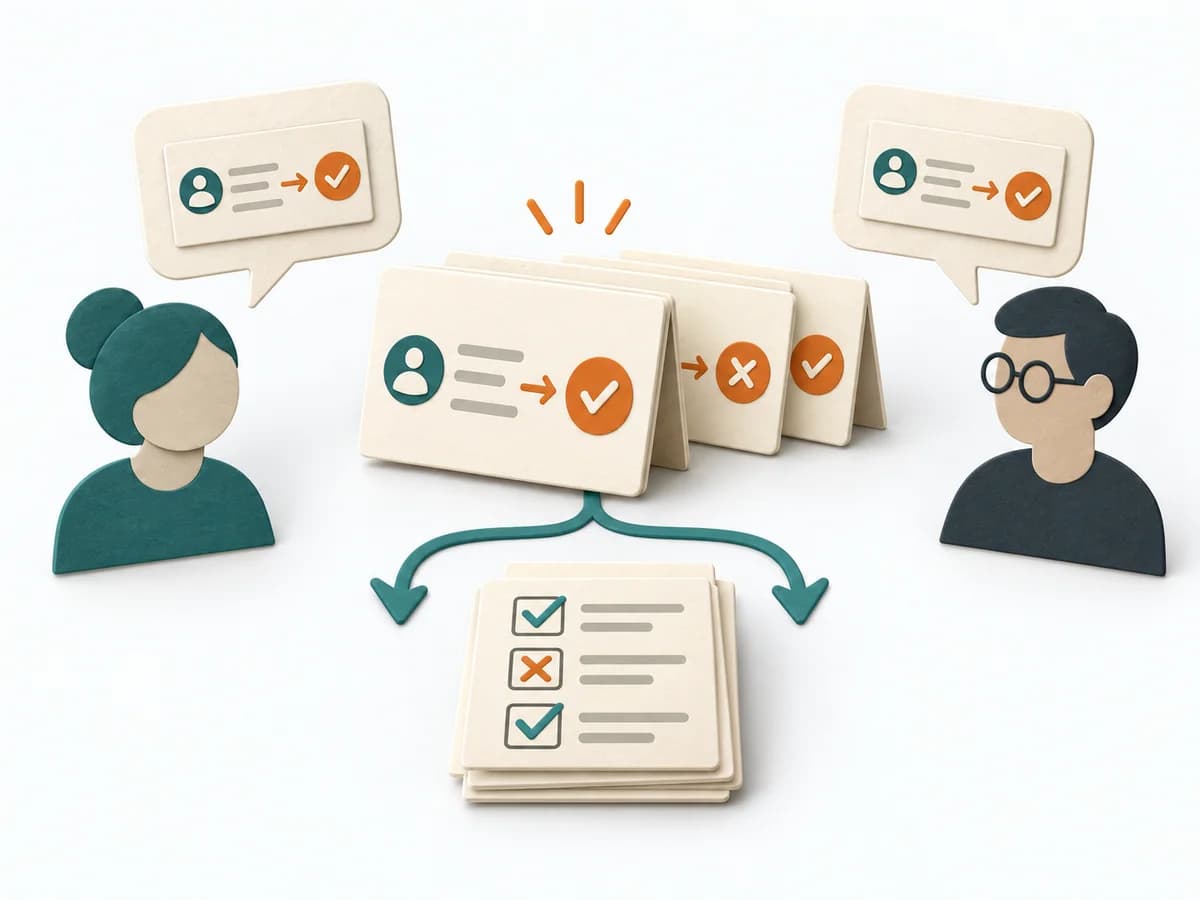 Agile Specification by Example |  Agile Example Mapping |
|---|---|---|---|---|
Purposedifferent | Porter Five Forces analyzes the forces that shape competitive pressure and profitability in a market. The view of market structure goes beyond individual competitors and reveals systemic pressure points. | SWOT Analysis arranges strengths, weaknesses, opportunities, and threats into a compact picture of the situation. It keeps internal capabilities and external influences separate before strategic options emerge from them. | When business rules need to become precise, it ties language, example, and test together. It sorts work by value, risk, and delivery ability. The result is captured as an Example Table and Acceptance Tests. | When a story carries business rules and exceptions, it brings clarity before implementation. It makes examples, open questions, and boundaries visible enough that the logic becomes jointly sound. |
Complexitydifferent | Medium | Low | Medium | Low |
Timedifferent | 1-3 h | 30-60 min | 60-90 min pro Feature | 30-60 min |
Participantsdifferent | 2-8 | 3-12 | 3-6 | 3-7 |
Formatdifferent | Workshop + async | Workshop | Workshop | Workshop |
Outputdifferent | Five Forces Analysis, Competitive Risks, Strategic Options | SWOT matrix, Strategic options, Action list | Example Table, Acceptance Tests | Example Map, Acceptance Criteria, Open Questions |
Tagsno overlap | StrategyCompetitionMarket | StrategyAnalysisMarketPositioning | AgileRequirementsExamplesBehavior-Driven Development | Behavior-Driven DevelopmentRequirementsExamplesRefinement |