View methods side by side.
Choose up to four methods. Add them using the search and share the comparison by copying its link.
| Criterion | 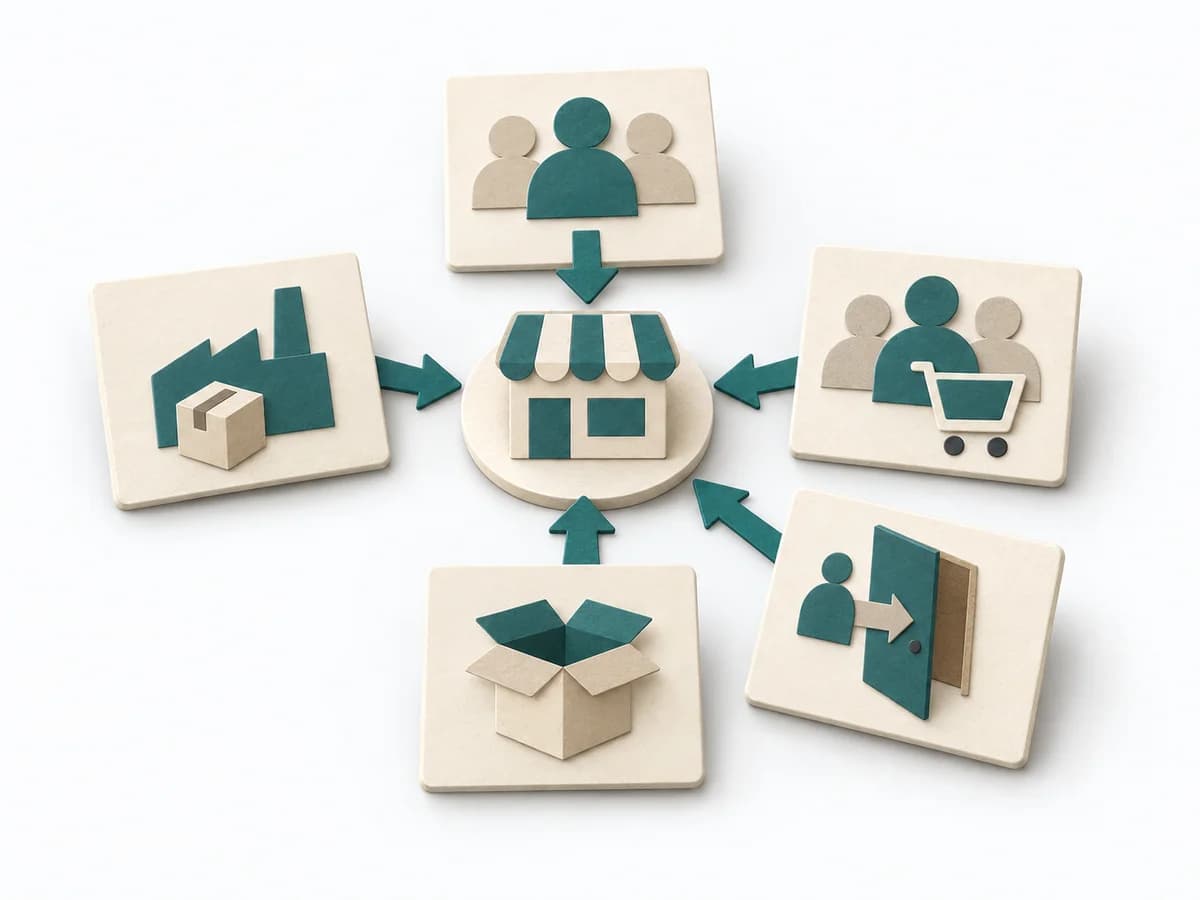 Business Strategy Porter Five Forces |  Business Strategy Scenario Planning |  Business Strategy GAP Analysis |  Product Strategy Impact Mapping |
|---|---|---|---|---|
Purposedifferent | Porter Five Forces analyzes the forces that shape competitive pressure and profitability in a market. The view of market structure goes beyond individual competitors and reveals systemic pressure points. | Scenario Planning opens the view to several plausible futures instead of a single forecast. The method protects strategies from depending on too narrow an expected path. | GAP Analysis compares the current state with a target picture and makes the distance manageable. It becomes useful when, ahead of new initiatives, it must become clear which capabilities, processes, or resources are missing. | When a goal needs to be connected to several possible paths, it shows chains of impact instead of feature lists. It connects business goal, behavior change, and measures. |
Complexitydifferent | Medium | High | Medium | Medium |
Timedifferent | 1-3 h | 0.5-2 Tage | 1-3 h | 45-90 min |
Participantsdifferent | 2-8 | 4-12 | 2-8 | 3-8 |
Formatdifferent | Workshop + async | Workshop | Workshop + async | Workshop |
Outputdifferent | Five Forces Analysis, Competitive Risks, Strategic Options | Scenario Set, Strategic Implications, Robust Options | Gap Matrix, Action Plan, Risk Notes | Impact Map, Outcome Hypotheses, Delivery Options |
Tags1 shared | StrategyCompetitionMarket | StrategyUncertaintyPlanning | StrategyAnalysisPlanning | OutcomesStrategyBehaviorPlanning |