View methods side by side.
Choose up to four methods. Add them using the search and share the comparison by copying its link.
| Criterion |  Business Strategy Porter Five Forces | 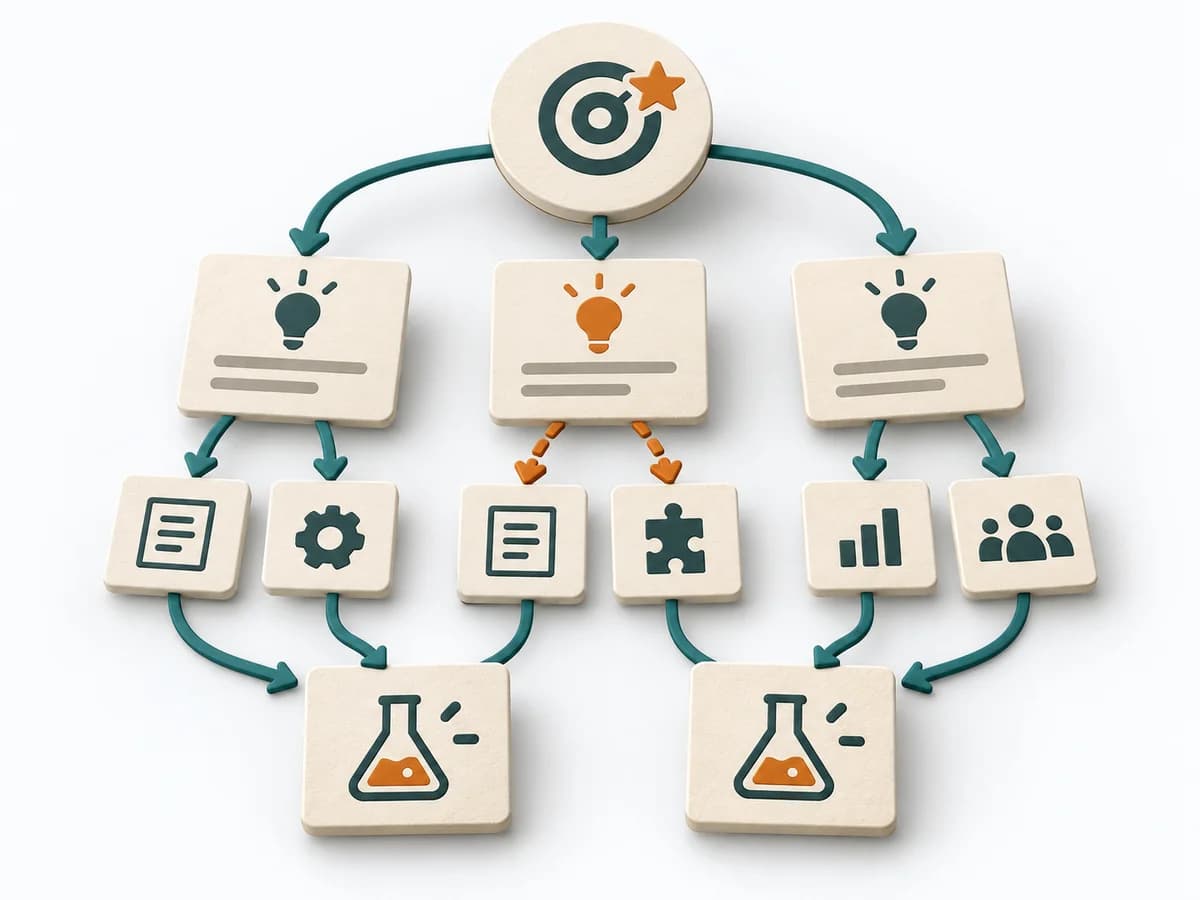 Product Discovery Opportunity Solution Tree |  UX Design Lean UX Canvas |  Product Discovery Test Card |
|---|---|---|---|---|
Purposedifferent | Porter Five Forces analyzes the forces that shape competitive pressure and profitability in a market. The view of market structure goes beyond individual competitors and reveals systemic pressure points. | When discovery keeps swinging between goals, ideas, and learning loops, it creates clear steering logic. It connects the desired outcome, opportunities, and experiments into a legible structure. | The Lean UX Canvas helps clarify user behavior, touchpoints, and concept decisions. It makes assumptions and desired outcomes visible and captures the result as a completed canvas, hypothesis list, and first experiment. | The Test Card turns a critical assumption into a testable claim and specifies in advance which result counts as success. |
Complexitydifferent | Medium | Medium | Medium | Low |
Timedifferent | 1-3 h | 1-2 h Setup, laufend | 2-3 h | 20-35 min |
Participantsdifferent | 2-8 | 2-6 | 3-8 | 1-5 |
Formatsame | Workshop + async | Workshop + async | Workshop + async | Workshop + async |
Outputdifferent | Five Forces Analysis, Competitive Risks, Strategic Options | Opportunity Solution Tree, Experiment Backlog, Learning Log | Completed Lean UX Canvas, Hypothesis list, First experiment | Test Card with a pre-set threshold |
Tagsno overlap | StrategyCompetitionMarket | DiscoveryOutcomesExperimentsOpportunity | CanvasHypothesisOutcomesDiscovery | ExperimentsValidationDiscoveryHypothesis |