View methods side by side.
Choose up to four methods. Add them using the search and share the comparison by copying its link.
| Criterion |  Business Strategy Porter Five Forces |  Product Strategy Impact Mapping |  Innovation Lean Startup | 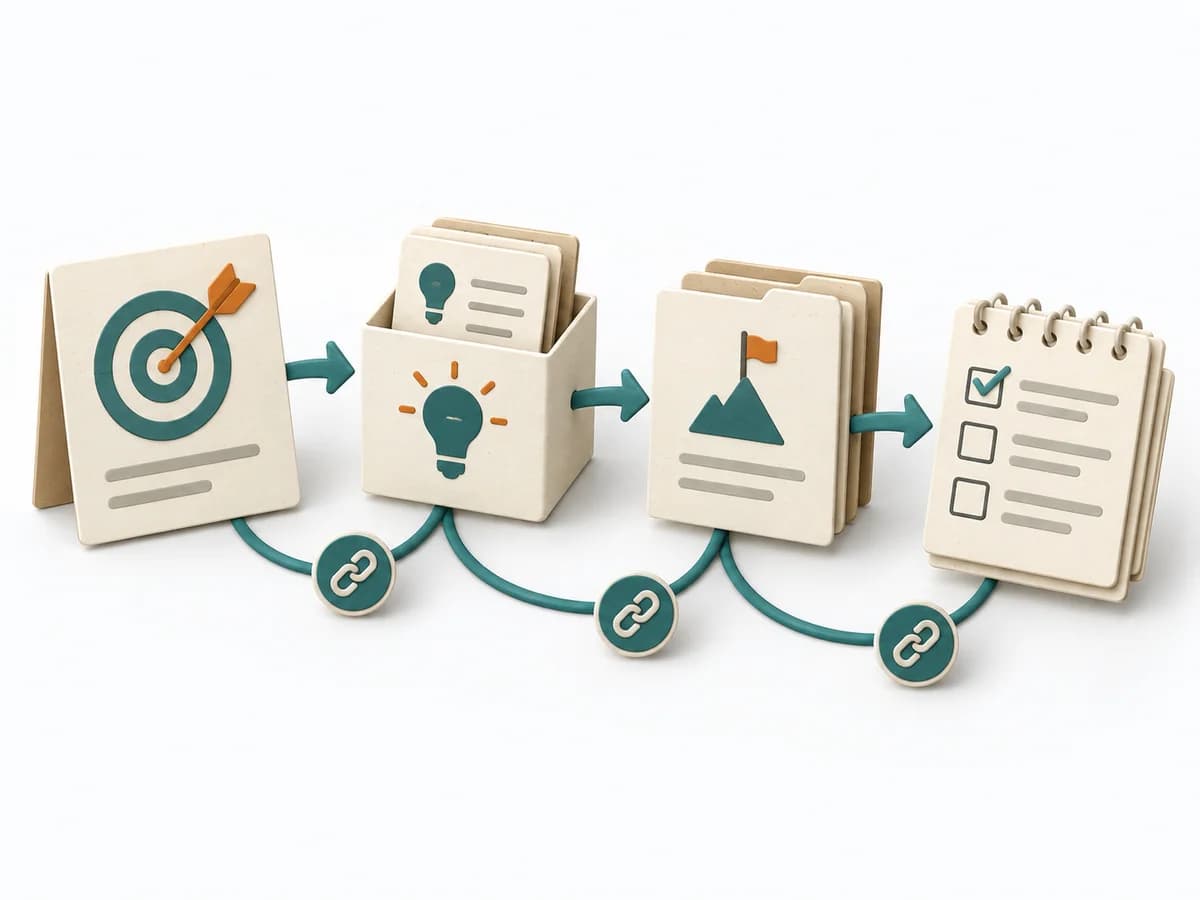 Product Strategy GIST Planning |
|---|---|---|---|---|
Purposedifferent | Porter Five Forces analyzes the forces that shape competitive pressure and profitability in a market. The view of market structure goes beyond individual competitors and reveals systemic pressure points. | When a goal needs to be connected to several possible paths, it shows chains of impact instead of feature lists. It connects business goal, behavior change, and measures. | For uncertain business assumptions, the method forces the idea into contact with real market reactions early. It separates wishful picture, assumption, and observable behavior, so that learning becomes faster than planning. This translates uncertainty into measurable insight. | GIST Planning helps clarify target groups, value, goals, and priorities. It links customer value, product logic, and decision priorities, and captures the result as goals, an idea bank, and a step-project list. |
Complexitysame | Medium | Medium | Medium | Medium |
Timedifferent | 1-3 h | 45-90 min | Wochen bis Monate je Lernzyklus | Wochen bis Monate je Goal |
Participantsdifferent | 2-8 | 3-8 | 2-8 | 3-10 |
Formatdifferent | Workshop + async | Workshop | Workshop + async | Workshop + async |
Outputdifferent | Five Forces Analysis, Competitive Risks, Strategic Options | Impact Map, Outcome Hypotheses, Delivery Options | Hypothesis list, MVPs, Learning reports, Pivot or persevere decision | Goals, Idea bank, Step-project list, Tasks, Learning reports |
Tagsno overlap | StrategyCompetitionMarket | OutcomesStrategyBehaviorPlanning | LeanStartupValidationMVP | RoadmapOutcomesPlanningExperiments |