View methods side by side.
Choose up to four methods. Add them using the search and share the comparison by copying its link.
| Criterion | 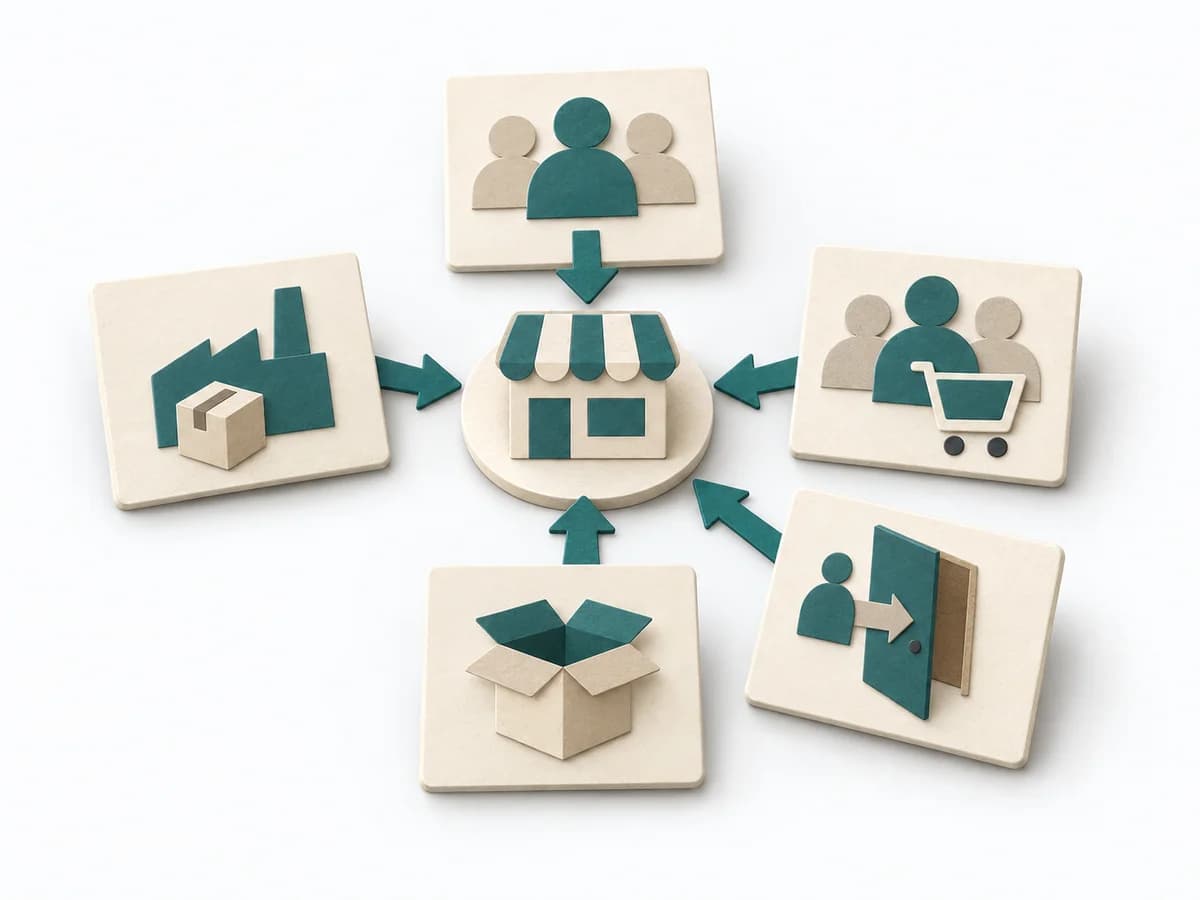 Business Strategy Porter Five Forces |  Decision Making Delphi Method |  Business Strategy McKinsey 7S |  Facilitation Alignment Mapping |
|---|---|---|---|---|
Purposedifferent | Porter Five Forces analyzes the forces that shape competitive pressure and profitability in a market. The view of market structure goes beyond individual competitors and reveals systemic pressure points. | When knowledge is distributed and direct dominance should be avoided, groups quickly fall under the sway of their opinion leaders. The Delphi Method gathers assessments iteratively and gradually brings expert judgments closer together. | McKinsey 7S checks whether Strategy, Structure, Systems, Shared Values, Skills, Style, and Staff fit together. Organizational misalignments become visible across multiple levers as a result. | When several people work toward one goal but hold different mental maps, Alignment Mapping makes the discrepancies visible. It arranges goals, assumptions, and priorities so shared direction becomes verifiable. |
Complexitydifferent | Medium | High | Medium | Medium |
Timedifferent | 1-3 h | 1-4 Wochen | 2-4 h | 1-2 h |
Participantsdifferent | 2-8 | 6-30 Experten | 3-12 | 4-12 |
Formatdifferent | Workshop + async | Async | Workshop | Workshop |
Outputdifferent | Five Forces Analysis, Competitive Risks, Strategic Options | Expert Forecast, Consensus Range, Assumption Notes | 7S Assessment, Alignment Gaps, Change Actions | Alignment Map, Open Issues, Decision Questions |
Tags1 shared | StrategyCompetitionMarket | ForecastingExpertsDecisionStrategy | OrganizationStrategyAlignmentChange | AlignmentStakeholdersStrategyFacilitation |