View methods side by side.
Choose up to four methods. Add them using the search and share the comparison by copying its link.
| Criterion |  Business Strategy Porter Five Forces |  Decision Making Assumption Surfacing | 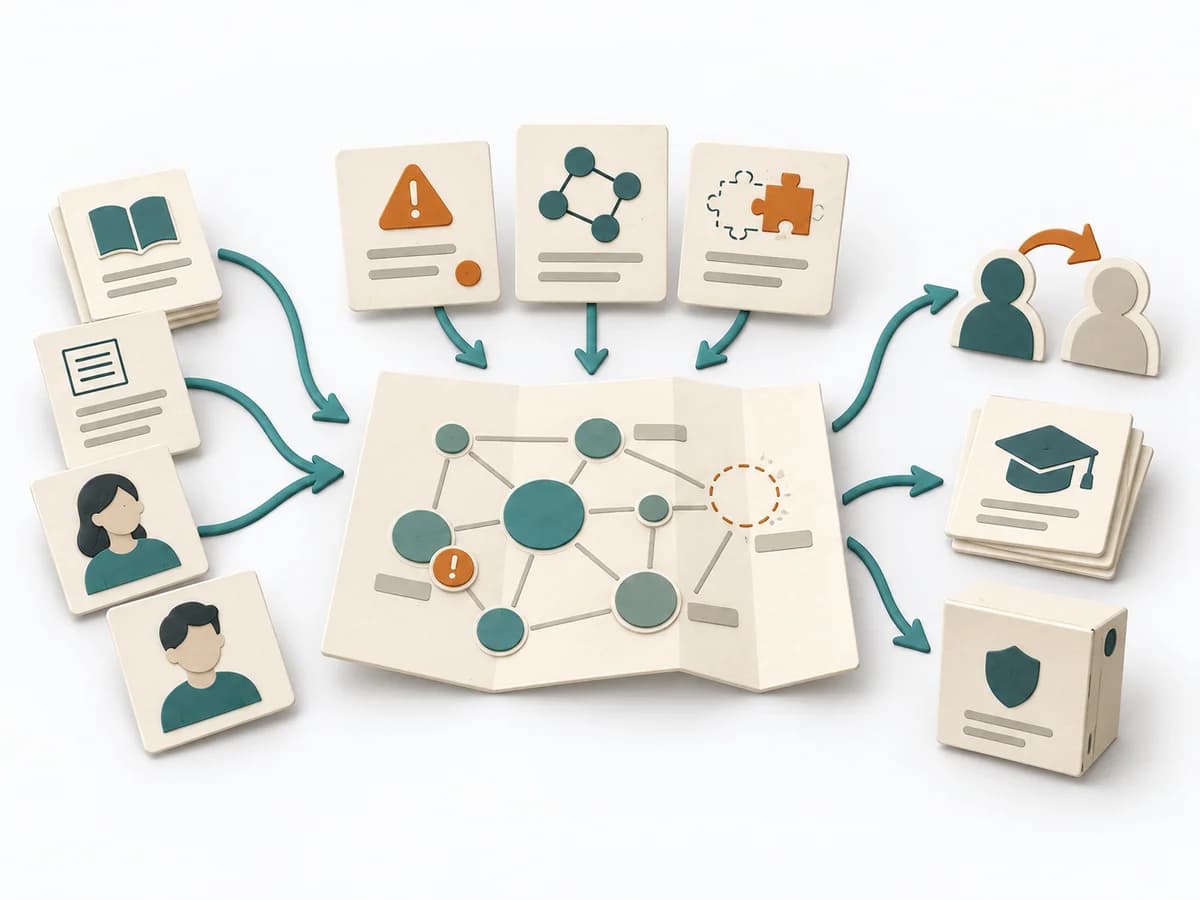 Knowledge Modeling Knowledge Mapping | 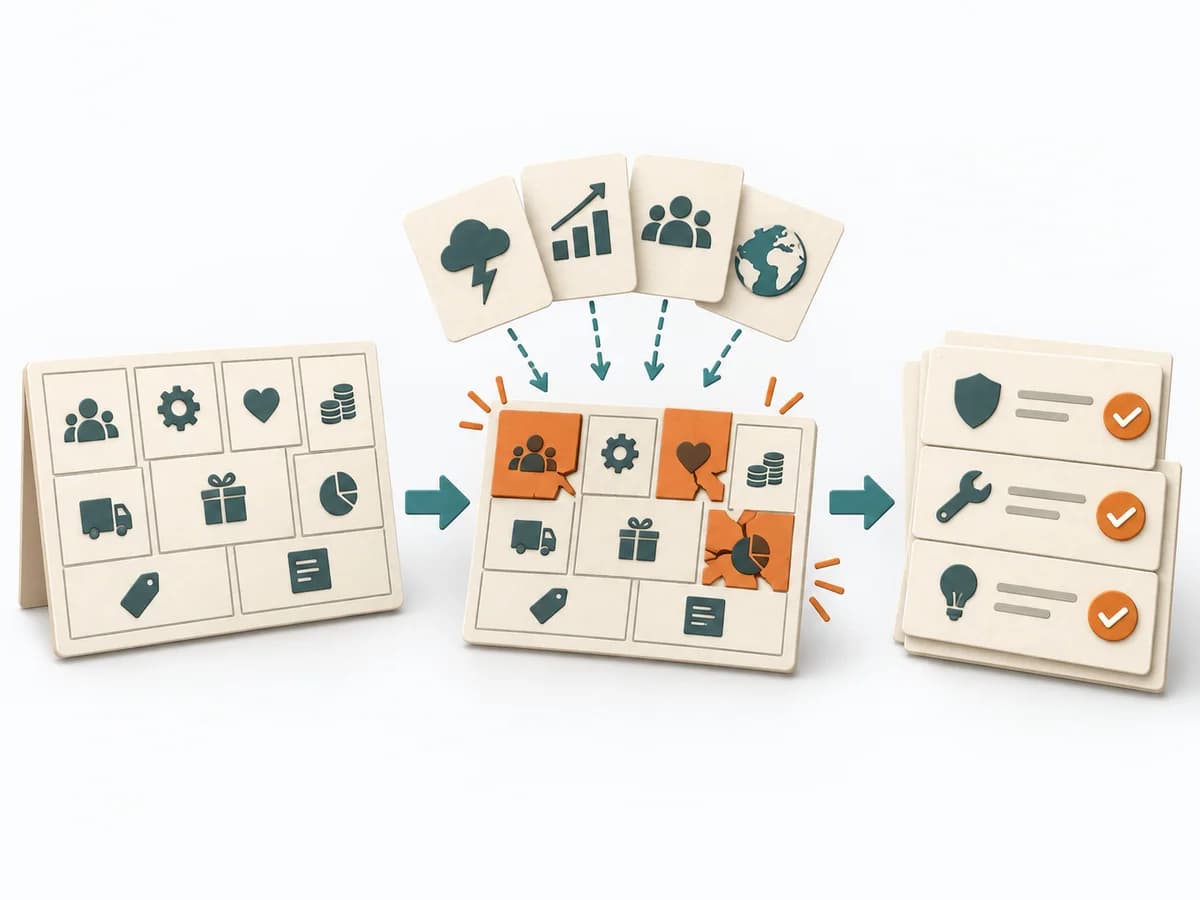 Business Strategy Business Model Stress Test |
|---|---|---|---|---|
Purposedifferent | Porter Five Forces analyzes the forces that shape competitive pressure and profitability in a market. The view of market structure goes beyond individual competitors and reveals systemic pressure points. | Plans often contain assumptions that were never openly stated and remain dangerous precisely because of that. Assumption Surfacing makes these silent premises visible and prioritizes which of them carry the initiative or could sink it. | Knowledge Mapping makes knowledge, gaps, and transfer paths visible across a field. It fits when expertise should not just exist but also be findable and transferable. | A Business Model Stress Test checks how well a business model holds up under pressure and headwinds. It compares strengths, risks, market logic, and courses of action. The result is captured as a stress-test report and action plan per scenario. |
Complexitydifferent | Medium | Low | Medium | High |
Timedifferent | 1-3 h | 45-90 min | 1-3 h | Half day |
Participantsdifferent | 2-8 | 2-8 | 3-12 | 3-8 |
Formatdifferent | Workshop + async | Workshop + async | Workshop | Workshop |
Outputdifferent | Five Forces Analysis, Competitive Risks, Strategic Options | Assumption List, Critical Assumptions, Learning Plan | Knowledge Map, Critical Knowledge Areas, Transfer Plan | Stress Test Report, Action Plan per Scenario |
Tagsno overlap | StrategyCompetitionMarket | AssumptionsRiskDecisionDiscovery | KnowledgeMappingRisk | StrategyBusiness modelRiskDiagnosis |