View methods side by side.
Choose up to four methods. Add them using the search and share the comparison by copying its link.
Selected:Porter Five ForcesArchitecture Decision RecordArchitecture Communication CanvasAlignment Mapping
| Criterion | 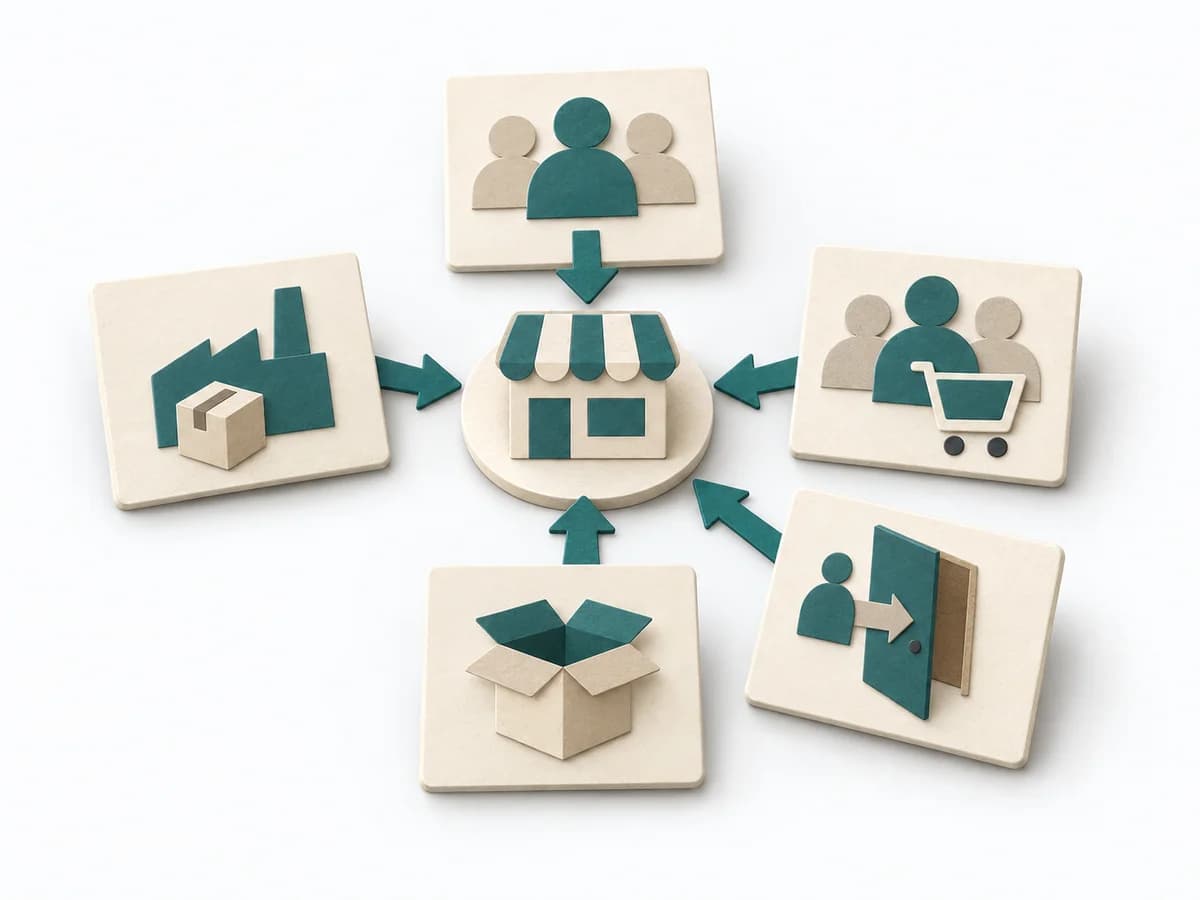 Business Strategy Porter Five Forces |  Architecture Architecture Decision Record |  Architecture Architecture Communication Canvas |  Facilitation Alignment Mapping |
|---|---|---|---|---|
Purposedifferent | Porter Five Forces analyzes the forces that shape competitive pressure and profitability in a market. The view of market structure goes beyond individual competitors and reveals systemic pressure points. | An ADR permanently records an architecture decision with context, trade-offs, and consequence. It creates continuity for later changes because the decision path stays traceable. | The Architecture Communication Canvas plans architecture communication so the right people receive the right message. The method turns technical complexity into deliberate communication design. | When several people work toward one goal but hold different mental maps, Alignment Mapping makes the discrepancies visible. It arranges goals, assumptions, and priorities so shared direction becomes verifiable. |
Complexitydifferent | Medium | Low | Medium | Medium |
Timedifferent | 1-3 h | 15-45 min | 60-120 min | 1-2 h |
Participantsdifferent | 2-8 | 1-3 | 2-8 | 4-12 |
Formatdifferent | Workshop + async | Async | Workshop + async | Workshop |
Outputdifferent | Five Forces Analysis, Competitive Risks, Strategic Options | ADR File, Decision Log, Rationale | Communication Canvas, Stakeholder Messages, Architecture Communication Plan | Alignment Map, Open Issues, Decision Questions |
Tagsno overlap | StrategyCompetitionMarket | ArchitectureRationaleDocumentationGovernance | ArchitectureCommunicationStakeholdersCanvas | AlignmentStakeholdersStrategyFacilitation |