View methods side by side.
Choose up to four methods. Add them using the search and share the comparison by copying its link.
| Criterion | 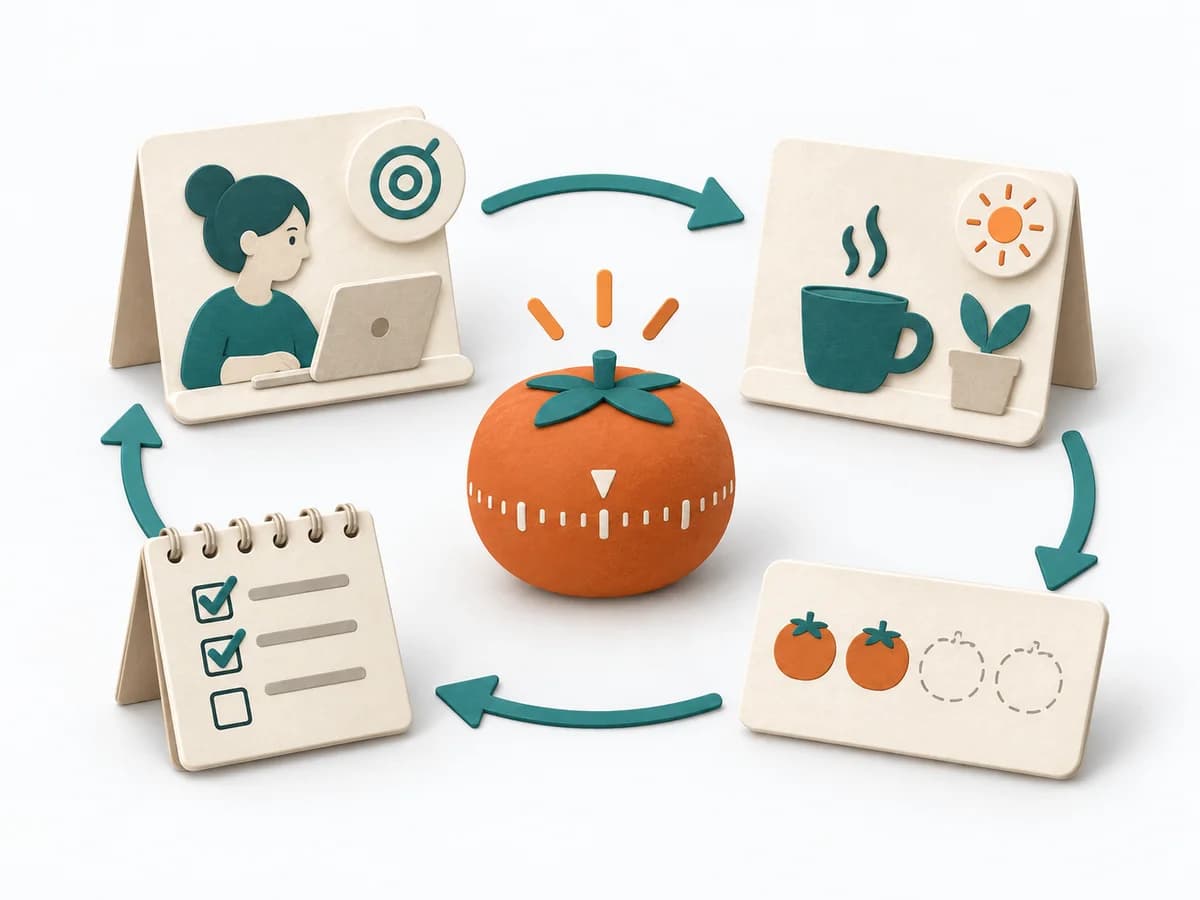 Operations Pomodoro Technique |  Product Discovery Experiment Canvas |  Product Discovery Assumption Mapping | 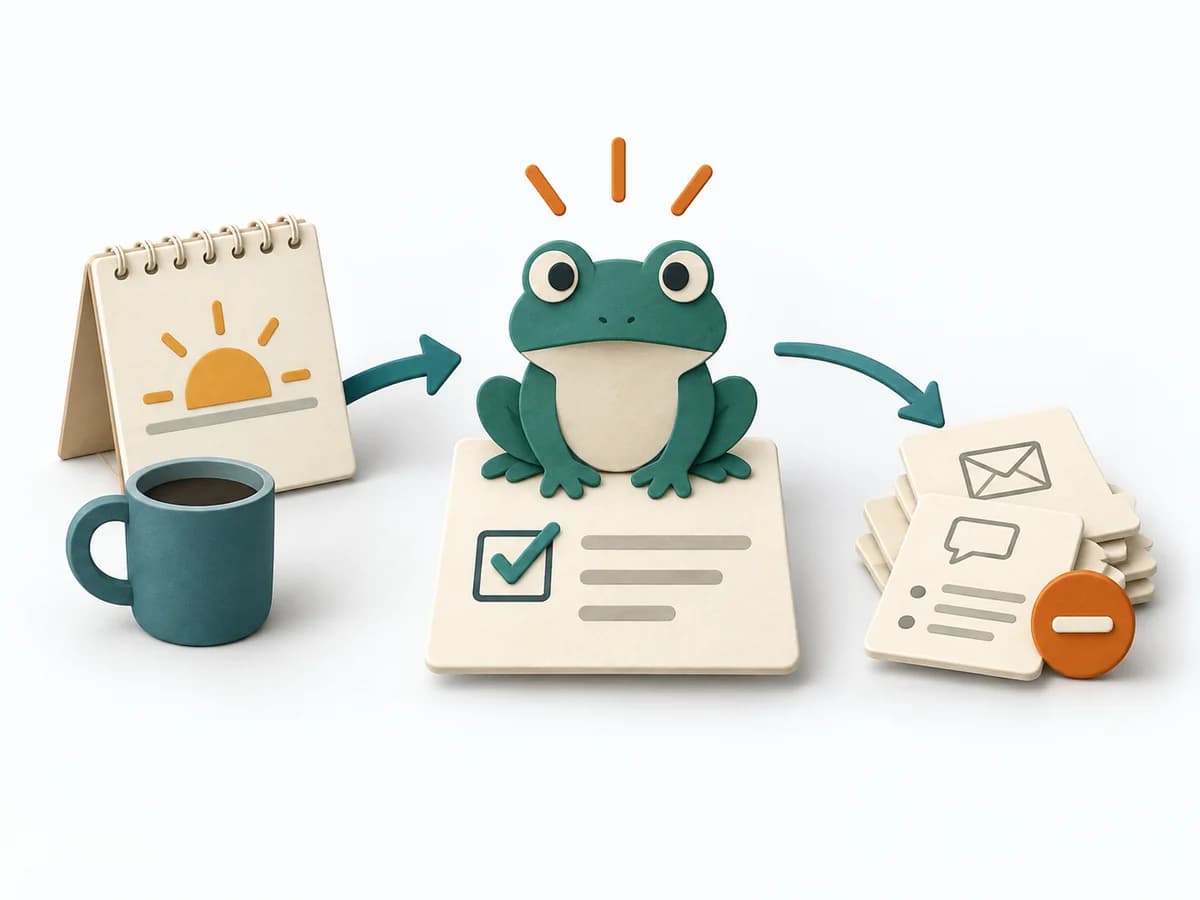 Operations Eat the Frog |
|---|---|---|---|---|
Purposedifferent | For easily distracted solo work, the method sets clear time boundaries for concentrated work. It protects attention when large tasks would otherwise fall apart into small avoidance moves. | When experiments become unreadable after the fact, it arranges hypothesis, signal, and learning goal on a single canvas. It separates problem, assumption, solution, and evidence. The result is captured as a Completed Experiment Canvas and a Success Metric. | When assumptions still sit unordered in the room, it weighs uncertainty against leverage. It makes visible which hypotheses should be checked first. | The method protects energy and attention for the task that creates the largest progress and is often postponed. |
Complexitydifferent | Low | Low | Medium | Low |
Timedifferent | 25 min Zyklen | 30-60 min | 45-60 min | 15-90 min daily |
Participantsdifferent | 1 | 1-5 | 2-8 | 1 |
Formatdifferent | Async | Workshop + async | Workshop + async | Async |
Outputdifferent | Focus Sessions, Task Progress, Interruption Notes | Completed Experiment Canvas, Success Metric | Assumption map, Test backlog, Risk ranking | Priority Task, Completion Note, Daily Focus |
Tagsno overlap | FocusTime managementProductivityExecution | ExperimentsValidationDiscoveryHypothesis | AssumptionsRiskExperimentsValidation | PrioritizationProductivityFocusExecution |