View methods side by side.
Choose up to four methods. Add them using the search and share the comparison by copying its link.
| Criterion |  Systems Thinking Polarity Mapping |  Facilitation Six Thinking Hats |  Facilitation Decision Jam | 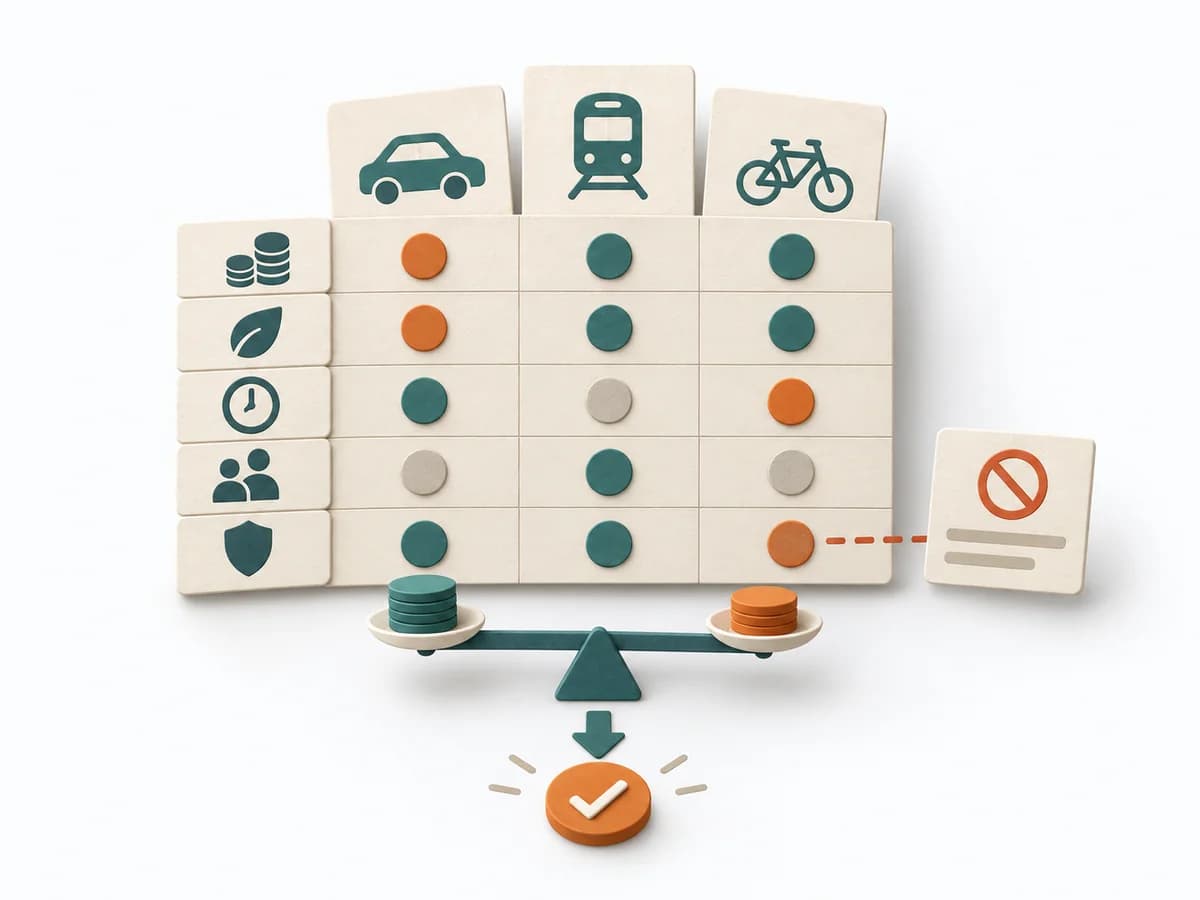 Decision Making Trade-off Analysis |
|---|---|---|---|---|
Purposedifferent | Polarity Mapping makes tensions between two opposing poles tangible, such as standardization and adaptation or control and autonomy. The method guards against making apparent either-or decisions prematurely. | When a topic gets stuck too quickly in the same thinking mode, Six Thinking Hats deliberately separates the perspectives. This means facts, risks, creativity, and emotional signals get worked through one after another instead of mixed together. | When a decision is stuck, Decision Jam loosens the knot through structured separation of problem, idea, and selection. The format creates movement without jumping prematurely at the first seemingly elegant answer. | With limited resources, quality, speed, cost, and risk almost always compete with each other. Trade-off Analysis makes these tensions explicit and prevents decisions from producing hidden side effects. |
Complexitydifferent | Medium | Medium | Low | Medium |
Timedifferent | 1-2 h | 45-90 min | 60-90 min | 45-120 min |
Participantsdifferent | 3-12 | 4-12 | 4-10 | 2-8 |
Formatdifferent | Workshop | Workshop | Workshop | Workshop + async |
Outputdifferent | Polarity Map, Warning Signs, Balance Actions | Perspective Notes, Decision Inputs, Action Items | Problem Cluster, Prioritized Challenge, Experiment | Trade-off Matrix, Criteria List, Decision Rationale, Accepted Downsides |
Tagsno overlap | Systems thinkingTradeoffsLeadership | FacilitationOptionsDecision | FacilitationDecisionProblem solvingWorkshop | TradeoffsDecisionCriteriaOptions |