View methods side by side.
Choose up to four methods. Add them using the search and share the comparison by copying its link.
| Criterion |  Systems Thinking Polarity Mapping | 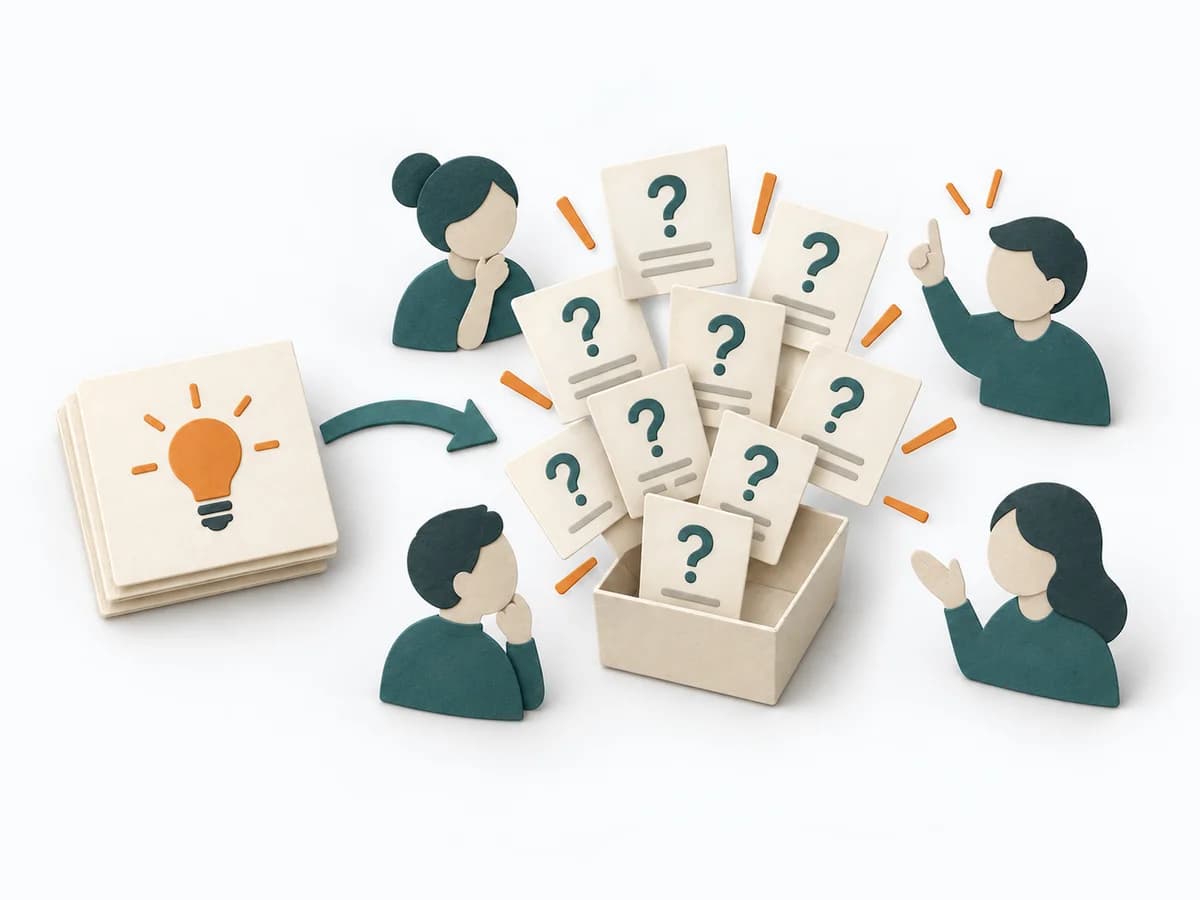 Facilitation Question Burst | 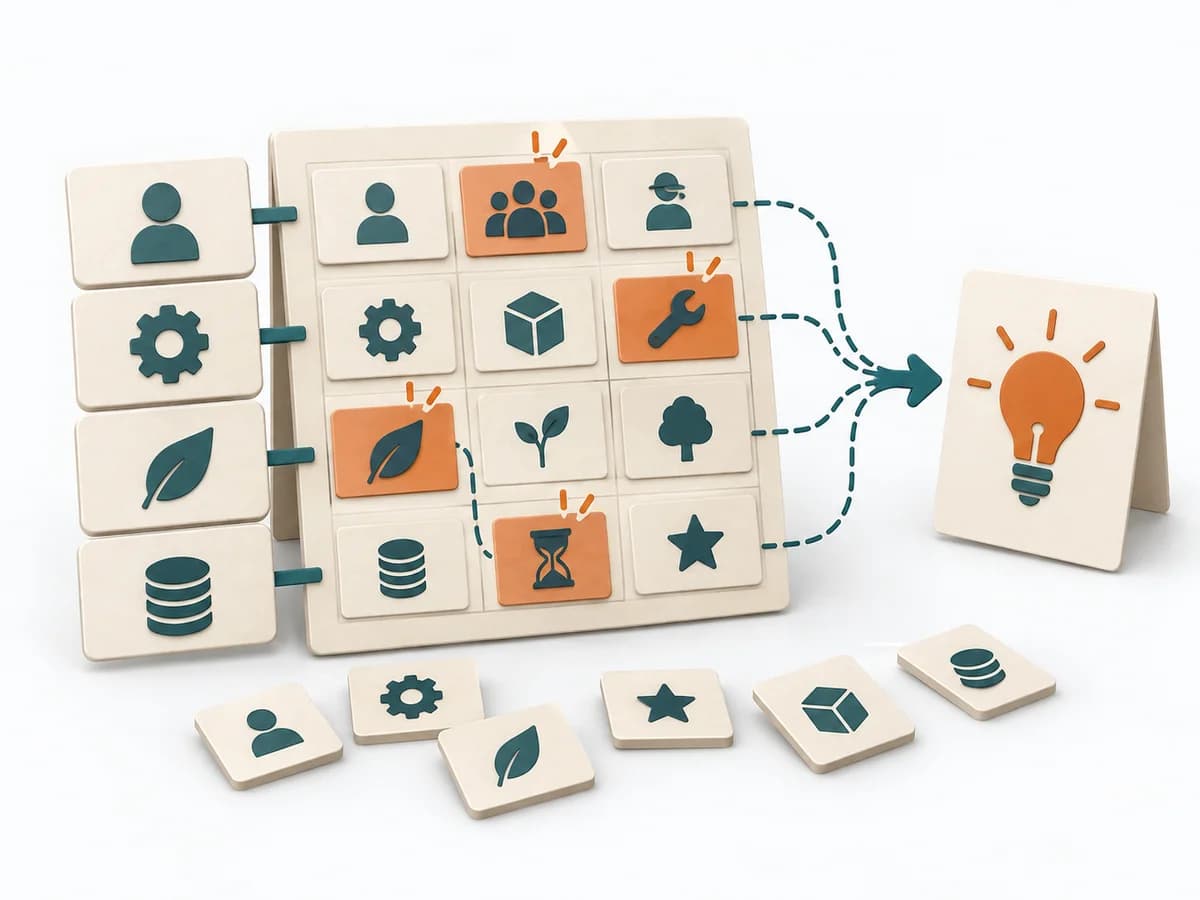 Innovation Morphological Analysis |  Innovation Brainstorming |
|---|---|---|---|---|
Purposedifferent | Polarity Mapping makes tensions between two opposing poles tangible, such as standardization and adaptation or control and autonomy. The method guards against making apparent either-or decisions prematurely. | When a problem gets covered up too quickly with answers, Question Burst puts the better question at the center. The format opens the thinking space before the group commits to an interpretation. | For a search for solutions with many degrees of freedom, a grid emerges for systematic combinations. The method separates features, variants, and exclusion criteria, so the space gets explored deliberately. | When a team faces an open question with many obvious directions, the method first creates breadth instead of premature commitment. It separates idea flow from evaluation and makes lines of thought visible, creating a pool for selection and further development. |
Complexitydifferent | Medium | Low | Medium | Low |
Timedifferent | 1-2 h | 15-30 min | 1-3 h | 30-60 min |
Participantsdifferent | 3-12 | 2-8 | 2-8 | 4-12 |
Formatdifferent | Workshop | Workshop | Workshop + async | Workshop |
Outputdifferent | Polarity Map, Warning Signs, Balance Actions | Question List, Reframed Challenge, Learning Prompts | Morphological Box, Concept Combinations, Idea Shortlist | Idea pool, Theme clusters, Shortlist |
Tagsno overlap | Systems thinkingTradeoffsLeadership | QuestionsReframingFacilitationSensemaking | IdeationInnovationCreativity | BrainstormingIdeationCreativityWorkshopDivergence |