View methods side by side.
Choose up to four methods. Add them using the search and share the comparison by copying its link.
| Criterion |  Systems Thinking Polarity Mapping | 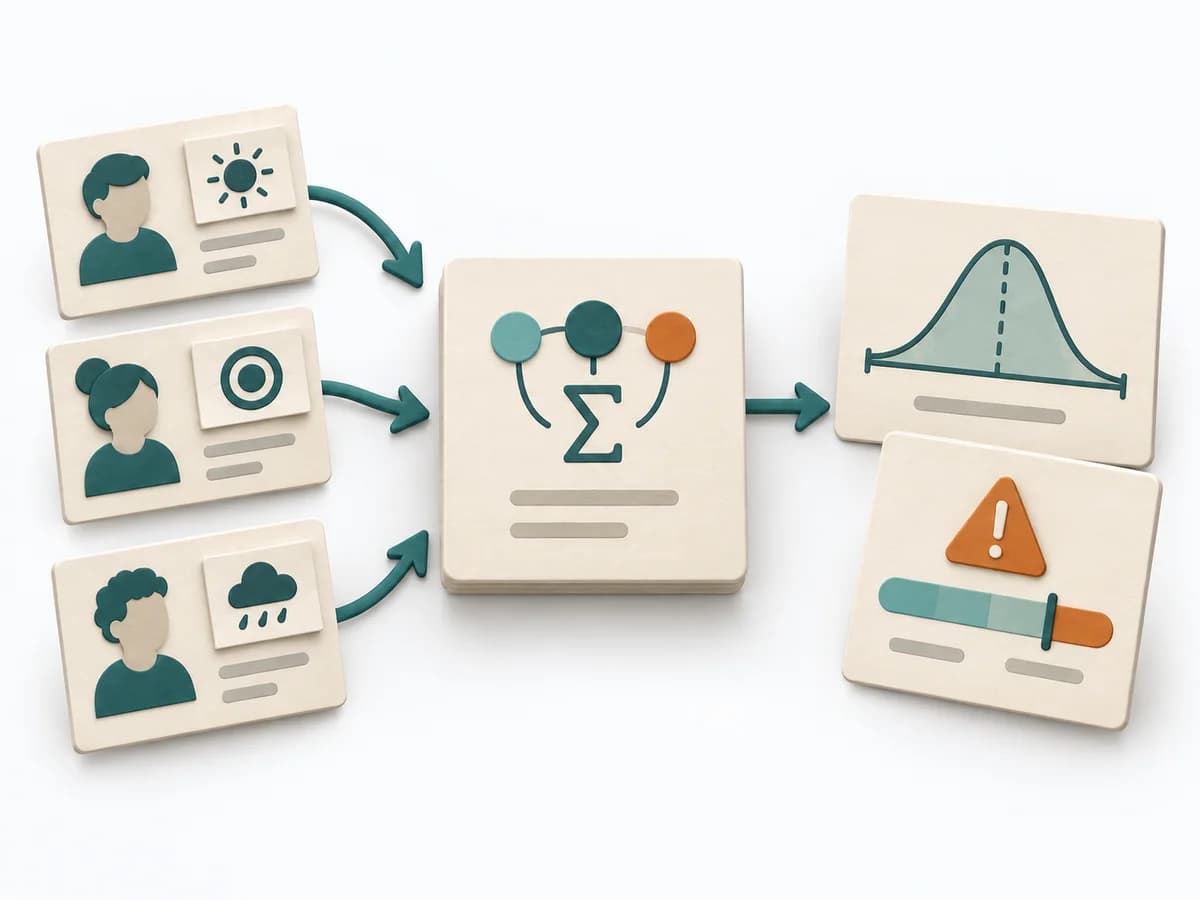 Decision Making PERT Estimation |  Decision Making Wideband Delphi | 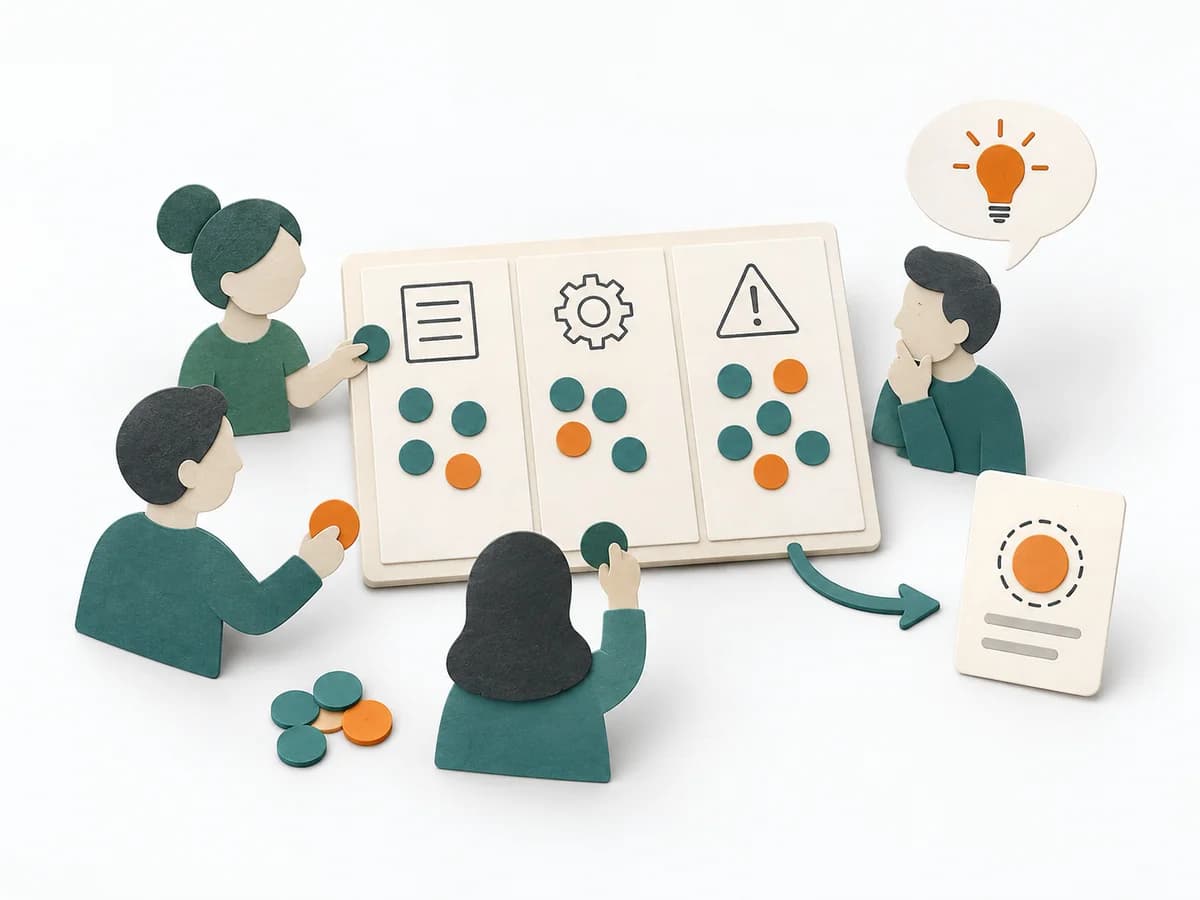 Facilitation Dot Estimation |
|---|---|---|---|---|
Purposedifferent | Polarity Mapping makes tensions between two opposing poles tangible, such as standardization and adaptation or control and autonomy. The method guards against making apparent either-or decisions prematurely. | On complex initiatives, a plain average tends to understate just how uncertain the outcome really is. It separates options, evaluation criteria, and open risks. The result is captured as a PERT Estimate, Expected Value, and Risk Notes. | A single opinion rarely holds up for planning when the future is genuinely uncertain. It separates options, evaluation criteria, and open risks. The result is captured as an Estimate Range, Assumption Log, and Expert Consensus Notes. | When size or effort can only be estimated roughly, Dot Estimation condenses the group's experience into a quick range. It turns individual contributions into a visible selection. The result is captured as an Effort Heatmap, Risk Signals, and Discussion Targets. |
Complexitydifferent | Medium | Medium | High | Low |
Timedifferent | 1-2 h | 15-45 min | 1-4 h or multiple rounds | 5-20 min |
Participantsdifferent | 3-12 | 1-8 | 4-12 Experten | 3-20 |
Formatdifferent | Workshop | Workshop + async | Workshop + async | Workshop |
Outputdifferent | Polarity Map, Warning Signs, Balance Actions | PERT Estimate, Expected Value, Risk Notes | Estimate Range, Assumption Log, Expert Consensus Notes | Effort Heatmap, Risk Signals, Discussion Targets |
Tagsno overlap | Systems thinkingTradeoffsLeadership | EstimationUncertaintyRisk | EstimationExpertsForecasting | EstimationEffortRisk |