View methods side by side.
Choose up to four methods. Add them using the search and share the comparison by copying its link.
| Criterion |  Systems Thinking Polarity Mapping |  Systems Thinking Leverage Points |  Operations Root Cause Analysis | 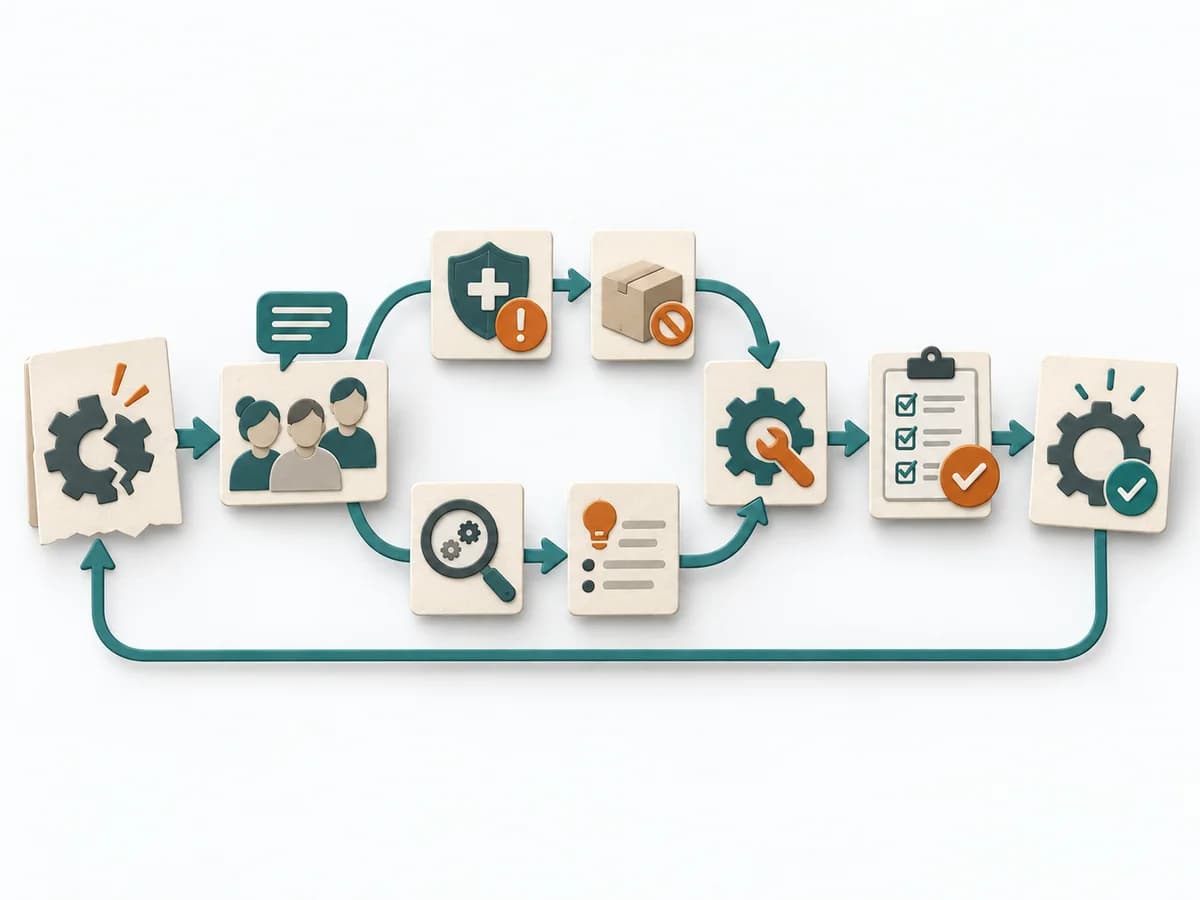 Operations 8D Problem Solving |
|---|---|---|---|---|
Purposedifferent | Polarity Mapping makes tensions between two opposing poles tangible, such as standardization and adaptation or control and autonomy. The method guards against making apparent either-or decisions prematurely. | Leverage Points show exactly where interventions in a system produce a disproportionate effect. It draws relationships, patterns, and feedback loops. The result is captured as a leverage map and action strategy. | When a problem keeps recurring and the cause stays unclear, the method exposes the underlying mechanism. It separates symptom, guess, and robust explanation from one another. | For an acute quality or delivery problem, the method structures immediate protection and root cause work together. It keeps the situation stable while the actual cause is investigated cleanly. |
Complexitydifferent | Medium | High | Medium | High |
Timedifferent | 1-2 h | Half day | 1-4 h | 1-6 Wochen |
Participantsdifferent | 3-12 | 3-12 | 3-8 | 4-10 |
Formatdifferent | Workshop | Workshop | Workshop + async | Workshop + async |
Outputdifferent | Polarity Map, Warning Signs, Balance Actions | Leverage Map, Action Strategy | Problem Statement, Cause Hypotheses, Confirmed Causes, Action Plan | 8D Report, Containment Plan, Root Cause Evidence, Corrective Action Plan |
Tagsno overlap | Systems thinkingTradeoffsLeadership | Systems thinkingChangeStrategy | Root causeProblem solvingQualityIncident | QualityProblem solvingRoot cause |