View methods side by side.
Choose up to four methods. Add them using the search and share the comparison by copying its link.
| Criterion |  Systems Thinking Polarity Mapping |  Growth Hooked Model |  Decision Making Force Field Analysis | 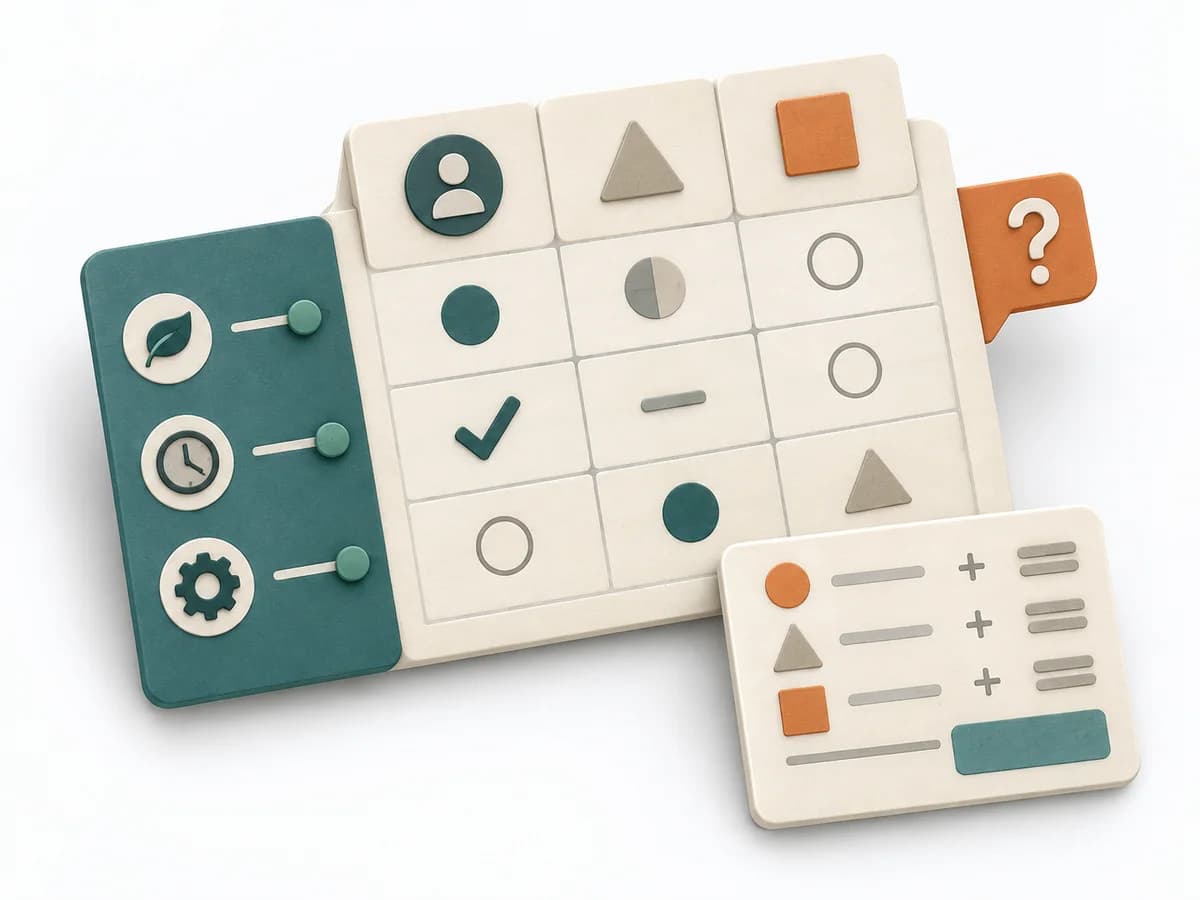 Decision Making Decision Matrix |
|---|---|---|---|---|
Purposedifferent | Polarity Mapping makes tensions between two opposing poles tangible, such as standardization and adaptation or control and autonomy. The method guards against making apparent either-or decisions prematurely. | The Hooked Model helps clarify engagement loops, user behavior, and experiments. It makes repeat behavior measurable and captures the result as a hooked loop, trigger map, and reward design. | In change initiatives, supporting and restraining forces sit at the table at the same time. Force Field Analysis makes these tensions explicit and shows where change can be pushed forward by strengthening or relieving. | When several options collide with several criteria, comparison quickly becomes subjective. A Decision Matrix makes the trade-off visible and brings weighting, criteria, and options into a shared logic. |
Complexitydifferent | Medium | Medium | Low | Medium |
Timedifferent | 1-2 h | Multiple workshops over several weeks | 45-90 min | 45-90 min |
Participantsdifferent | 3-12 | 2-8 | 3-12 | 2-8 |
Formatdifferent | Workshop | Workshop + async | Workshop | Workshop + async |
Outputdifferent | Polarity Map, Warning Signs, Balance Actions | Hooked loop, Trigger map, Reward design, Ethics check | Force Field Map, Change Levers, Risk Notes | Decision Matrix, Scoring Rationale, Selected Option |
Tagsno overlap | Systems thinkingTradeoffsLeadership | GrowthBehaviorRetention | ChangeDecisionStrategy | DecisionCriteriaScoringTradeoffs |