View methods side by side.
Choose up to four methods. Add them using the search and share the comparison by copying its link.
| Criterion |  Systems Thinking Polarity Mapping | 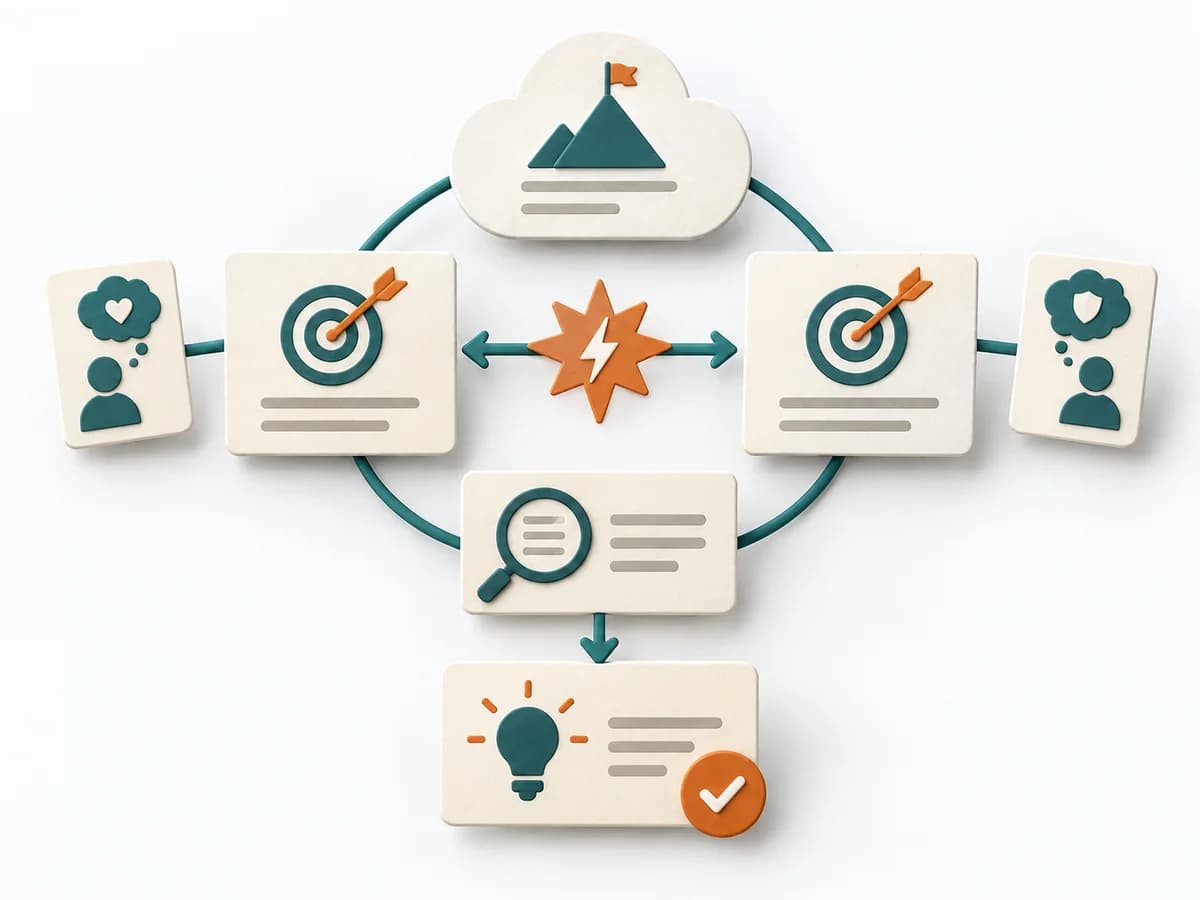 Systems Thinking Evaporating Cloud |  Architecture Request for Comments |  Decision Making Assumption Surfacing |
|---|---|---|---|---|
Purposedifferent | Polarity Mapping makes tensions between two opposing poles tangible, such as standardization and adaptation or control and autonomy. The method guards against making apparent either-or decisions prematurely. | The method makes visible why two seemingly incompatible demands arise and which assumption must be tested to resolve the conflict. | An RFC clarifies architecture context, options, and consequences. It structures technical context, alternatives, tradeoffs, open questions, and review feedback, and captures the result as an RFC document, reviewer comments, and a decision rationale. | Plans often contain assumptions that were never openly stated and remain dangerous precisely because of that. Assumption Surfacing makes these silent premises visible and prioritizes which of them carry the initiative or could sink it. |
Complexitydifferent | Medium | Medium | Medium | Low |
Timedifferent | 1-2 h | 60-120 min | 1-3 Wochen vom Draft bis zur Entscheidung | 45-90 min |
Participantsdifferent | 3-12 | 2-8 | 3-20 Reviewer | 2-8 |
Formatdifferent | Workshop | Workshop | Async | Workshop + async |
Outputdifferent | Polarity Map, Warning Signs, Balance Actions | Conflict Cloud, Assumption List, Breakthrough Ideas, Next Experiments | RFC document, Reviewer comments, Decision rationale, Follow-up ADR or tickets | Assumption List, Critical Assumptions, Learning Plan |
Tagsno overlap | Systems thinkingTradeoffsLeadership | Theory of ConstraintsAssumptionsSystems thinking | ArchitectureDecisionAsyncGovernance | AssumptionsRiskDecisionDiscovery |