View methods side by side.
Choose up to four methods. Add them using the search and share the comparison by copying its link.
| Criterion |  Systems Thinking Polarity Mapping | 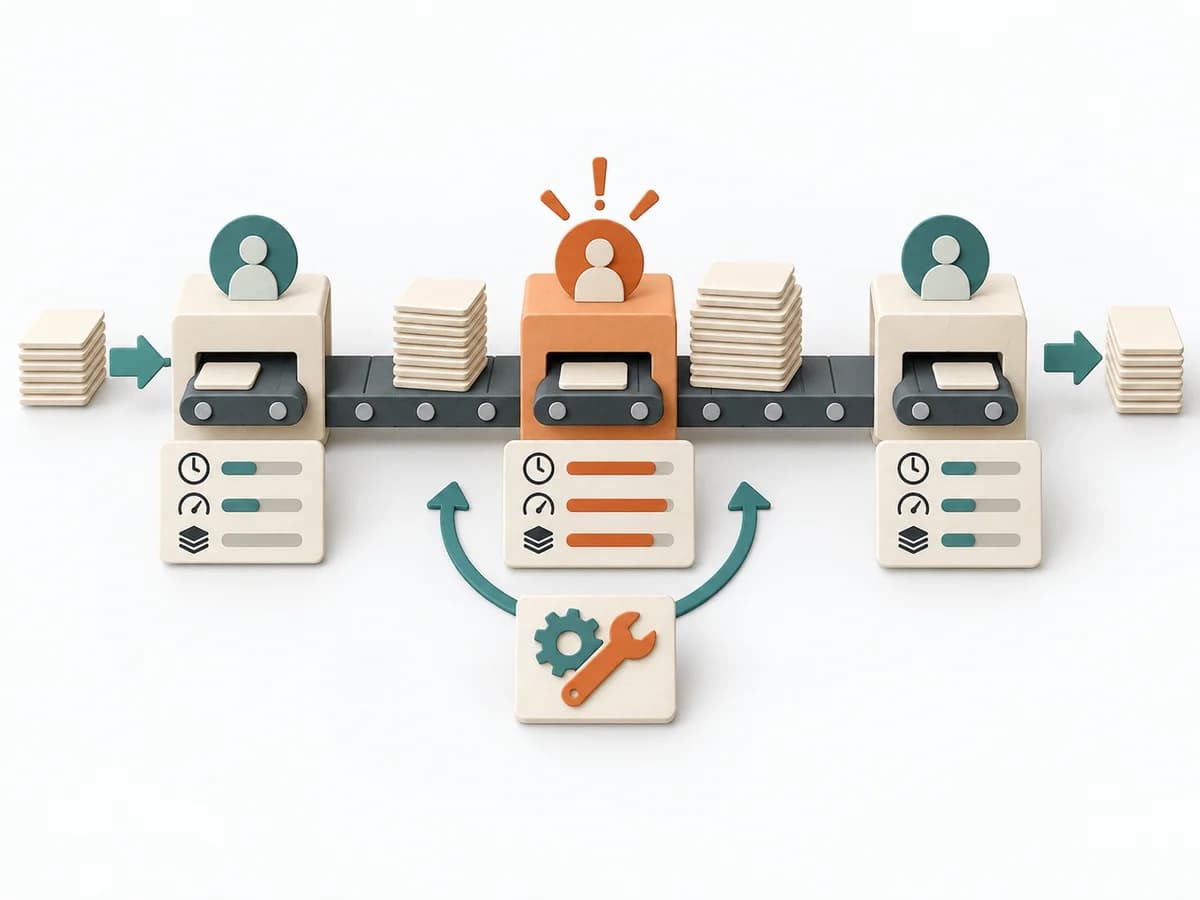 Operations Bottleneck Analysis |  Facilitation Responsibility Poker |  Systems Thinking Current Reality Tree |
|---|---|---|---|---|
Purposedifferent | Polarity Mapping makes tensions between two opposing poles tangible, such as standardization and adaptation or control and autonomy. The method guards against making apparent either-or decisions prematurely. | For a flow that backs up at one point, the method looks for the capacity limit with the greatest leverage. It explains why extra effort elsewhere barely improves throughput. | When it stays unclear who carries responsibility and who only contributes, Responsibility Poker makes the distribution of responsibility explicit. It sharpens the boundaries between weighing in, deciding, and bearing consequences. | A Current Reality Tree condenses many symptoms into a few causal chains. The method makes visible which core problems drive several negative effects at once. |
Complexitydifferent | Medium | Medium | Low | High |
Timedifferent | 1-2 h | 1-3 h | 45-90 min | 2-6 h |
Participantsdifferent | 3-12 | 3-8 | 3-10 | 3-8 |
Formatdifferent | Workshop | Workshop + async | Workshop | Workshop |
Outputdifferent | Polarity Map, Warning Signs, Balance Actions | Bottleneck Map, Flow Metrics, Improvement Options, Follow-up Measures | Responsibility Map, Role Agreements, Open Questions | Current Reality Tree, Core Problems, Intervention Ideas |
Tagsno overlap | Systems thinkingTradeoffsLeadership | FlowMeasurementConstraints | RolesResponsibilityTeamFacilitation | Systems thinkingRoot causeConstraintsCausality |