View methods side by side.
Choose up to four methods. Add them using the search and share the comparison by copying its link.
| Criterion |  Systems Thinking Polarity Mapping | 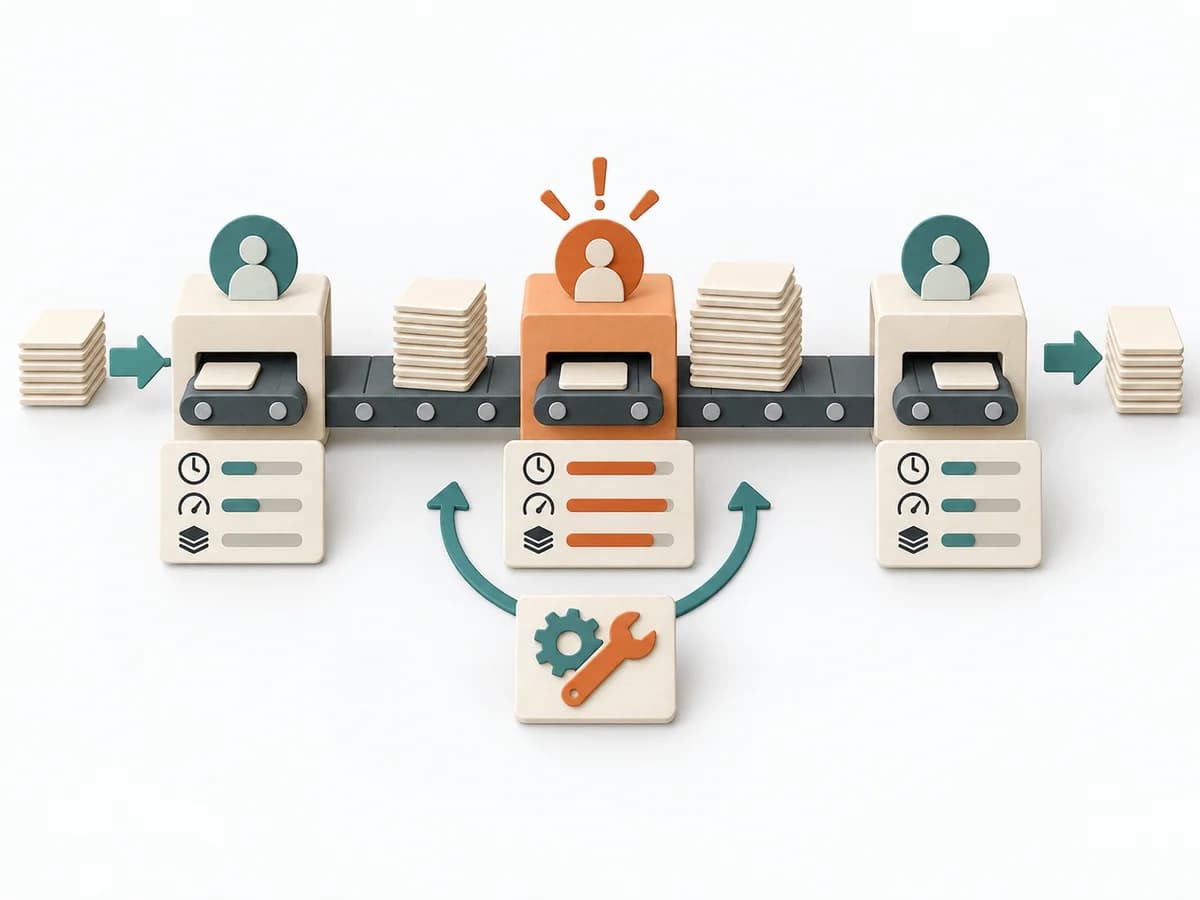 Operations Bottleneck Analysis | 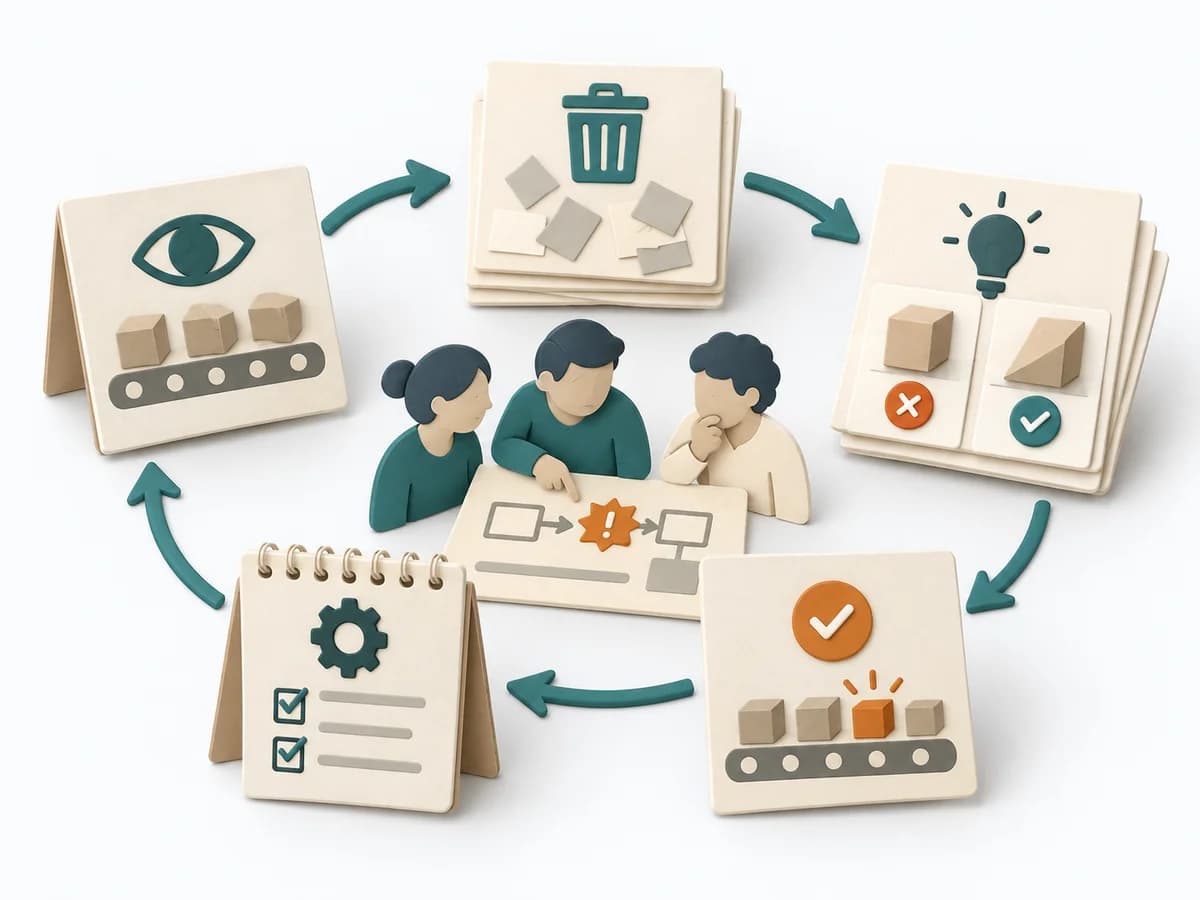 Operations Kaizen Event |  Operations A3 Problem Solving |
|---|---|---|---|---|
Purposedifferent | Polarity Mapping makes tensions between two opposing poles tangible, such as standardization and adaptation or control and autonomy. The method guards against making apparent either-or decisions prematurely. | For a flow that backs up at one point, the method looks for the capacity limit with the greatest leverage. It explains why extra effort elsewhere barely improves throughput. | For a tightly scoped process segment with noticeable waste, the method bundles shared energy for change. It suits situations that call for fast learning loops and visible adjustments. | For a complex deviation with several people involved, the method bundles problem, analysis, and decision onto one page. It creates a shared working space where causes, countermeasures, and follow-up fit together. |
Complexitysame | Medium | Medium | Medium | Medium |
Timedifferent | 1-2 h | 1-3 h | 0.5-5 Tage | 45-90 min |
Participantsdifferent | 3-12 | 3-8 | 4-10 | 2-5 |
Formatdifferent | Workshop | Workshop + async | Workshop | Workshop + async |
Outputdifferent | Polarity Map, Warning Signs, Balance Actions | Bottleneck Map, Flow Metrics, Improvement Options, Follow-up Measures | Kaizen Charter, Waste List, Improvement Experiments, Standard Work Update | A3 Report, Action Plan, Root Cause Analysis |
Tagsno overlap | Systems thinkingTradeoffsLeadership | FlowMeasurementConstraints | LeanContinuous improvementOperations | LeanProblem solvingCoachingOperations |