View methods side by side.
Choose up to four methods. Add them using the search and share the comparison by copying its link.
| Criterion |  Agile Planning Poker |  Facilitation Dot Estimation | 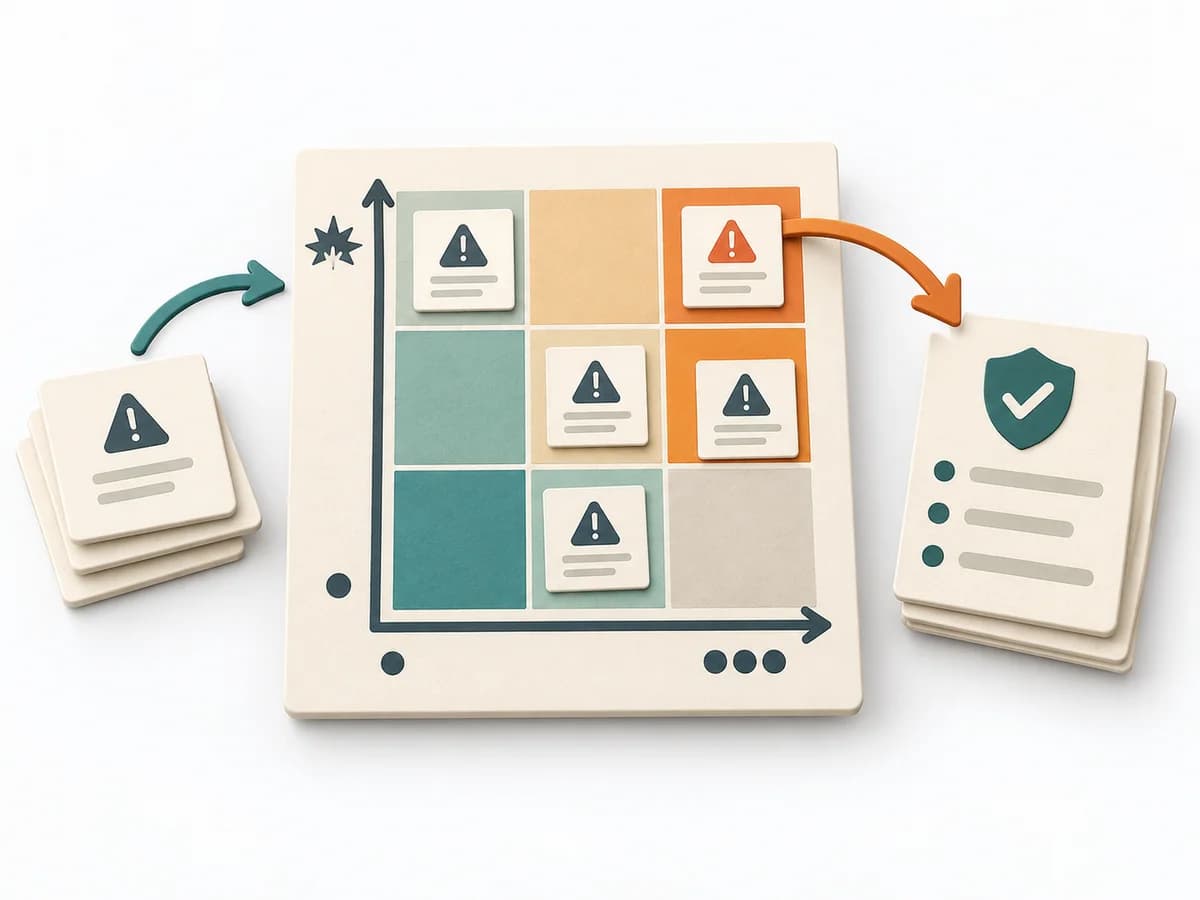 Decision Making Risk Matrix | 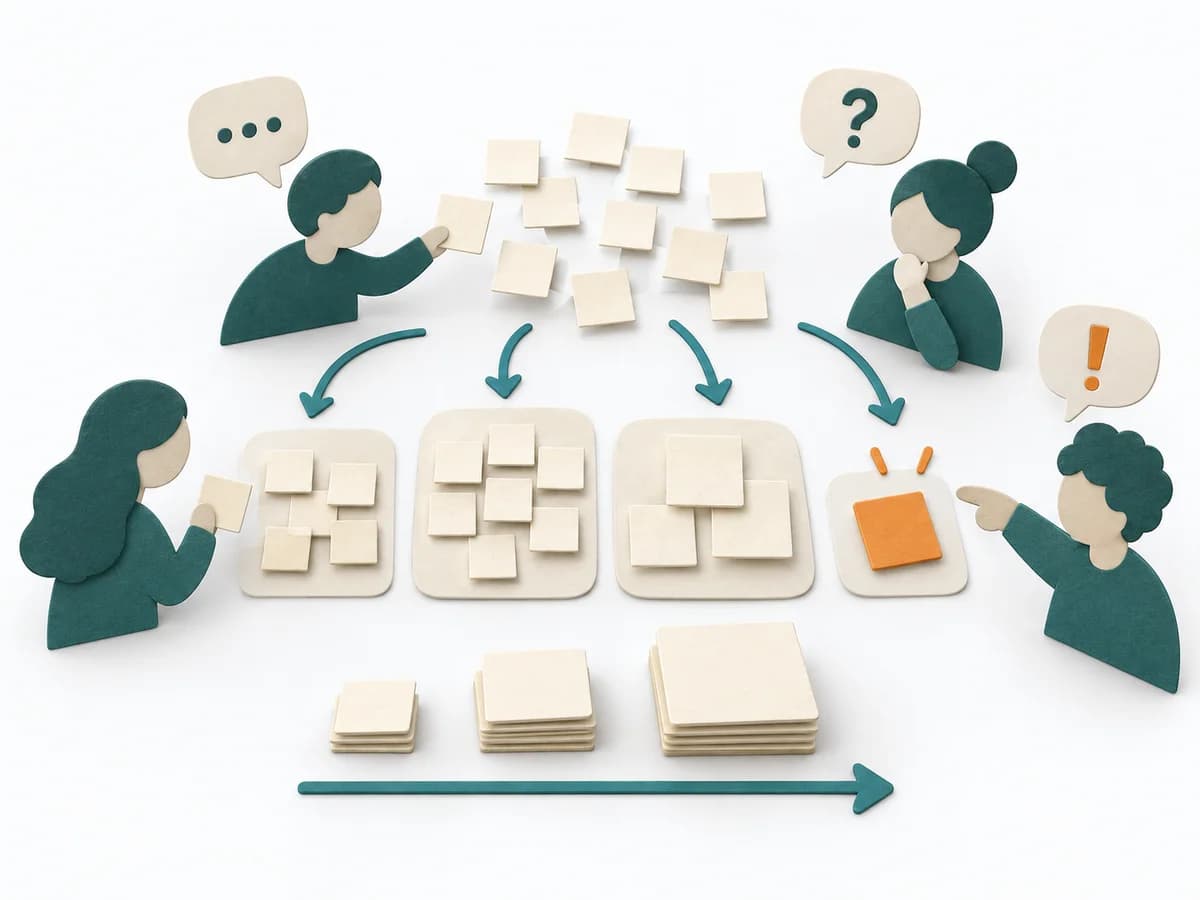 Agile Affinity Estimation |
|---|---|---|---|---|
Purposedifferent | When estimates within the team diverge too much, it puts differing expectations on a common test bench. It separates rough complexity from unspoken assumptions. | When size or effort can only be estimated roughly, Dot Estimation condenses the group's experience into a quick range. It turns individual contributions into a visible selection. The result is captured as an Effort Heatmap, Risk Signals, and Discussion Targets. | When a project faces many possible disruptions, it quickly becomes unclear which risks deserve attention first. It separates options, evaluation criteria, and open risks. The result is captured as a Risk Matrix and a Top Risk List. | When many tasks need to be classified quickly, it sorts them by perceived effort and similarity. It reduces the effort of fine-grained estimation for large volumes. |
Complexitydifferent | Low | Low | Low | Medium |
Timedifferent | 2-5 min je Item | 5-20 min | 30-60 min | 30-90 min |
Participantsdifferent | 3-9 | 3-20 | 3-10 | 3-12 |
Formatdifferent | Workshop + async | Workshop | Workshop + async | Workshop |
Outputdifferent | Relative Estimates, Assumption Notes, Split Candidates | Effort Heatmap, Risk Signals, Discussion Targets | Risk Matrix, Top Risk List | Affinity Size Map, Grouped Estimates, Unclear Items |
Tagsno overlap | EstimationAgileRelative sizingTeam | EstimationEffortRisk | RiskDecisionPrioritizationAssessment | EstimationBacklogRelative sizing |