View methods side by side.
Choose up to four methods. Add them using the search and share the comparison by copying its link.
| Criterion | 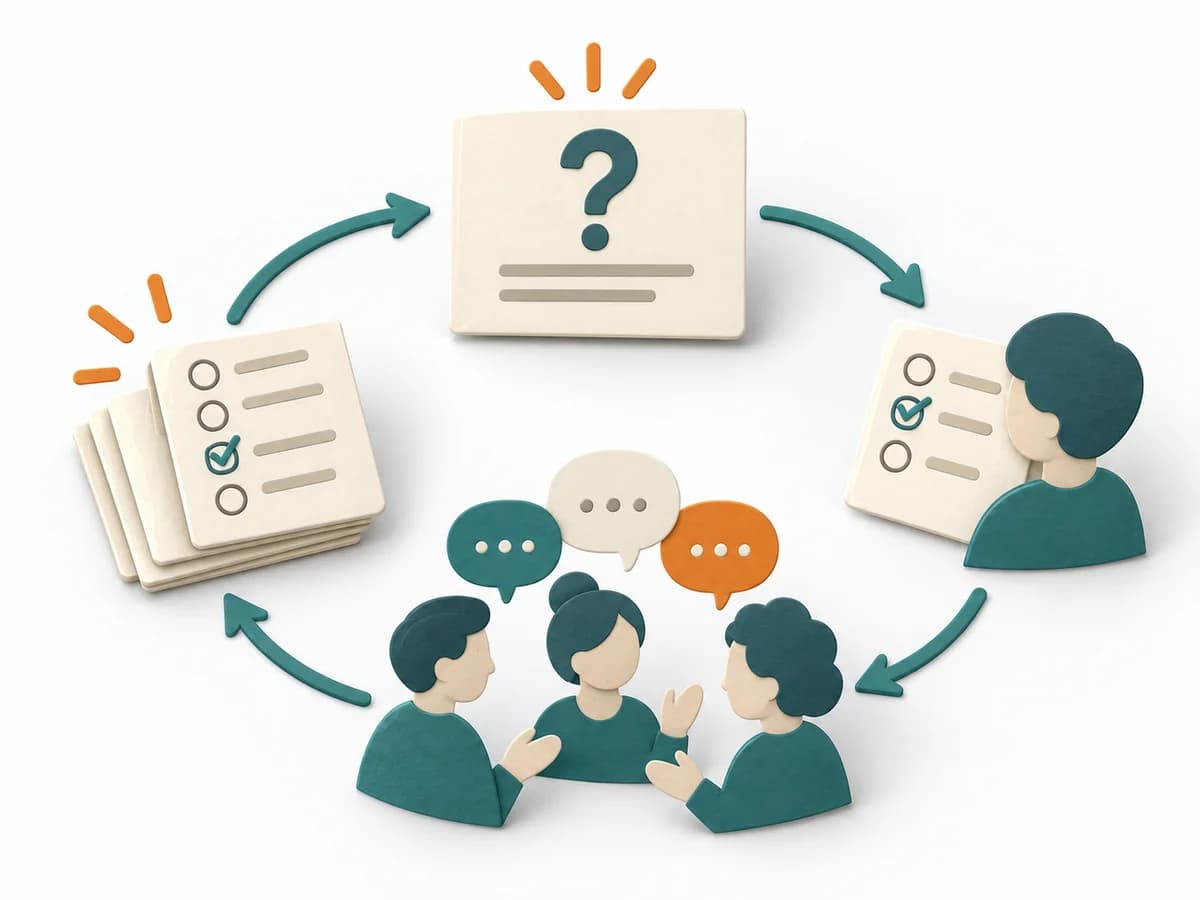 Knowledge Modeling Peer Instruction | 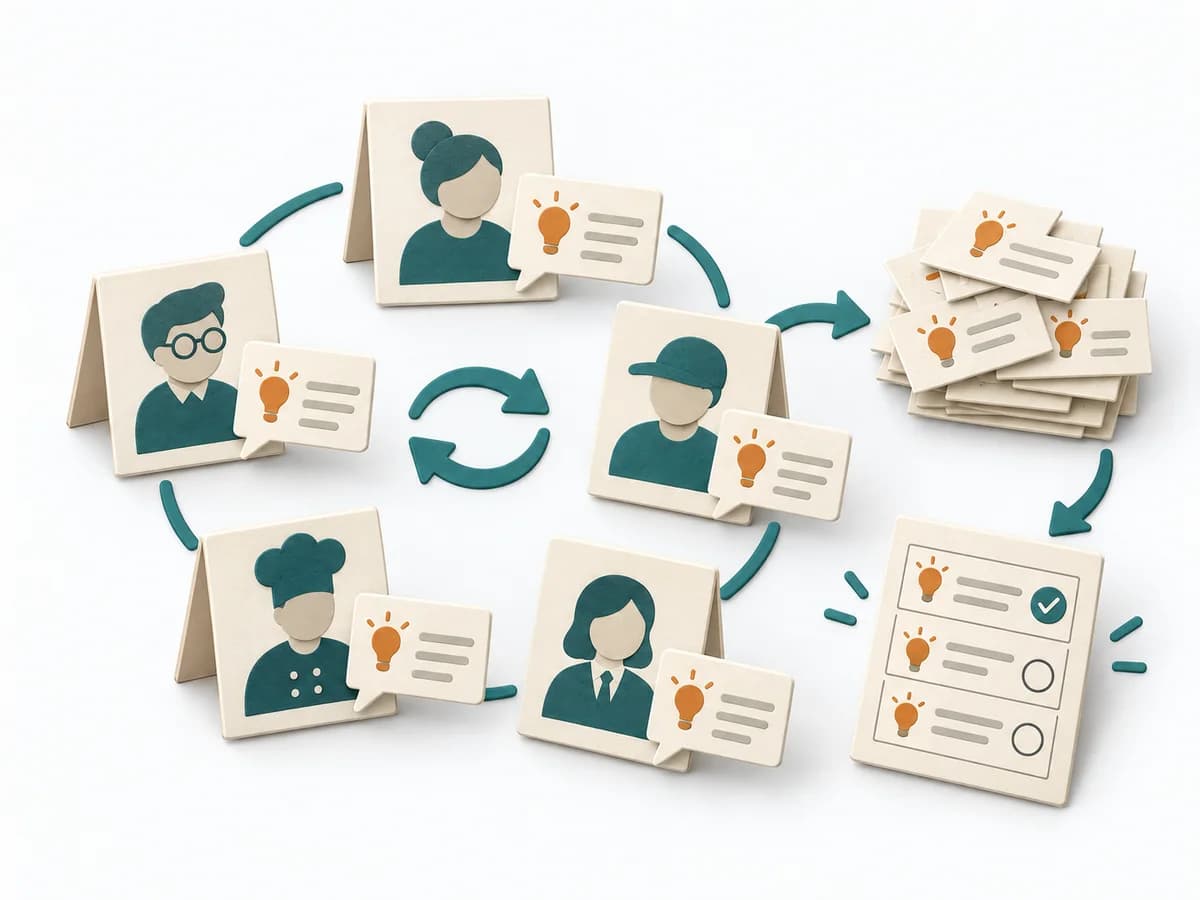 Innovation Rolestorming |  Innovation Reverse Brainstorming |  Innovation SCAMPER |
|---|---|---|---|---|
Purposedifferent | Peer Instruction uses group thinking to clarify difficult terms or concepts faster. The method combines individual reflection with social correction and shared precision. | When a search for ideas stalls, switching roles helps people step outside their own perspective and activate new logics of action. The method reduces habit because contributions arise from a different stance. This brings unfamiliar, often fitting solution approaches into play. | For persistent errors or blockages, the method shifts the view to the opposite of the desired effect. It exposes the mechanics of failure and makes hidden causes easier to grasp. This makes improvement more concrete and the problem clearer. | For an existing solution under pressure to change, the method deliberately opens space for systematic variants. It directs attention to rebuilding, combining, and repurposing rather than only new basic ideas. This produces concrete evolution paths for products, offerings, or workflows. |
Complexitydifferent | Medium | Low | Low | Low |
Timedifferent | 10-20 min je Frage | 30-60 min | 30-60 min | 30-60 min |
Participantsdifferent | 6-50 | 3-12 | 3-12 | 2-10 |
Formatsame | Workshop | Workshop | Workshop | Workshop |
Outputdifferent | Concept Questions, Vote Results, Learning Notes | Rollenkarten, Ideenpool pro Rolle, Konsolidierte Shortlist | Reverse Ideas, Risk Themes, Solution Ideas | SCAMPER Idea List, Concept Shortlist, Variation Notes |
Tagsno overlap | LearningDialogueFacilitation | BrainstormingIdeationCreativity | BrainstormingIdeationCreativityRisk | BrainstormingIdeationCreativityReframingInnovation |