View methods side by side.
Choose up to four methods. Add them using the search and share the comparison by copying its link.
| Criterion | 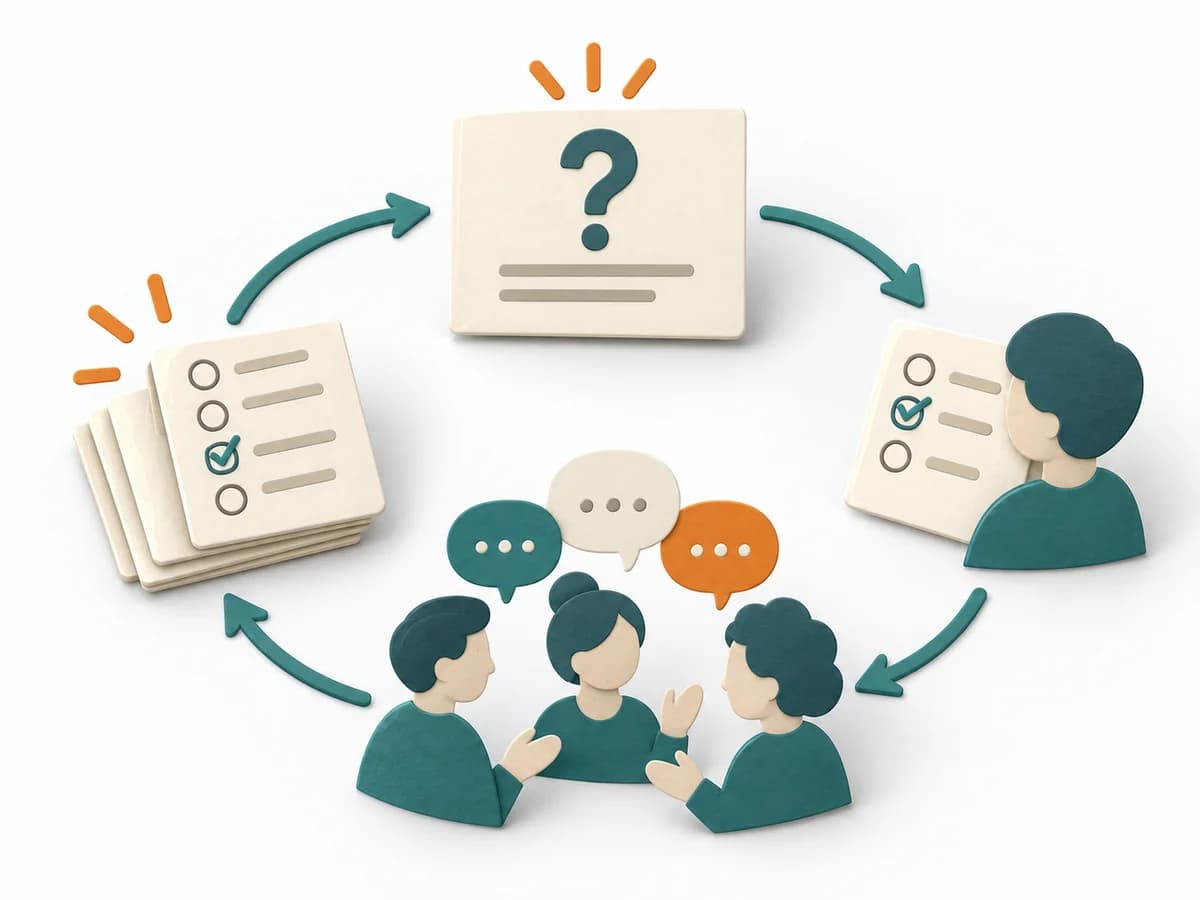 Knowledge Modeling Peer Instruction |  Operations Failure Mode and Effects Analysis |  Operations Fishbone Diagram | 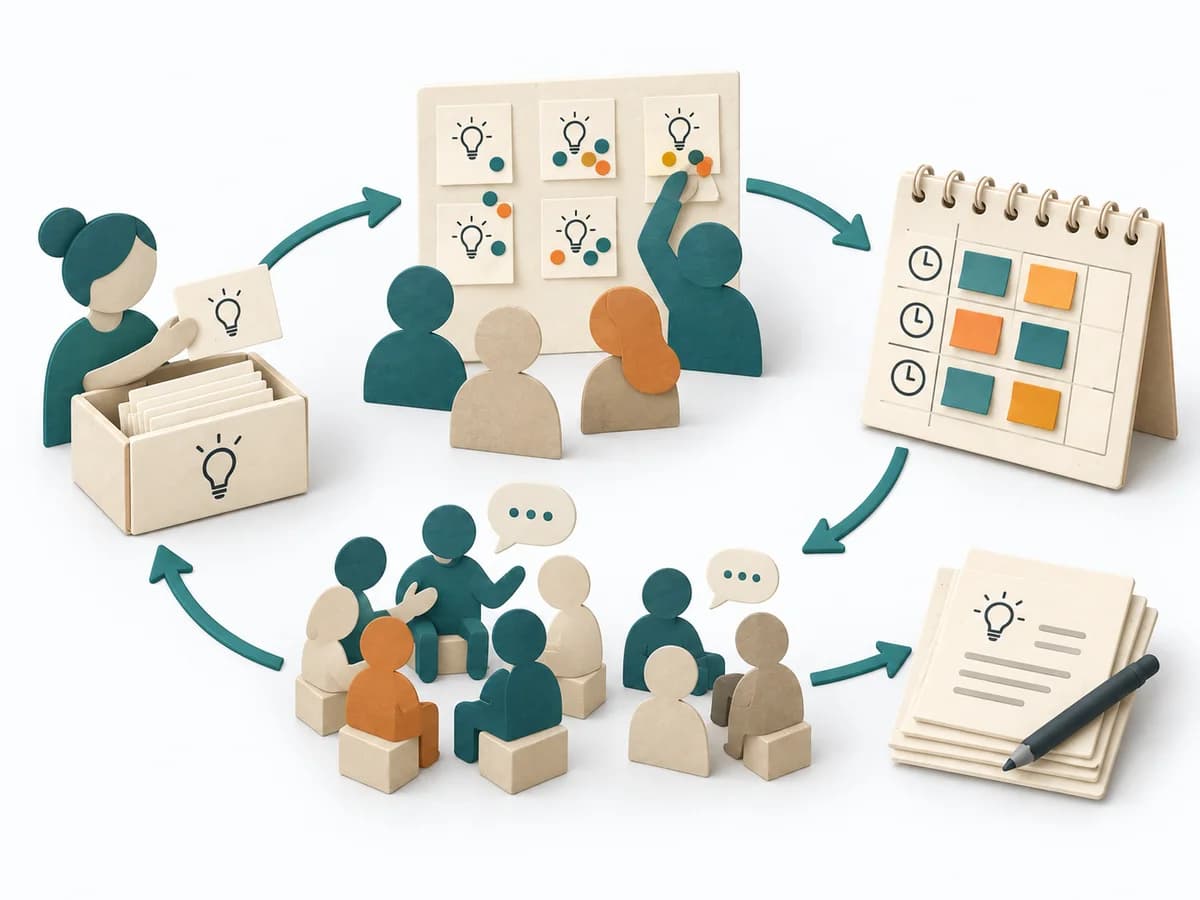 Facilitation Barcamp |
|---|---|---|---|---|
Purposedifferent | Peer Instruction uses group thinking to clarify difficult terms or concepts faster. The method combines individual reflection with social correction and shared precision. | For a process, product, or service with noticeable failure risks, the method assesses possible failure modes in advance. It directs attention to combinations of occurrence, effect, and detectability. | When a problem has several possible contributing factors, the method sorts causes by cause areas. It prevents an initial hunch from blocking the view of other plausible drivers. | When many people can contribute knowledge and the flow should stay open, Barcamp provides a framework for self-organized sessions. The format channels energy without defining the content too narrowly in advance. |
Complexitydifferent | Medium | High | Low | Medium |
Timedifferent | 10-20 min je Frage | 2-6 h | 30-60 min | Halber Tag bis 2 Tage |
Participantsdifferent | 6-50 | 3-10 | 2-8 | 15-200 |
Formatsame | Workshop | Workshop | Workshop | Workshop |
Outputdifferent | Concept Questions, Vote Results, Learning Notes | FMEA Table, Risk Priority, Mitigation Actions | Fishbone Diagram, Cause Categories, Investigation Backlog | Session Board, Session Notes, Community Learnings |
Tagsno overlap | LearningDialogueFacilitation | RiskQualityOperationsRoot cause | Root causeQualityOperations | FacilitationLarge groupLearning |