View methods side by side.
Choose up to four methods. Add them using the search and share the comparison by copying its link.
| Criterion |  Operations PDCA Cycle | 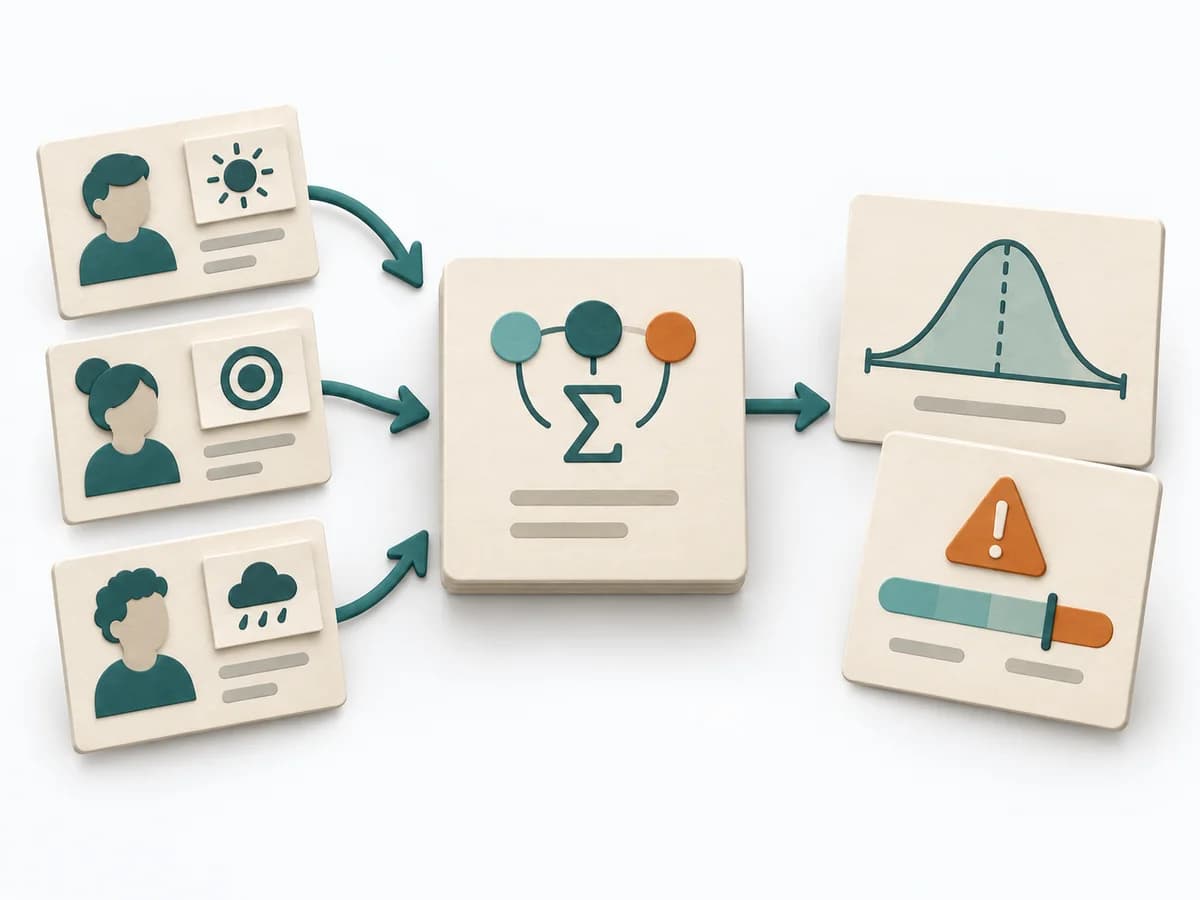 Decision Making PERT Estimation |  Operations Root Cause Analysis | 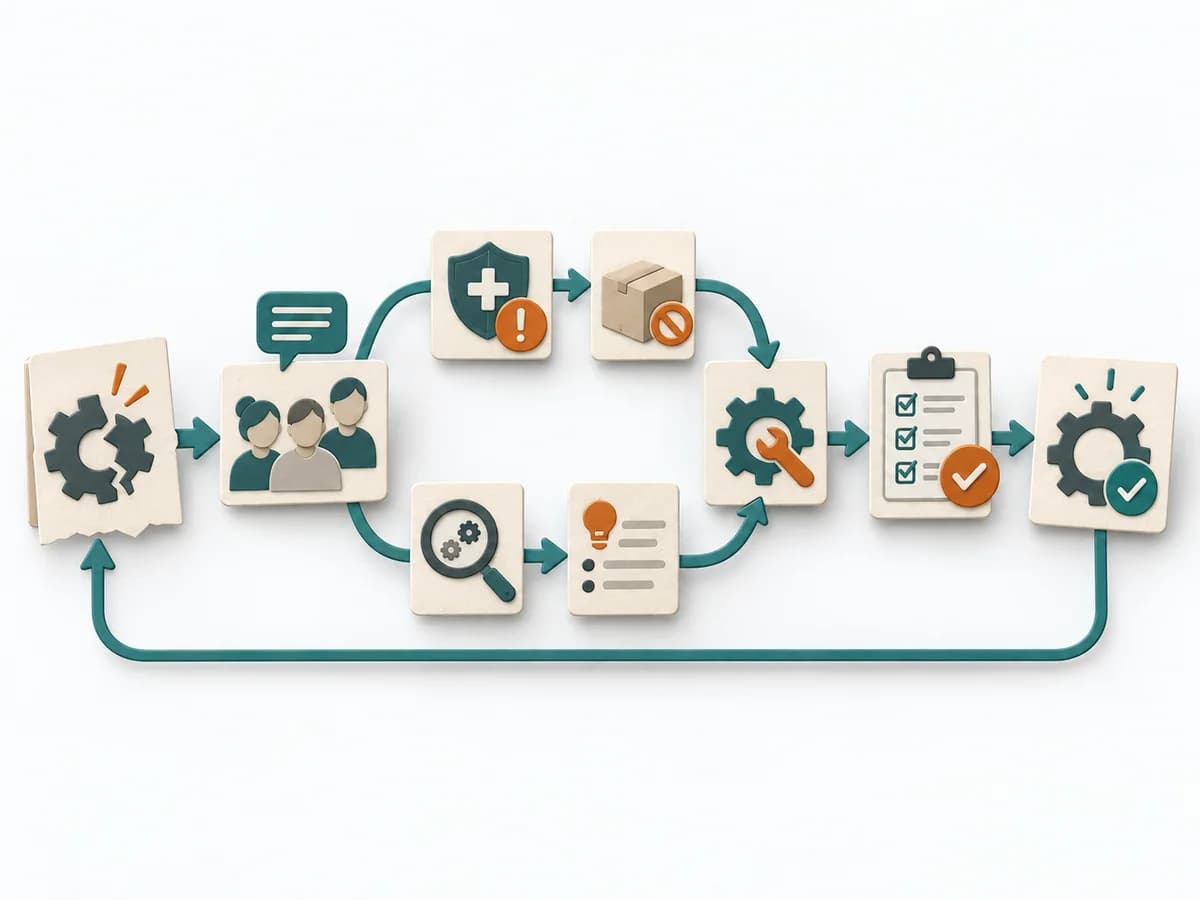 Operations 8D Problem Solving |
|---|---|---|---|---|
Purposedifferent | For an improvement that still has to prove itself in everyday work, the method runs it through small learning loops. It connects planning, checking, and standardization into a repeatable learning mode. | On complex initiatives, a plain average tends to understate just how uncertain the outcome really is. It separates options, evaluation criteria, and open risks. The result is captured as a PERT Estimate, Expected Value, and Risk Notes. | When a problem keeps recurring and the cause stays unclear, the method exposes the underlying mechanism. It separates symptom, guess, and robust explanation from one another. | For an acute quality or delivery problem, the method structures immediate protection and root cause work together. It keeps the situation stable while the actual cause is investigated cleanly. |
Complexitydifferent | Low | Medium | Medium | High |
Timedifferent | 1 h bis mehrere Wochen | 15-45 min | 1-4 h | 1-6 Wochen |
Participantsdifferent | 1-8 | 1-8 | 3-8 | 4-10 |
Formatsame | Workshop + async | Workshop + async | Workshop + async | Workshop + async |
Outputdifferent | PDCA Log, Experiment Plan, Learning Outcome, Standard Change | PERT Estimate, Expected Value, Risk Notes | Problem Statement, Cause Hypotheses, Confirmed Causes, Action Plan | 8D Report, Containment Plan, Root Cause Evidence, Corrective Action Plan |
Tagsno overlap | Continuous improvementLeanExperiments | EstimationUncertaintyRisk | Root causeProblem solvingQualityIncident | QualityProblem solvingRoot cause |