View methods side by side.
Choose up to four methods. Add them using the search and share the comparison by copying its link.
| Criterion | 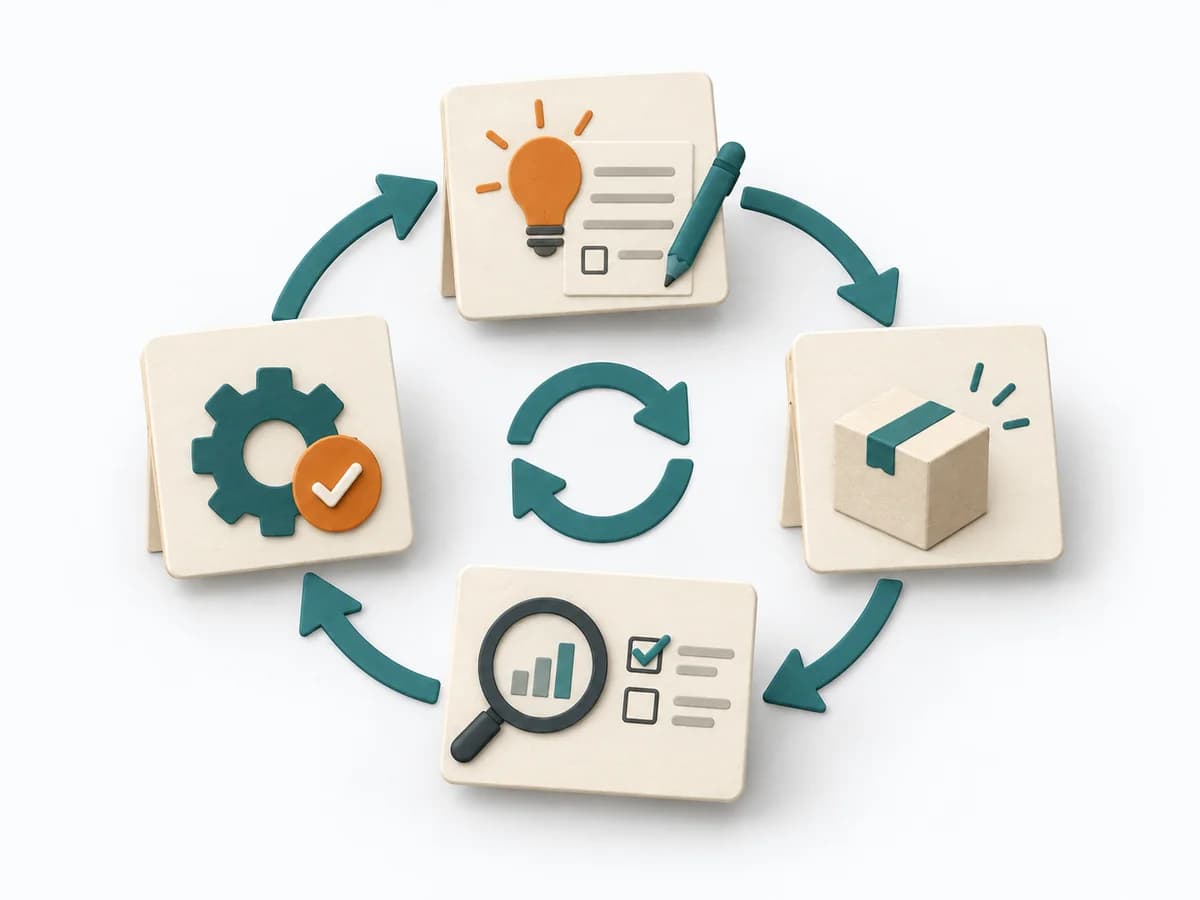 Operations PDCA Cycle |  Product Discovery Outcome-Driven Innovation |  Product Discovery Experiment Canvas | 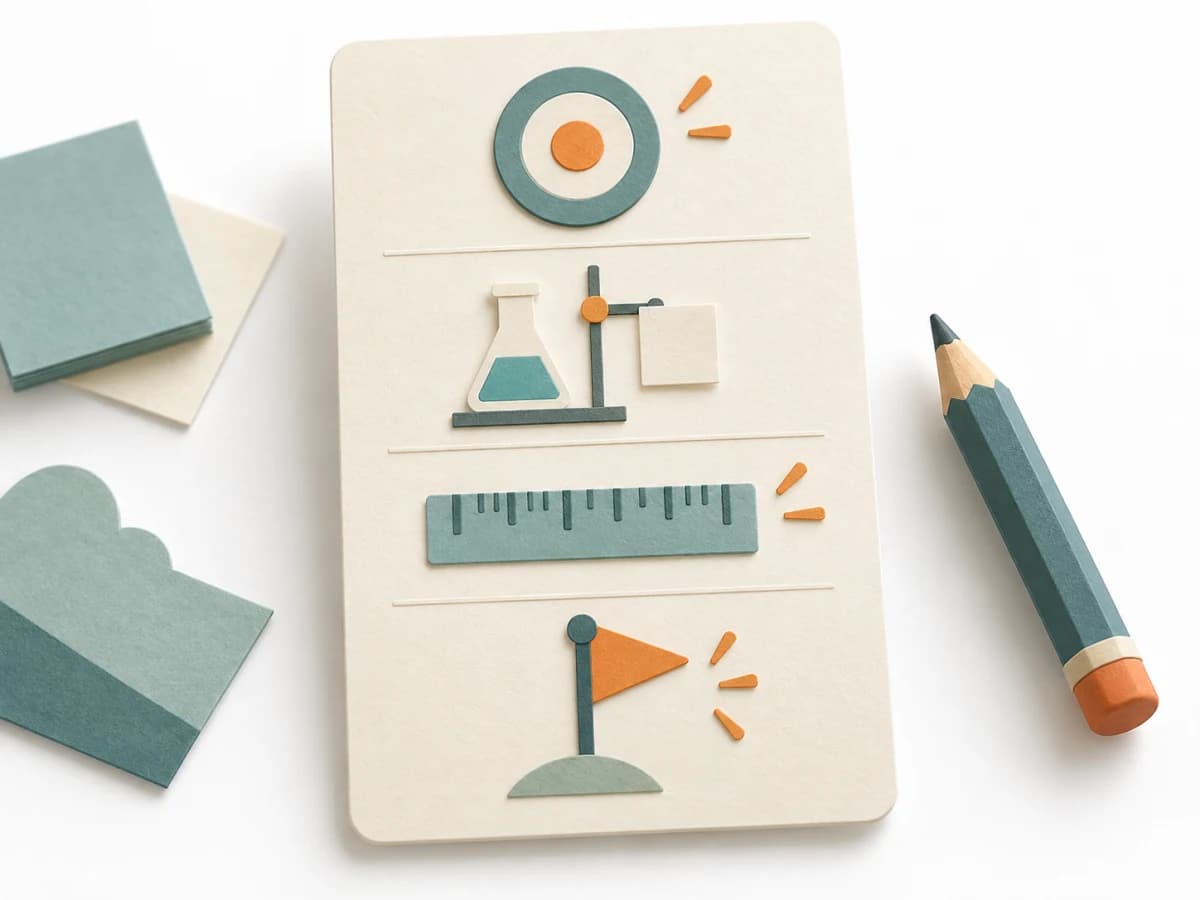 Product Discovery Test Card |
|---|---|---|---|---|
Purposedifferent | For an improvement that still has to prove itself in everyday work, the method runs it through small learning loops. It connects planning, checking, and standardization into a repeatable learning mode. | Outcome-Driven Innovation clarifies customer problems, solution opportunities, and evidence. It separates jobs, desired outcomes, importance, satisfaction, and opportunity, and captures results as desired outcome statements, an opportunity landscape, and segments by underserved needs. | When experiments become unreadable after the fact, it arranges hypothesis, signal, and learning goal on a single canvas. It separates problem, assumption, solution, and evidence. The result is captured as a Completed Experiment Canvas and a Success Metric. | The Test Card turns a critical assumption into a testable claim and specifies in advance which result counts as success. |
Complexitydifferent | Low | High | Low | Low |
Timedifferent | 1 h bis mehrere Wochen | Mehrere Wochen | 30-60 min | 20-35 min |
Participantsdifferent | 1-8 | 2-6 researchers plus sample | 1-5 | 1-5 |
Formatsame | Workshop + async | Workshop + async | Workshop + async | Workshop + async |
Outputdifferent | PDCA Log, Experiment Plan, Learning Outcome, Standard Change | Desired outcome statements, Opportunity landscape, Segmentation by underserved needs, Innovation hypotheses | Completed Experiment Canvas, Success Metric | Test Card with a pre-set threshold |
Tagsno overlap | Continuous improvementLeanExperiments | OutcomesInnovationResearchQuantitative | ExperimentsValidationDiscoveryHypothesis | ExperimentsValidationDiscoveryHypothesis |