View methods side by side.
Choose up to four methods. Add them using the search and share the comparison by copying its link.
| Criterion | 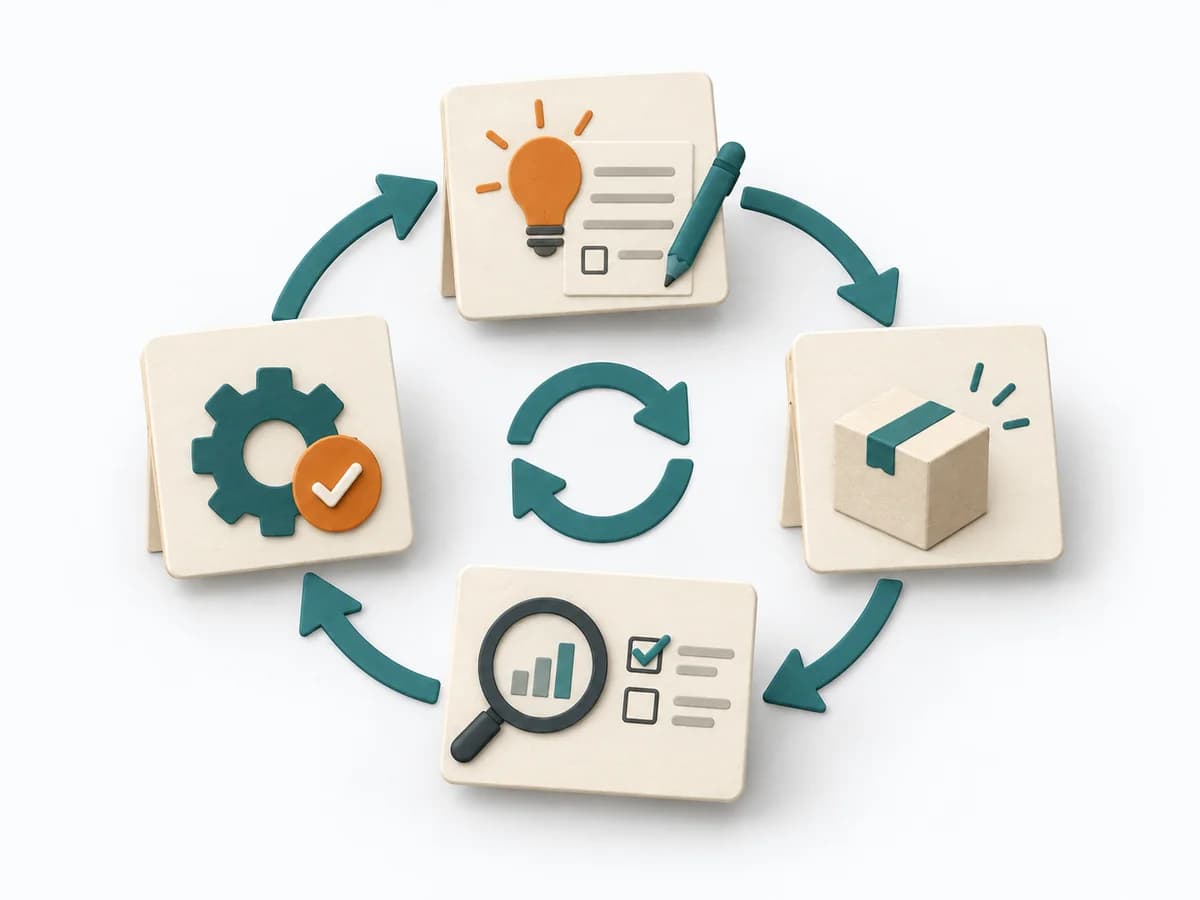 Operations PDCA Cycle |  Innovation Design Sprint |  Innovation Reverse Brainstorming |  Innovation SCAMPER |
|---|---|---|---|---|
Purposedifferent | For an improvement that still has to prove itself in everyday work, the method runs it through small learning loops. It connects planning, checking, and standardization into a repeatable learning mode. | When the product question is unclear and time pressure is high, the method takes a team from an open idea to a testable solution. It connects problem understanding, decision, and learning in one compact format, lowering the risk of spending a lot of energy on a mere guess. | For persistent errors or blockages, the method shifts the view to the opposite of the desired effect. It exposes the mechanics of failure and makes hidden causes easier to grasp. This makes improvement more concrete and the problem clearer. | For an existing solution under pressure to change, the method deliberately opens space for systematic variants. It directs attention to rebuilding, combining, and repurposing rather than only new basic ideas. This produces concrete evolution paths for products, offerings, or workflows. |
Complexitydifferent | Low | High | Low | Low |
Timedifferent | 1 h bis mehrere Wochen | 4-5 Tage | 30-60 min | 30-60 min |
Participantsdifferent | 1-8 | 5-8 | 3-12 | 2-10 |
Formatdifferent | Workshop + async | Workshop | Workshop | Workshop |
Outputdifferent | PDCA Log, Experiment Plan, Learning Outcome, Standard Change | Prototype, Test Findings, Decision Rationale | Reverse Ideas, Risk Themes, Solution Ideas | SCAMPER Idea List, Concept Shortlist, Variation Notes |
Tagsno overlap | Continuous improvementLeanExperiments | Design sprintPrototypeValidationInnovation | BrainstormingIdeationCreativityRisk | BrainstormingIdeationCreativityReframingInnovation |