View methods side by side.
Choose up to four methods. Add them using the search and share the comparison by copying its link.
| Criterion | 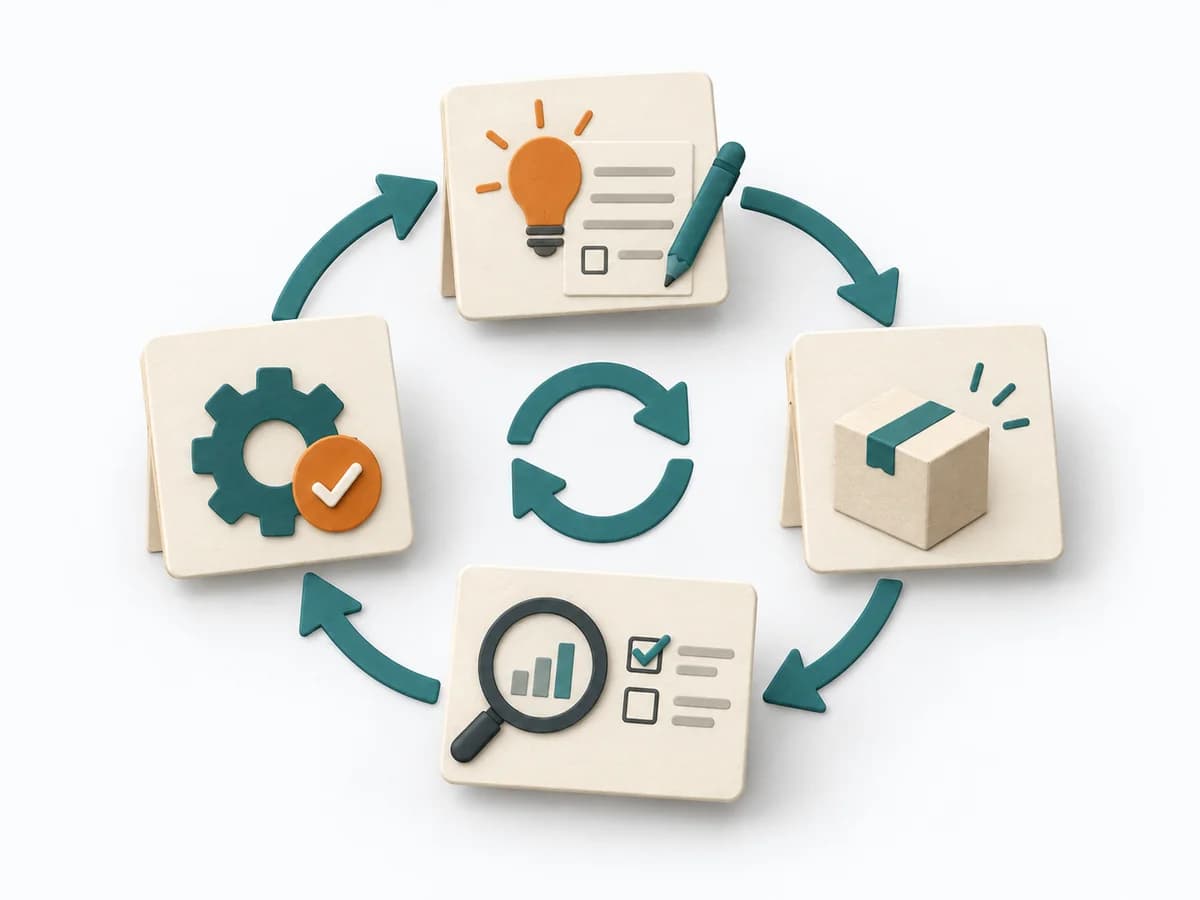 Operations PDCA Cycle | 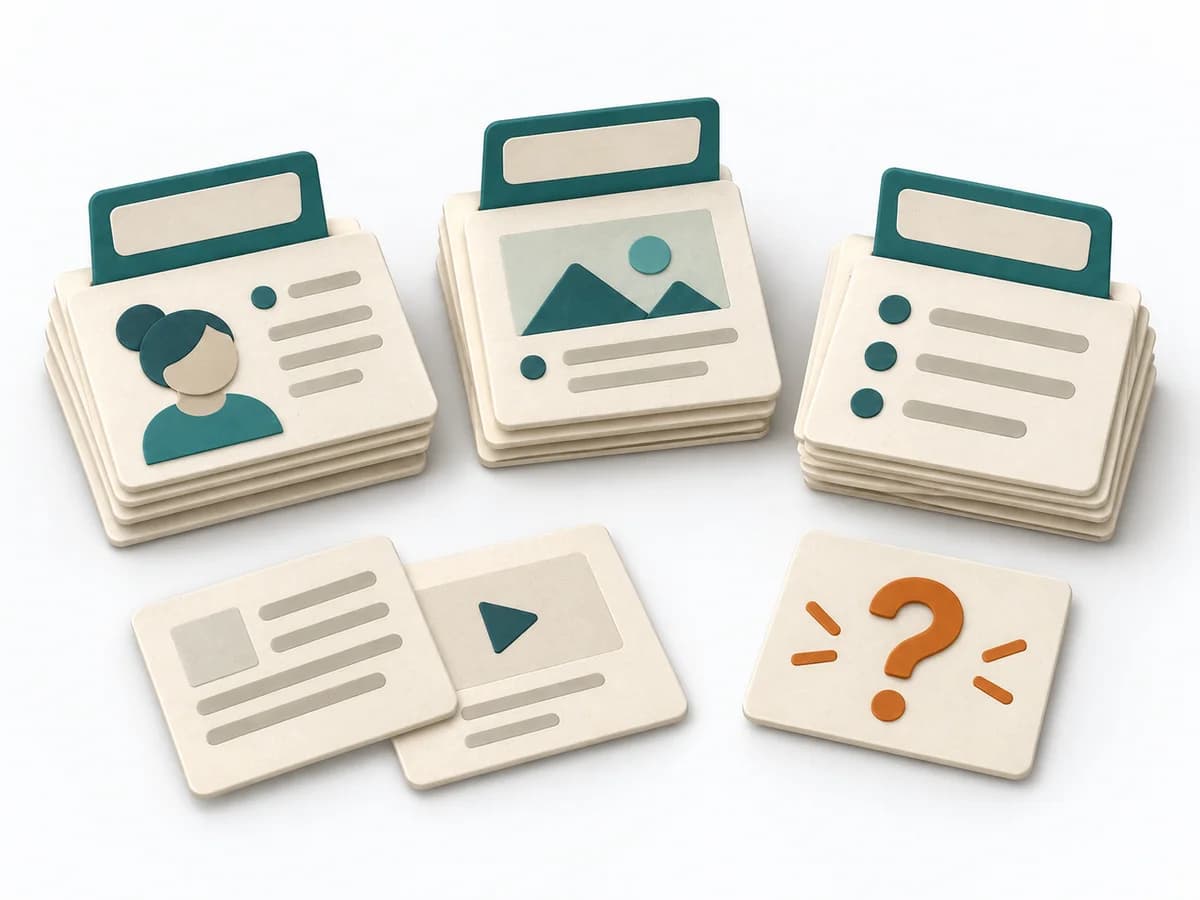 UX Research Card Sorting | 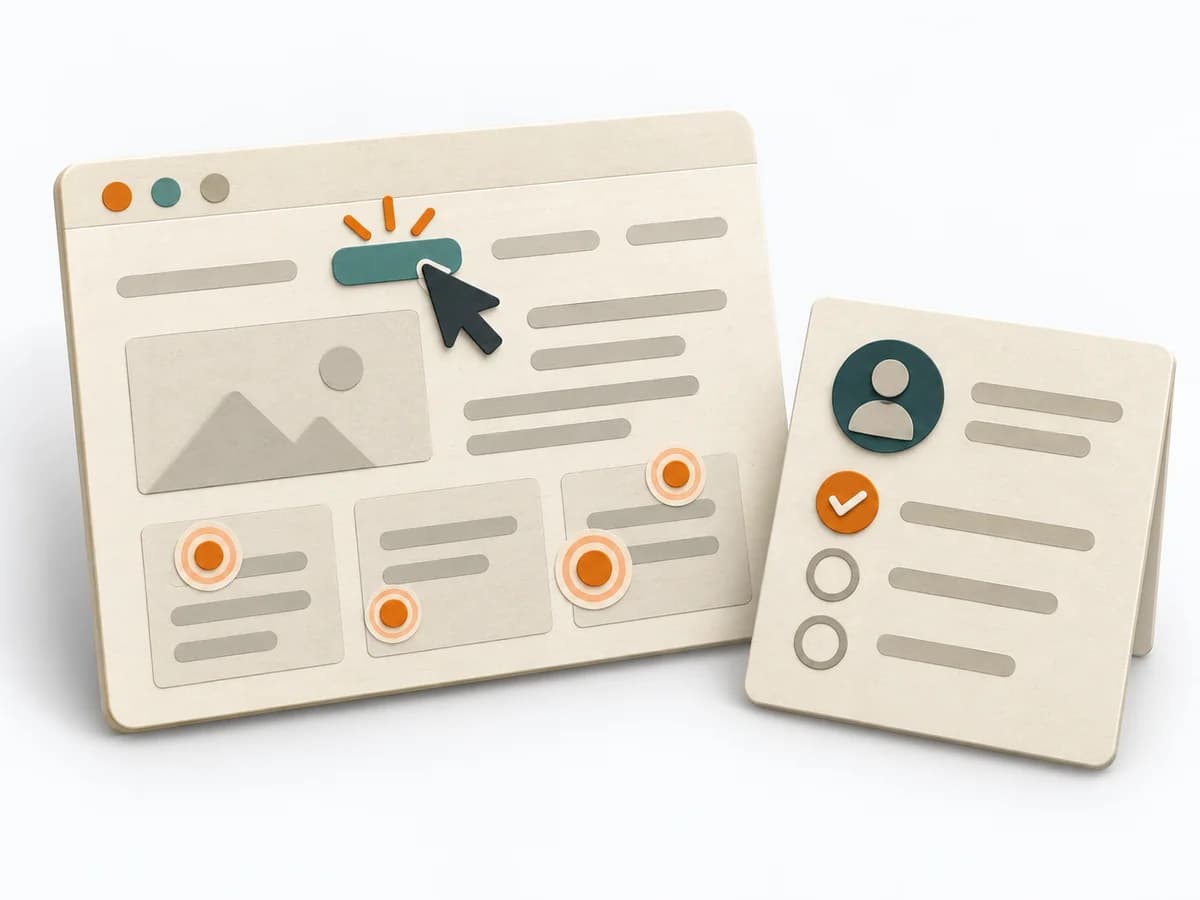 UX Research First-click Testing | 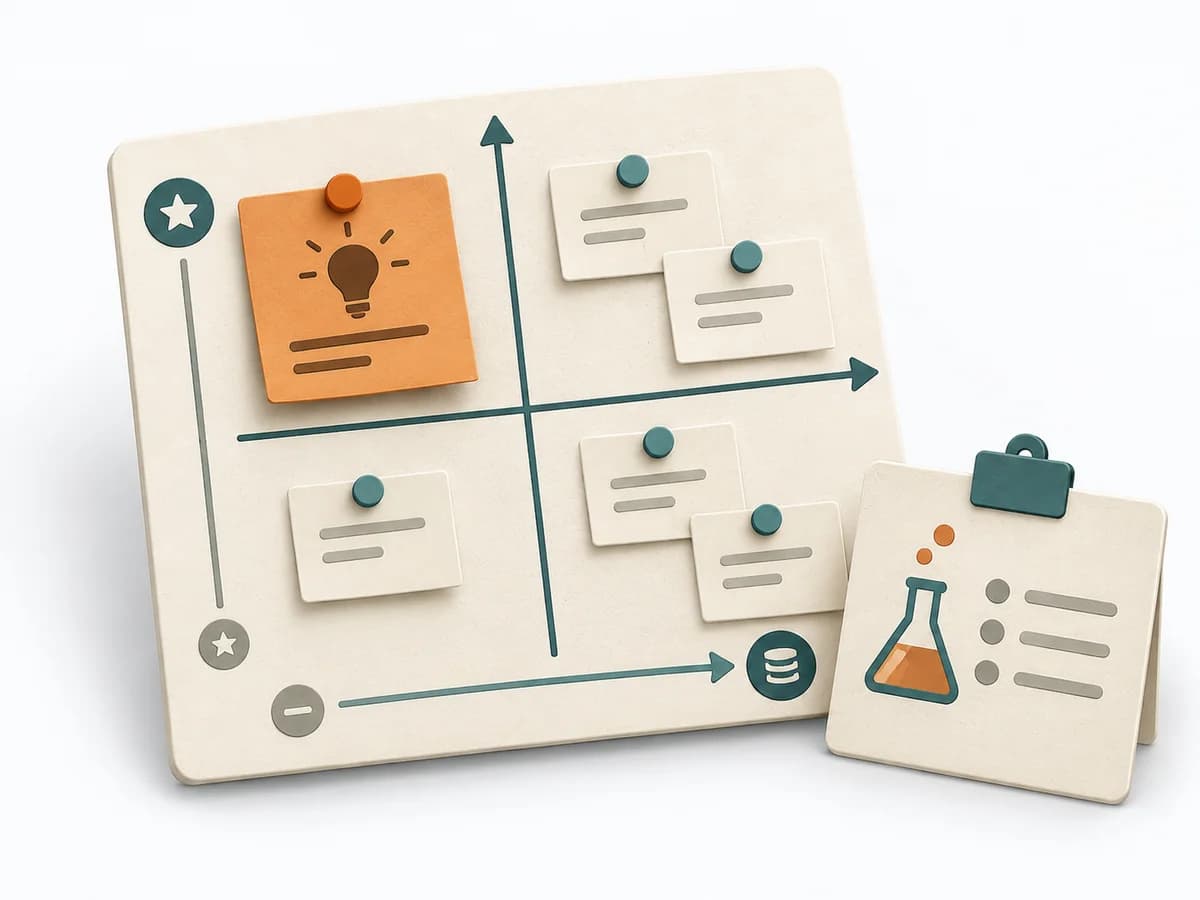 Product Discovery Assumption Mapping |
|---|---|---|---|---|
Purposedifferent | For an improvement that still has to prove itself in everyday work, the method runs it through small learning loops. It connects planning, checking, and standardization into a repeatable learning mode. | When content only makes sense internally and users can't find the structure again, card sorting exposes their mental order. Terms, groups, and naming are then aligned with the target group's expectations. | When users immediately turn the wrong way on a screen or wireframe, first click testing checks initial orientation at high speed. The first click shows early whether expectation, labeling, and wayfinding fit together. | When assumptions still sit unordered in the room, it weighs uncertainty against leverage. It makes visible which hypotheses should be checked first. |
Complexitydifferent | Low | Low | Low | Medium |
Timedifferent | 1 h bis mehrere Wochen | 20-45 min | 1-2 Tage | 45-60 min |
Participantsdifferent | 1-8 | Based on research question | 10-30 | 2-8 |
Formatdifferent | Workshop + async | Workshop + async | Async | Workshop + async |
Outputdifferent | PDCA Log, Experiment Plan, Learning Outcome, Standard Change | Content groups, Label set, IA hypotheses | Click Heatmap, Success Rate, Design Recommendations | Assumption map, Test backlog, Risk ranking |
Tagsno overlap | Continuous improvementLeanExperiments | Information architectureNavigationStructure | UXNavigationFindabilityValidation | AssumptionsRiskExperimentsValidation |