View methods side by side.
Choose up to four methods. Add them using the search and share the comparison by copying its link.
| Criterion |  Knowledge Modeling PARA Method | 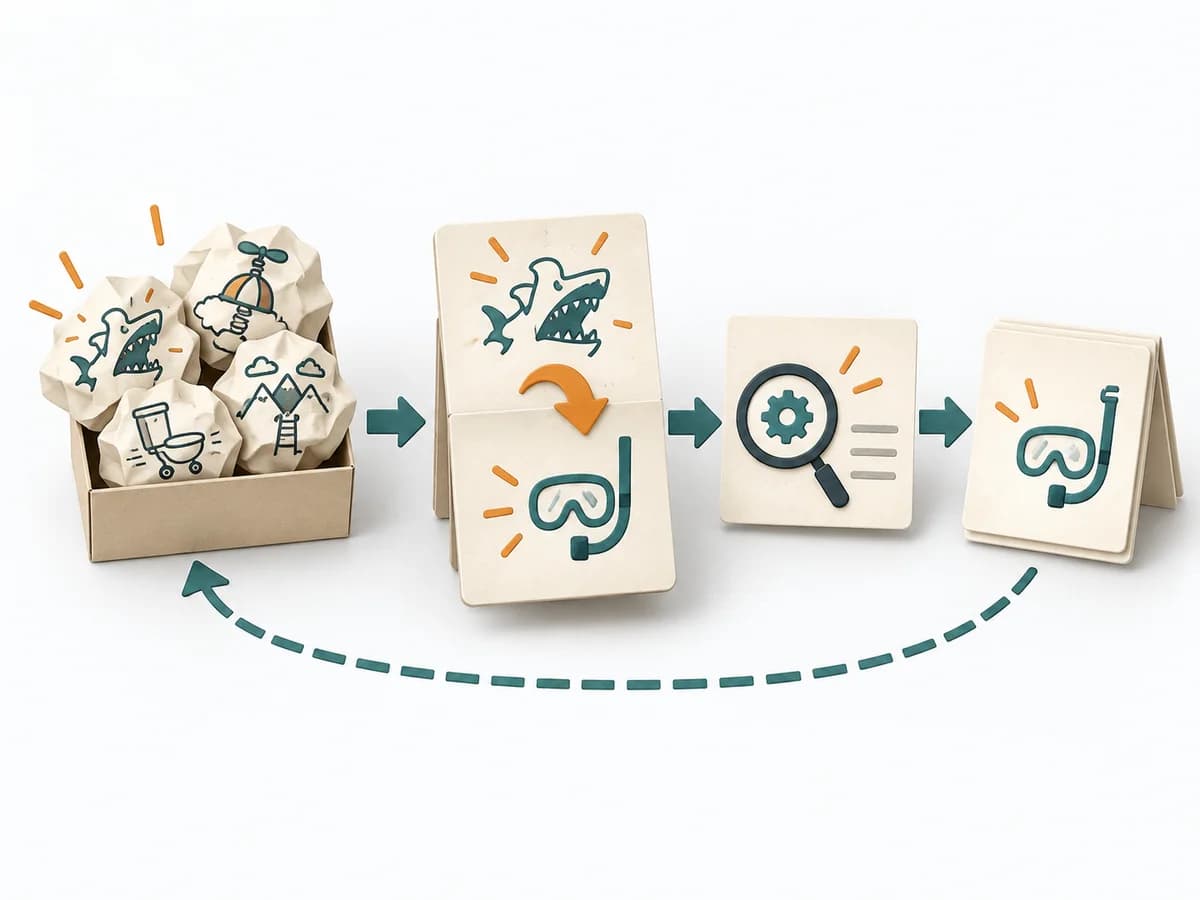 Innovation Worst Possible Idea | 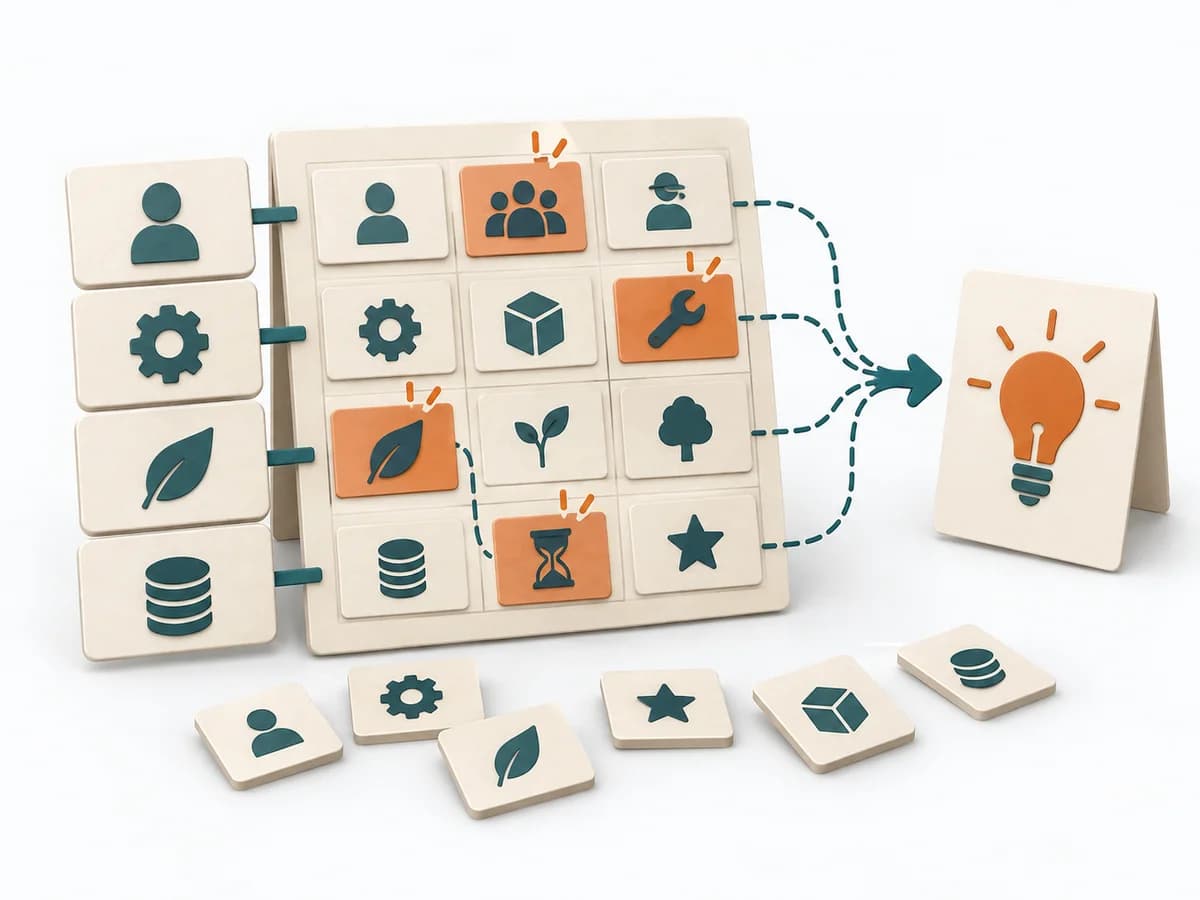 Innovation Morphological Analysis |  Innovation Brainstorming |
|---|---|---|---|---|
Purposedifferent | The PARA Method organizes knowledge into Projects, Areas, Resources, and Archives. It creates order when digital notes, files, and tasks no longer cleanly fit current work. | For a seemingly familiar problem with paralyzing seriousness, the method dissolves pressure and fear of judgment. It deliberately makes failure pictures extreme, so hidden assumptions become visible faster. This clarifies what a workable path should avoid. | For a search for solutions with many degrees of freedom, a grid emerges for systematic combinations. The method separates features, variants, and exclusion criteria, so the space gets explored deliberately. | When a team faces an open question with many obvious directions, the method first creates breadth instead of premature commitment. It separates idea flow from evaluation and makes lines of thought visible, creating a pool for selection and further development. |
Complexitydifferent | Medium | Low | Medium | Low |
Timedifferent | 1-3 h Setup, laufend | 20-45 min | 1-3 h | 30-60 min |
Participantsdifferent | 1 | 3-12 | 2-8 | 4-12 |
Formatdifferent | Async | Workshop | Workshop + async | Workshop |
Outputdifferent | PARA Structure, Project Notes, Knowledge Archive | Bad Idea List, Reframed Concepts, Idea Shortlist | Morphological Box, Concept Combinations, Idea Shortlist | Idea pool, Theme clusters, Shortlist |
Tagsno overlap | KnowledgeProductivityOrganization | IdeationCreativityDivergence | IdeationInnovationCreativity | BrainstormingIdeationCreativityWorkshopDivergence |