View methods side by side.
Choose up to four methods. Add them using the search and share the comparison by copying its link.
| Criterion |  Knowledge Modeling PARA Method |  UX Research Surveys | 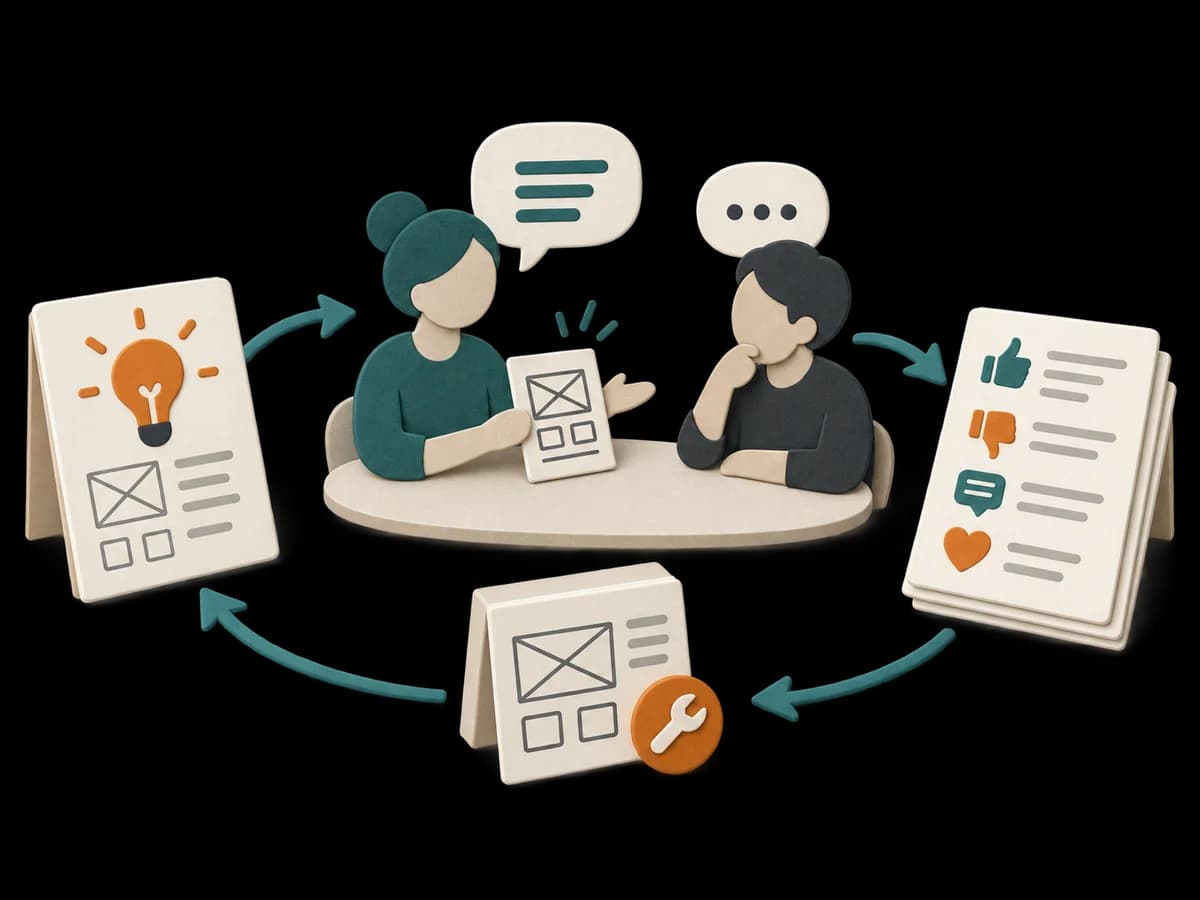 Product Discovery Solution Interview |  Product Discovery Outcome-Driven Innovation |
|---|---|---|---|---|
Purposedifferent | The PARA Method organizes knowledge into Projects, Areas, Resources, and Archives. It creates order when digital notes, files, and tasks no longer cleanly fit current work. | When a topic needs to be validated broadly and many people can answer the same question, surveys gather structured feedback in a scalable form. Answers become comparable and segmentable instead of remaining merely anecdotal. | When a solution idea is already on the table, it checks how it is understood and evaluated. It looks for resonance, objections, and missing fit early in the conversation. | Outcome-Driven Innovation clarifies customer problems, solution opportunities, and evidence. It separates jobs, desired outcomes, importance, satisfaction, and opportunity, and captures results as desired outcome statements, an opportunity landscape, and segments by underserved needs. |
Complexitydifferent | Medium | Medium | Medium | High |
Timedifferent | 1-3 h Setup, laufend | 3-14 Tage | 30-60 min je Interview | Mehrere Wochen |
Participantsdifferent | 1 | 50+ | 5-10 Interviews | 2-6 researchers plus sample |
Formatdifferent | Async | Async | Workshop + async | Workshop + async |
Outputdifferent | PARA Structure, Project Notes, Knowledge Archive | Survey Results, Charts, Segment Insights | Solution Feedback, Objection List, Validation Notes | Desired outcome statements, Opportunity landscape, Segmentation by underserved needs, Innovation hypotheses |
Tagsno overlap | KnowledgeProductivityOrganization | QuantitativeResearchValidation | ValidationInterviewsPrototype | OutcomesInnovationResearchQuantitative |