View methods side by side.
Choose up to four methods. Add them using the search and share the comparison by copying its link.
| Criterion |  Knowledge Modeling PARA Method |  Product Discovery Outcome-Driven Innovation | 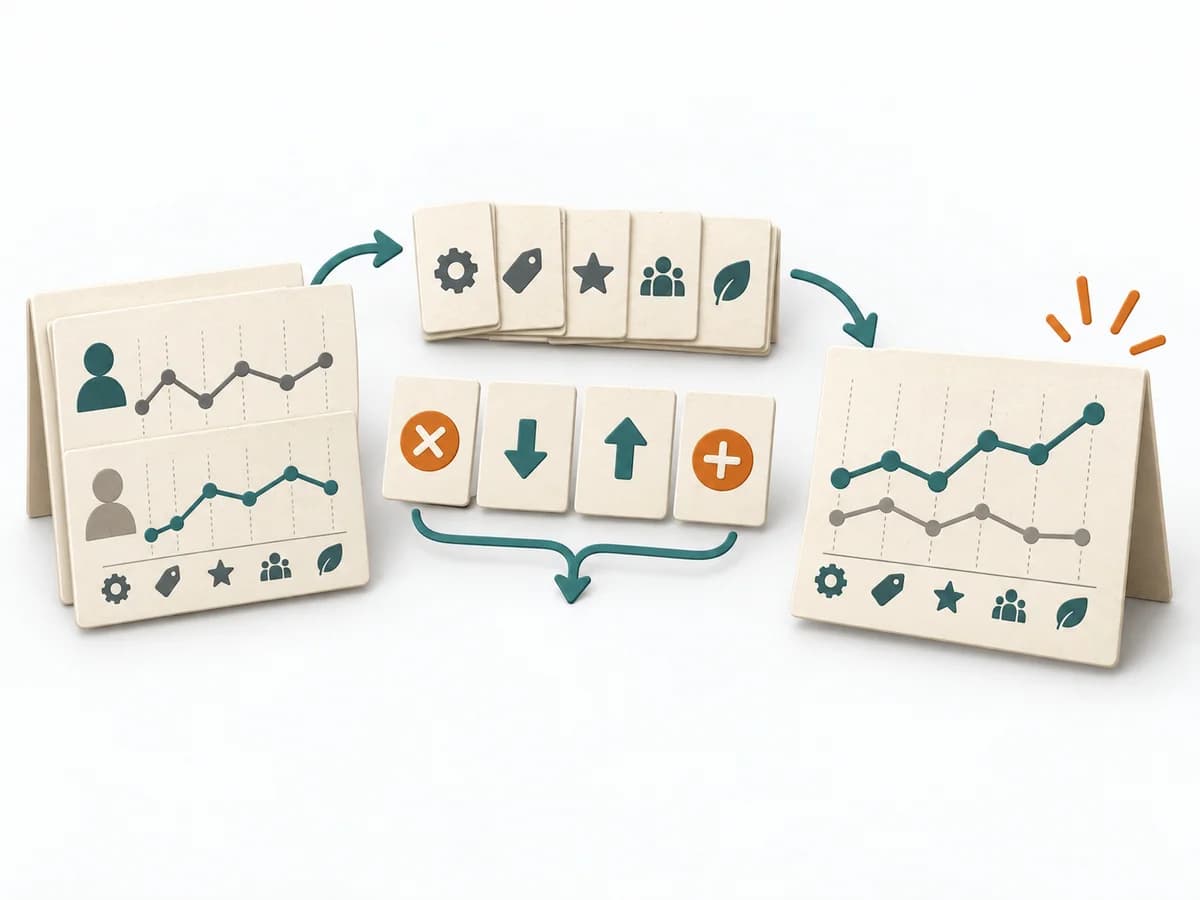 Business Strategy Blue Ocean Strategy Canvas |  Business Strategy McKinsey 7S |
|---|---|---|---|---|
Purposedifferent | The PARA Method organizes knowledge into Projects, Areas, Resources, and Archives. It creates order when digital notes, files, and tasks no longer cleanly fit current work. | Outcome-Driven Innovation clarifies customer problems, solution opportunities, and evidence. It separates jobs, desired outcomes, importance, satisfaction, and opportunity, and captures results as desired outcome statements, an opportunity landscape, and segments by underserved needs. | The Blue Ocean Strategy Canvas shows how an offering is positioned relative to the market. Differentiation thereby becomes tangible in value factors instead of merely being claimed. | McKinsey 7S checks whether Strategy, Structure, Systems, Shared Values, Skills, Style, and Staff fit together. Organizational misalignments become visible across multiple levers as a result. |
Complexitydifferent | Medium | High | Medium | Medium |
Timedifferent | 1-3 h Setup, laufend | Mehrere Wochen | 2-4 h | 2-4 h |
Participantsdifferent | 1 | 2-6 researchers plus sample | 3-10 | 3-12 |
Formatdifferent | Async | Workshop + async | Workshop | Workshop |
Outputdifferent | PARA Structure, Project Notes, Knowledge Archive | Desired outcome statements, Opportunity landscape, Segmentation by underserved needs, Innovation hypotheses | Strategy Canvas, Value Curve, ERRC Actions | 7S Assessment, Alignment Gaps, Change Actions |
Tagsno overlap | KnowledgeProductivityOrganization | OutcomesInnovationResearchQuantitative | StrategyPositioningInnovationValue | OrganizationStrategyAlignmentChange |